
 Home /
Production Process Design Services: From Prototype Bottlenecks to Validated Production CapacityProduction Process Design Services


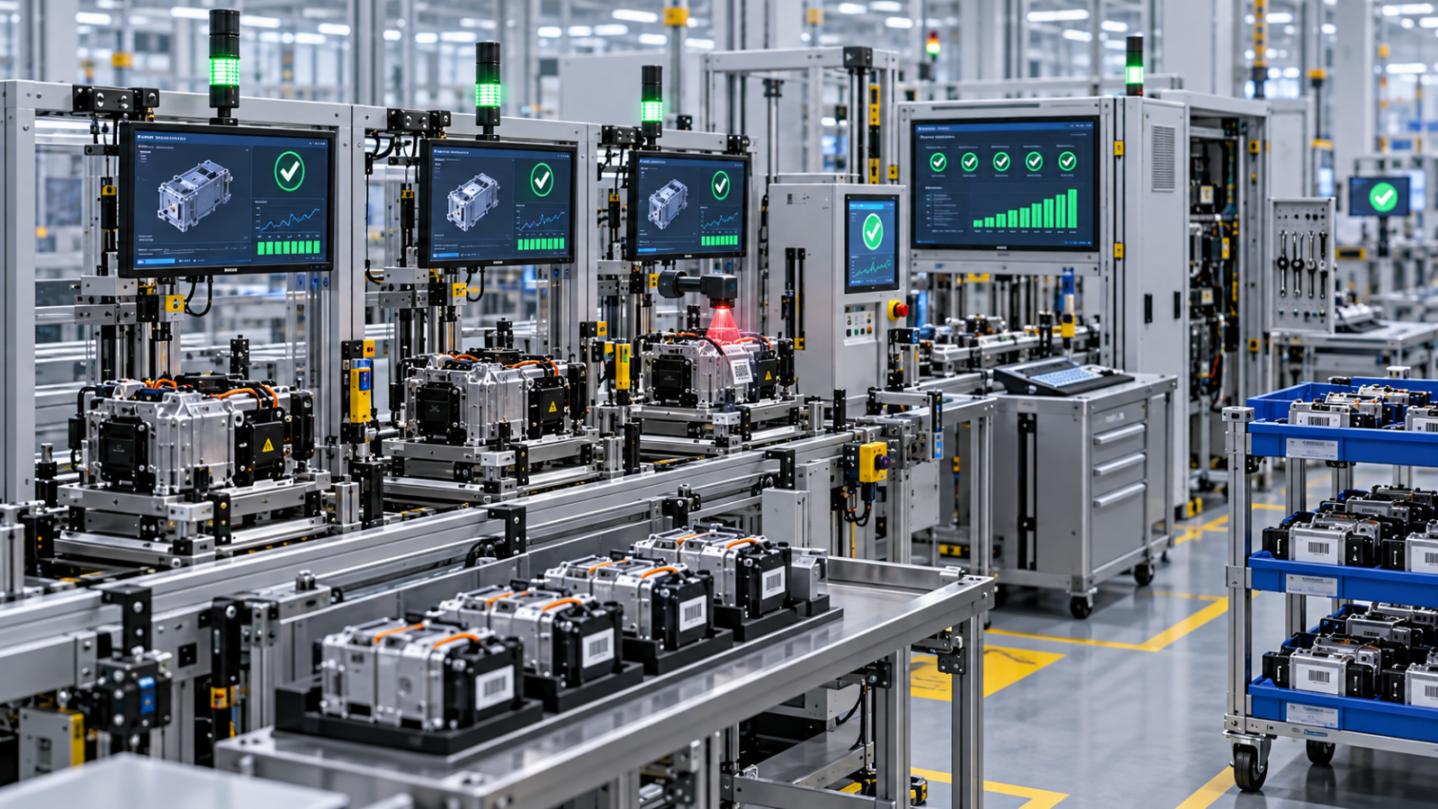

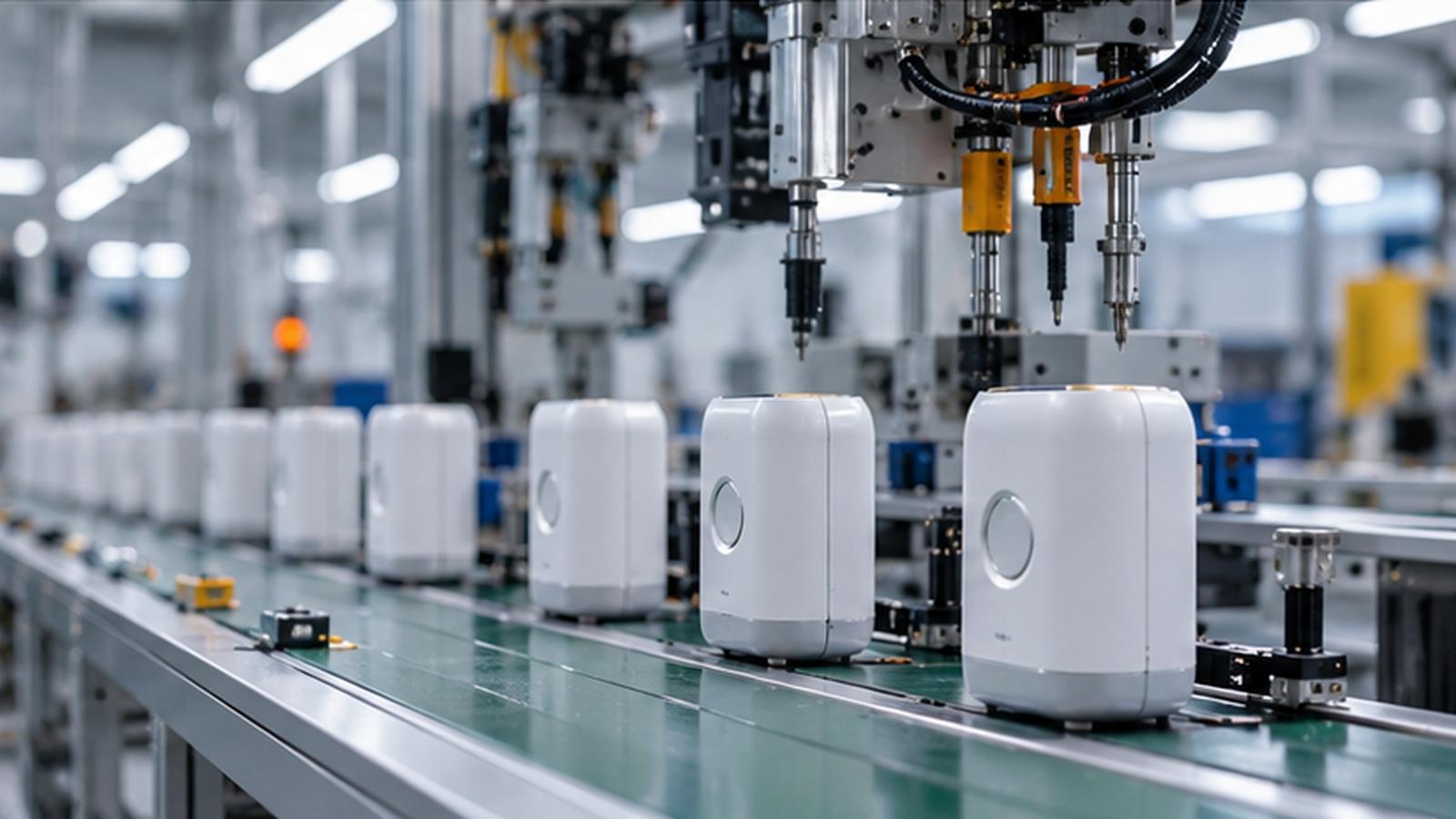
Production Process Design Services convert product specifications into process routes, workstation layouts, tooling requirements, inspection plans, and production acceptance criteria. The engineering objective is consistent good-part output within defined cost, capacity, and quality limits.
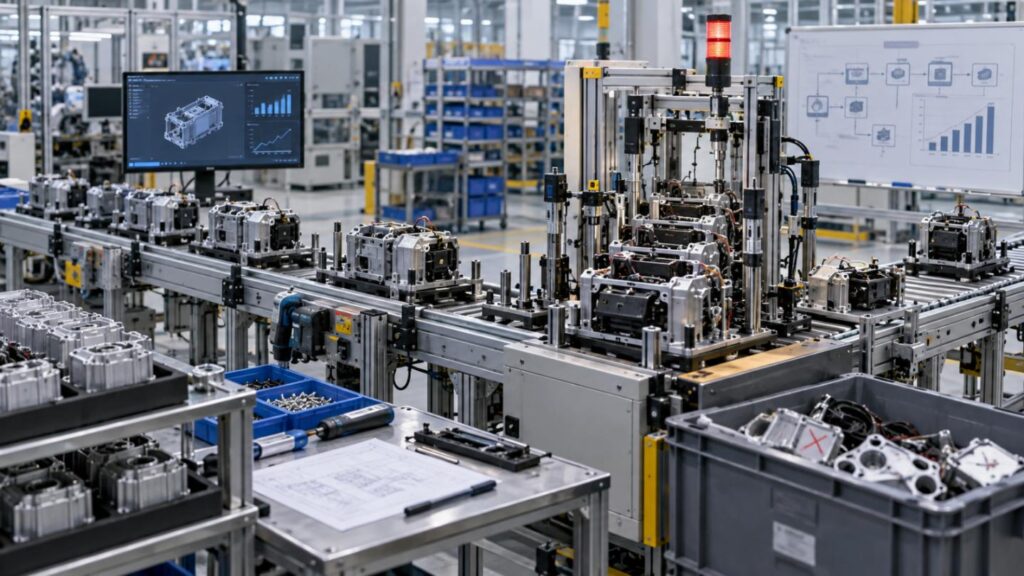
At LKK Design we offer manufacturing engineering services for DFM, process planning, line balancing, tooling readiness, and quality control. We help our clients resolve their manufacturing issues before tooling and equipment decisions become expensive.
Identify Why Prototype Methods Fail at Production Volume
When a prototype is assembled, adjustments are needed, and so is experience. When this approach is taken at production, it can create cycle time inconsistencies, alignments defects, waste, and a lot of scrap.
Loss mechanisms should be determined by the Production Process Design Services prior to equipment suggestions.
| Production Symptom | Likely Investigation | Required Evidence |
| Assembly requires repeated adjustment | Datum selection, tolerance stack-up, fixture location | Drawings, dimensional results, assembly observations |
| Output falls below equipment ratings | Bottlenecks, loading delays, starvation, blocking | Station cycle times and downtime records |
| Frequent SKU changes reduce output | Tool changes, setup verification, first-piece approval | Changeover breakdown by activity |
| Final yield looks acceptable despite high labor costs | Hidden repair and repeated inspection | First-pass yield and rework hours |
Define average demand, peak requirements, SKU mix, and planned shifts. New-product projects need pilot observations; retrofits also require equipment-condition records and shutdown constraints.
Convert Product Requirements Into Process Controls and Capacity
Connect Critical Features to the Process Route
Identify critical-to-quality characteristics, then assign:
• Process controls: Locating datums, assembly sequence, torque, pressure, or temperature windows.
• Verification: Measurement method, inspection frequency, and traceability.
• Reaction plans: Containment, adjustment authority, and reinspection requirements.
If alignment before enclosure closure is going to prove costly, verify for internal alignment before closure. Tighten tolerances only where function requires it while taking into account tooling and measurement cost trade-offs.
Calculate Capacity From the Constraint
Takt time = net available production time / required output.
One example: A production shift of 420 minutes for a demand of 600 units calculates a takt time of 42 seconds/unit. One station, capable of processing one unit in 50 seconds, has a production potential of 504 units/shift prior to other losses.
Production Process Design Services need to define the following:
• Cycle time: The time required for each operation including loading and unloading.
• Throughput: Good units produced during the defined period.
• Lead time: The time required for processing, waiting, and the movement along the defined path.
• First-pass yield: Units processed without the need for repair or re-processing.
Make a cycle time bottleneck reduction only if the upstream and downstream process will support the increase. Variability will be covered by processing buffers; however, the WIP level and the production lot size will increase while cycle time reduction and change over time will decrease.
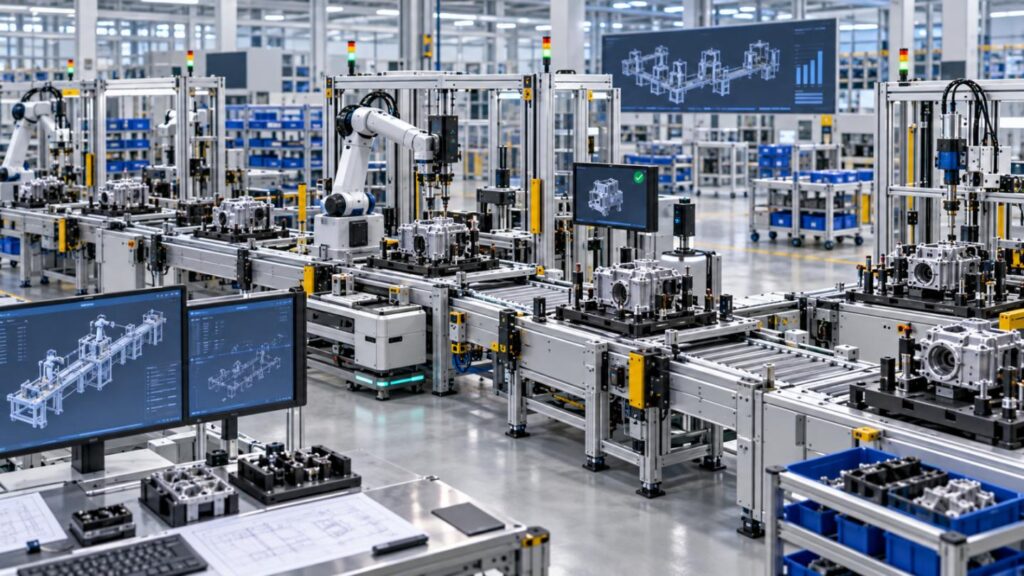
Compare Production Configurations Before Buying Equipment
Evaluate Production Process Design Services against the same demand profile, quality targets, staffing assumptions, and cost period.
| Configuration | Main Advantage | Main Constraint | Selection Driver |
| Manual / semi-automatic / automatic | Adaptability / selective repeatability / consistent repetitive execution | Labor variation / interface complexity / investment and maintenance | Volume stability, product maturity, incoming-part consistency |
| Cells / flow lines | Flexible staffing / sequential flow | Shared-resource balancing / sensitivity to station imbalance | Product families, routing similarity, expansion |
| Single-piece / batch transfer | Earlier defect feedback / batch-process compatibility | Process synchronization / higher WIP | Curing, handling, changeovers |
| Dedicated / modular fixtures | Product-specific location / reconfiguration | Limited reuse / setup verification | Repeatability, design changes, lifecycle cost |
| In-process / final inspection | Early containment / completed-product verification | Added station time / late defect discovery | Defect severity, accessibility, test coverage |
| Retrofit / new line | Asset reuse / layout freedom | Legacy interfaces / higher initial investment | Equipment condition, space, shutdown exposure |
Hybrid configurations are often appropriate. In-process inspection and final functional testing can serve complementary purposes.
Match the Process to Factory Interfaces
Production Process Design Services must specify how material, equipment, operators, and production data interact.
Confirm four interface groups:
• Mechanical: Part orientation, transfer heights, locating features, fixture compatibility.
• Facility: Power, compressed air, extraction, floor space, maintenance access.
• Operational: Replenishment, supplier capacity, incoming quality, ergonomics, operator skills.
• Control: Equipment handshakes, serial-number tracking, reject segregation, rework authorization.
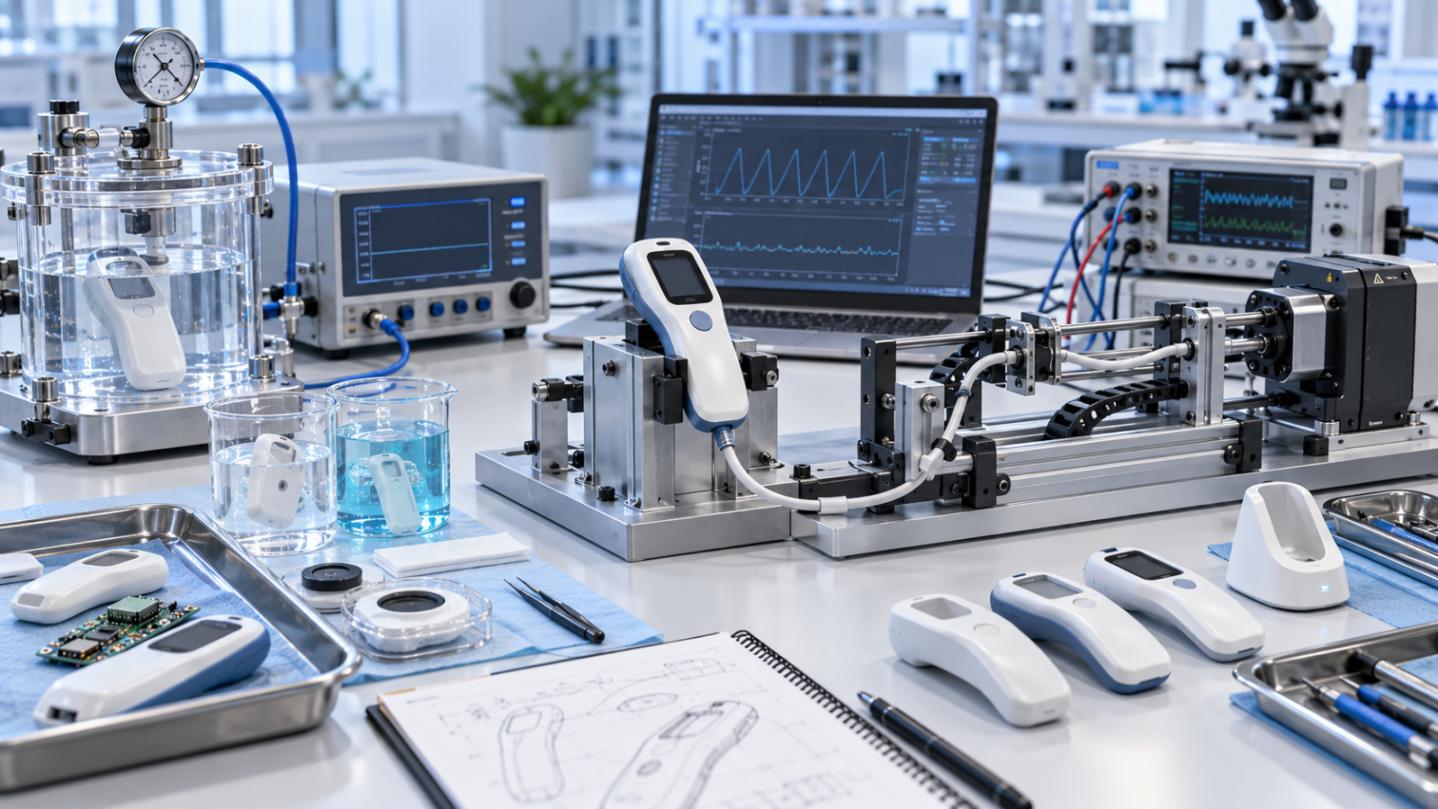
At LKK Design, we integrate all phases of the design, manufacture, and assembly services of a product through mechanical design, prototyping, molding, and contract manufacturing.
Plan Installation, Maintenance, and Fault Recovery
Control Production Transfer
For retrofits, plan shutdown windows, installation order, and temporary production and rollback. Use staged commissioning and a pilot run of the routine production.
Design for Serviceability
Specify:
• Parts, access to replace components, and maintenance tasks.
• Calibration intervals and fixtures that confirm calibrations.
• Save and restore programs after jams or service interruptions.
• Training and supplies of replaceable components, and maintenance service.
Enter the failure rates and lengths of repairs. The maintenance access and the troubleshooting steps affect the availability of production.
Verify Output Under Agreed Operating Conditions
Set Production Process Design Services approval criteria.
Wherever required, interface, safeguard, and operational verification should be done by site and factory acceptance tests. Production runs should show agreement on materials, SKUs, staffing levels, and duration. First-pass yield and changeover should meet the agreement. Traceability and process stability should be demonstrated. Cpk should be assessed after confirming measurement. Acceptable limits of Cpk should be agreed on. NIST addresses the statistical prerequisites of Cpk.
Apply ISO 12100 where relevant to machinery risk assessment. Confirm applicable electrical, functional-safety, industry, and destination-market requirements. Management-system certification does not establish project performance.
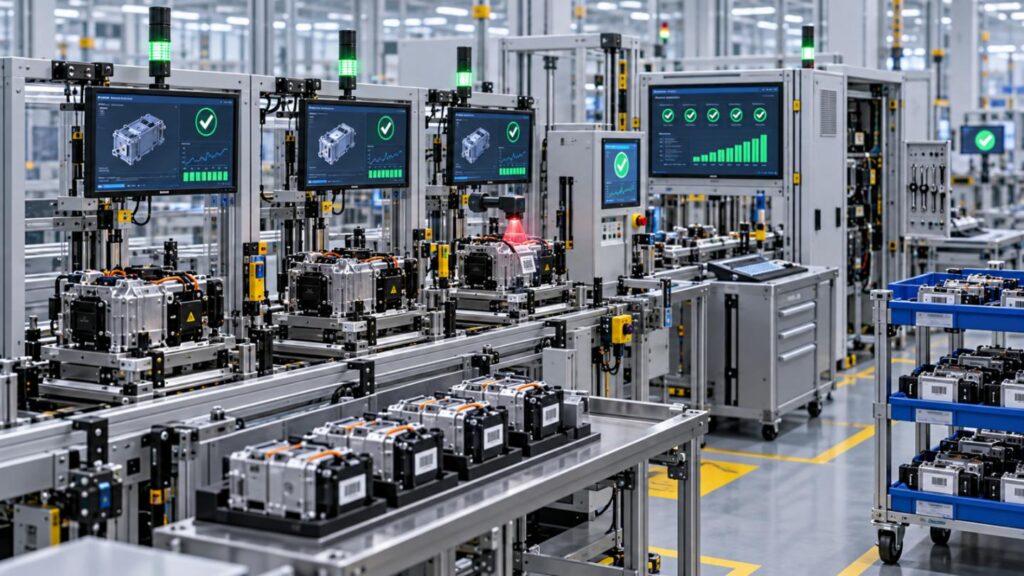
Purchase Defined Deliverables and Accountable Support
Evaluate Potential Providers Based on The Following:
• Deliverables: Process routes, capacities, layouts, equipment, control plans detailed at process level.
• Scope: Fixtures, programming, commissioning, training, and support for initial runs.
• Ownership: Source files, simulation models, programs, production documentation.
• Accountability: Milestones, change control and remedial work for failed tests.
• Economics: Integration costs, losses, maintenance costs, start-up costs, and losses due to low demand
To do this step in the production process, LKK Design will need production demand forecasts with precise quality expectations and factory constraints and constraints with drawings. We can provide detail design (detailed engineering) for the production services scope to align the product and production.
FAQs
Q1. What Do LKK Design’s Production Process Design Services Include?
LKK Design’s manufacturing engineering scope includes process planning, workstation layout simulation, line balancing, tooling readiness, and quality-control planning. Project deliverables should define the required process routes, equipment interfaces, inspection methods, and production-readiness criteria.
Q2. What Information Should We Provide Before Starting a Project With LKK Design?
Prepare product drawings, 3D models, BOMs, critical quality requirements, expected volumes, and SKU mix. For existing production lines, include layouts, equipment details, cycle-time records, downtime history, and common defects.
Q3. How Does LKK Design Connect Product Design With Production Process Planning?
LKK Design combines industrial and mechanical design with DFM, prototyping, tooling, and manufacturing engineering. This allows component geometry, tolerance requirements, and assembly access to be reviewed alongside the intended production method.
Q4. Can LKK Design Help Identify Production Bottlenecks?
LKK Design’s production-line engineering covers line balancing and bottleneck analysis. A useful assessment examines station cycle times, material availability, testing capacity, changeovers, and rework to determine which constraints limit good-part output.
Q5. How Should We Compare Automation Options With LKK Design?
Ask LKK Design to compare manual, semi-automatic, and automatic configurations using the same production assumptions. Review volume stability, product maturity, incoming-part consistency, staffing, maintenance requirements, and total cost before selecting equipment.
Contact Us



- 20+ Design Industries Serviced
- 200+ Product Categories
- 1,000+ Industry Leaders Served
- 10,000+ Products Successfully Launched

Founder and Chairman of LKK Design Group
Ready to get started? Connect with us today!
 Talk to Our Team