


 Home /
 Mold Development Services
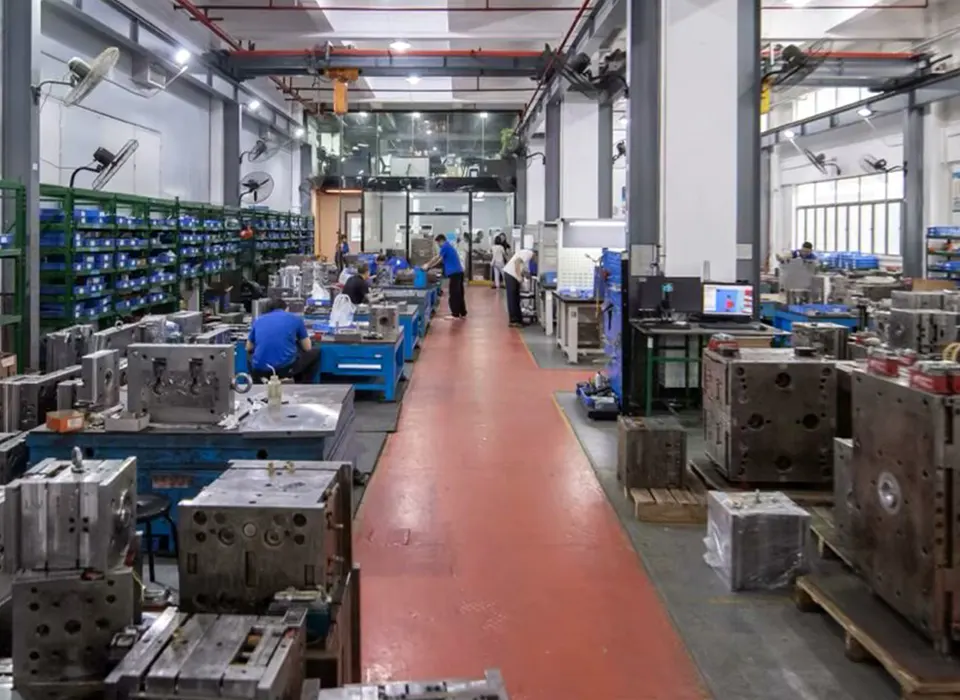
Tooling solutions include injection/die-casting/stamping mold design and manufacturing. Using S136 tool steel and hot runner systems, we achieve ±0.005mm accuracy and 100,000+ cycles. Accelerate pilot runs for automotive, electronics, and medical components.
 Get an Instant Quote
  All uploads are secure and confidential.
 Core Manufacturing Process
Mold Design
-
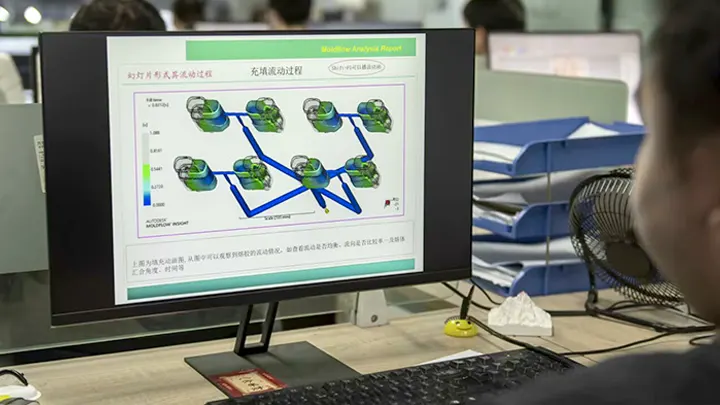
 Process: 3D parting design, Standard mold base selection (DME/HASCO), Conformal cooling channel optimization
 -
Accuracy: ±0.005mm for critical mating surfaces
-
Validation: FEA structural strength verification
CNC Cavity Machining
-
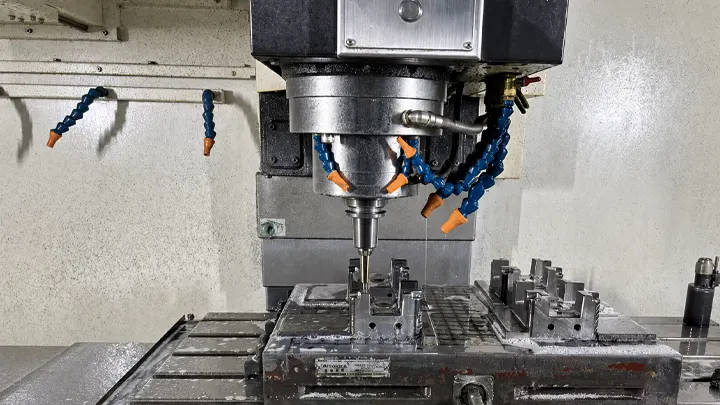
Equipment: 5-axis CNC (DMG MORI, ±0.005mm accuracy)
-
Material: Tool steels (NAK80/S136/H13)
-
Process: Roughing (0.3mm stock) → Semi-finishing (0.1mm) → Finishing
-
Surface Finish: Ra≤0.4μm after finishing
Copper Electrode Machining
-
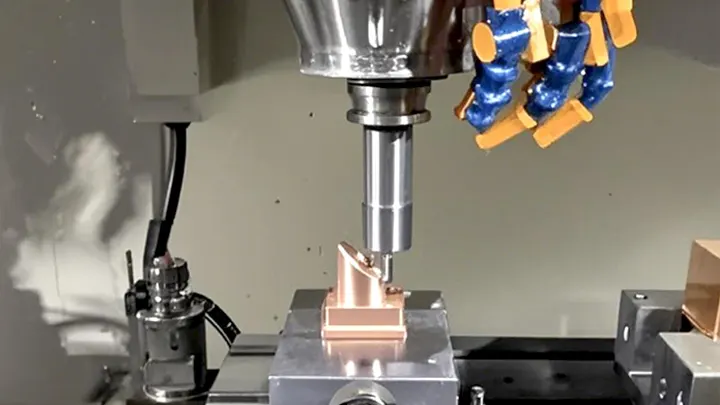
Purpose: EDM for complex cavities/fine textures
-
Equipment: High-speed engraving machine (±0.003mm)
-
Electrode Wear: ≤0.1% per discharge
-
Key Parameter: Electrode scaling 0.05-0.15mm (spark gap compensation)
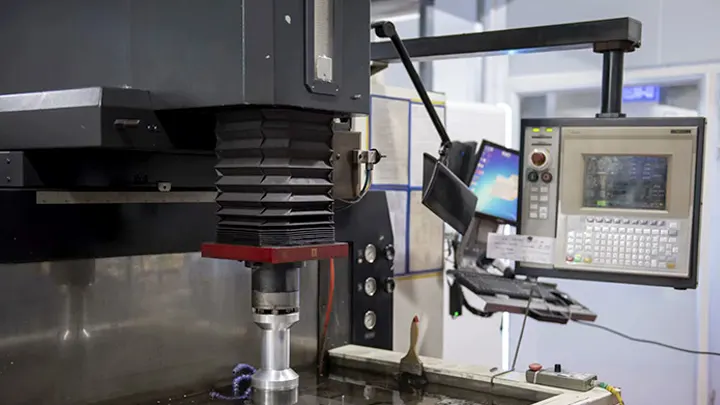
Electrical Discharge Machining (EDM)
-
Equipment: Mirror EDM (Sodick AG60L, Ra≤0.1μm)
-
Parameters: Pulse width 2-100μs, current 1-50A
-
Applications: Deep slots/narrow gaps/surface textures
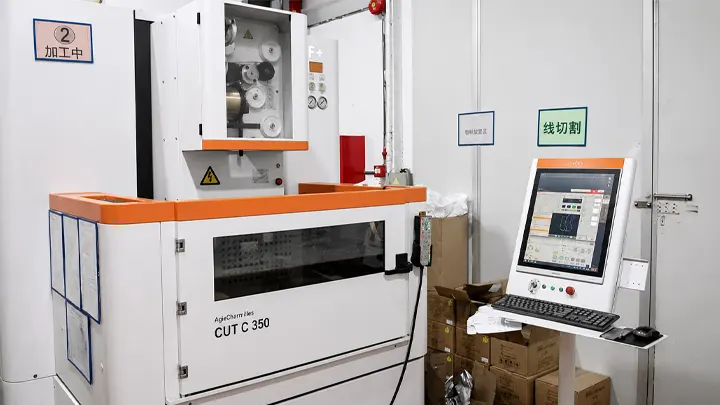
Wire-Cut EDM
-
Equipment: Slow wire-cut EDM (±0.003mm)
-
Wire Diameter: Φ0.02-0.3mm (brass/coated)
-
Applications: Precision inserts/special-shaped holes
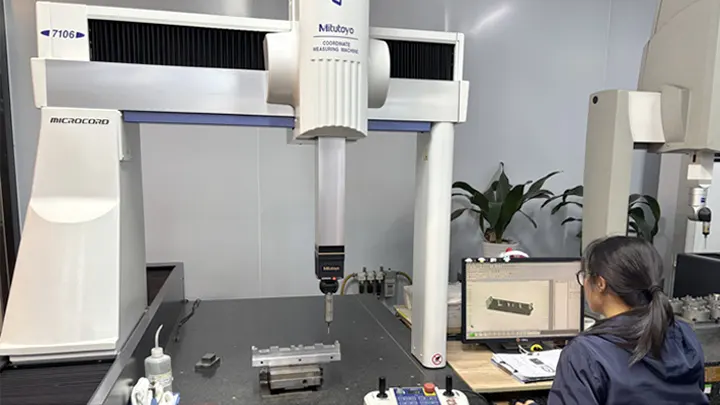
Inspection
-
Dimensional: CMM (±0.002mm, ISO 2768)
-
Surface: White light interferometer (Ra≤0.1μm)
-
Material: Spectrometer for alloy verification
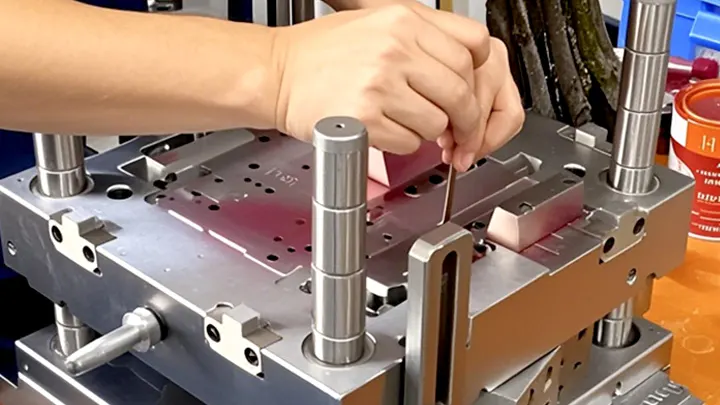
Mold Assembly
-
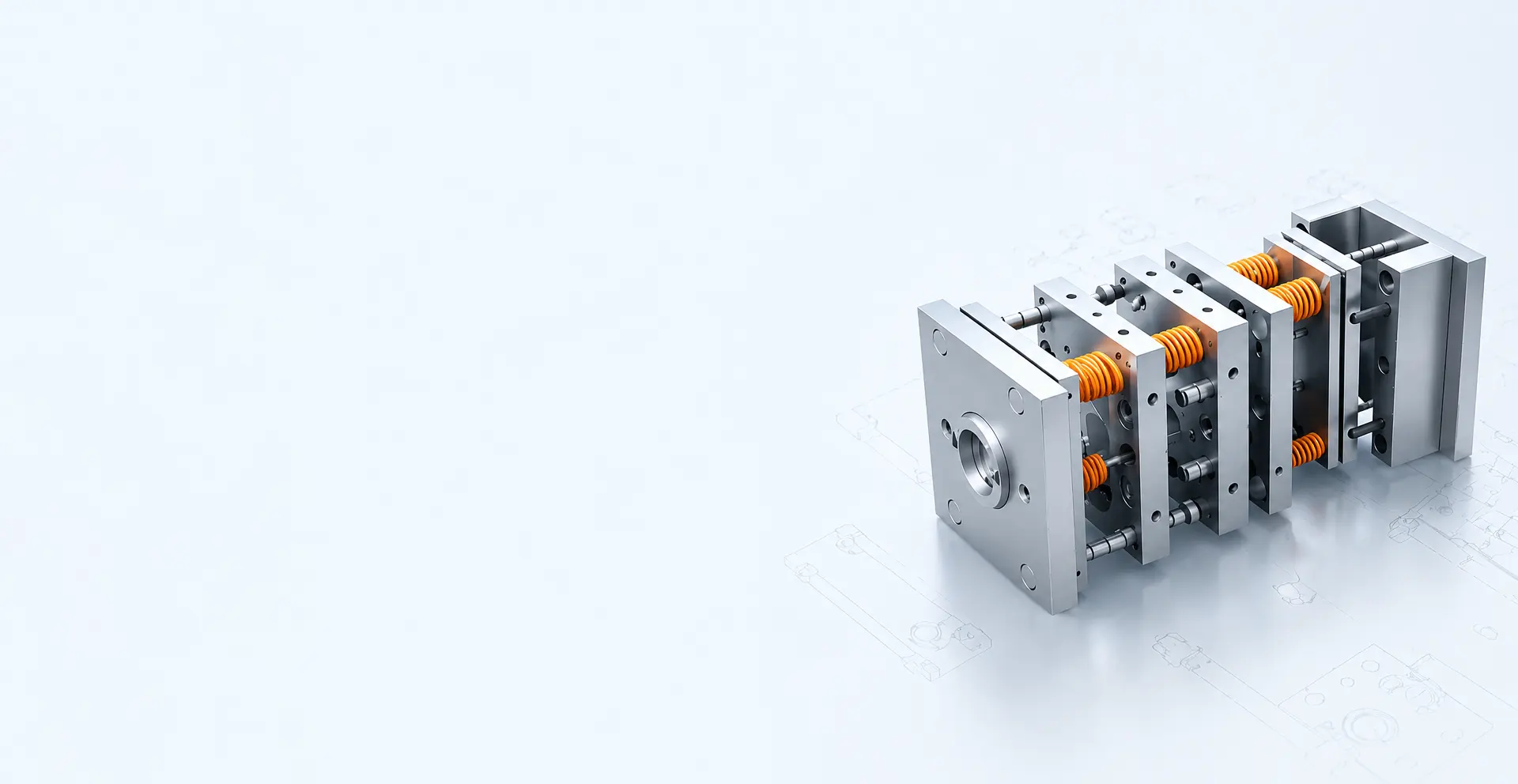
Key Steps: Core/cavity alignment (gap≤0.01mm), Ejection system smoothness test (≤5N resistance), Cooling system pressure test (0.5MPa/30min)
-
Tools: Laser interferometer for alignment
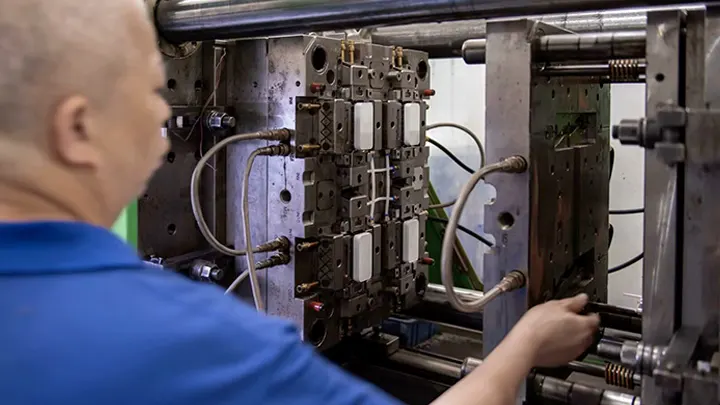
Trial Molding
-
Validation: Process stability (pressure/temp variation ≤2%), Dimensional yield (CPK≥1.67), Surface quality (no flow marks/sinks)
-
Equipment: Injection press (50-3000T clamping force)
New Product Development Process
Design for Manufacturing. From Concept to Mass Production.

Concept
(Product Definition Consultancy)

EVT
(Engineering Verification Test)

DVT
(Design Verification Test)

PVT
(Production Verification Test)

MP
(Mass Production)
Engineering Challenges in Mold Development
- Dimensional Drift Over Time
- Tolerance deviation increases
- Part accuracy declines
- Rework costs rise
Repeated thermal cycles cause material expansion and contraction.
- Surface Quality Instability
- Flow marks
- Sink marks
- Flash formation
Surface defects often originate from tooling imperfections.
- Mold Wear and Unexpected Failure
- Friction points
- Stress concentration
- Improper steel selection
High-volume production causes mechanical wear.
Get an Instant Quote Global Recognition & Regulatory Compliance
We combine award-winning industrial design expertise with rigorous global regulatory compliance, empowering your products to access global markets and earn industry recognition seamlessly.
Global Design Awards & Honors






Global Certification







Why Our Mold Development Approach Is Different
-
 Design-Driven Tooling Strategy
Tooling is developed during the product engineering phase, allowing for earlier risk detection, fewer redesigns, and faster project timelines.
-
 Precision-Oriented Manufacturing
Mold components are produced under strict dimensional control, ensuring high repeatability, stable geometry, and reduced post-processing requirements.
-
 Lifecycle-Focused Engineering
Molds are engineered not just for initial production but for long-term reliability, including maintenance accessibility, wear prediction, and tool longevity planning.
-
 Integrated Production Support
We provide continuous support through the entire production cycle, ensuring that molds perform consistently and meet evolving production needs.
Build Precision Tooling That Performs Over Time
Engineered molds designed for accuracy, durability, and scalable manufacturing.
Get an Instant Quote -
 Precision mold architecture improves product consistency.
 -
Thermal balance engineering enhances dimensional stability.
-
Simulation-driven tooling reduces trial risk.
-
Durable mold systems support long-term production efficiency.
Mold Development Workflow
Product geometry is translated into tooling structure.
-
Mold feasibility validation
-
Architecture modeling
-
Motion mechanism definition
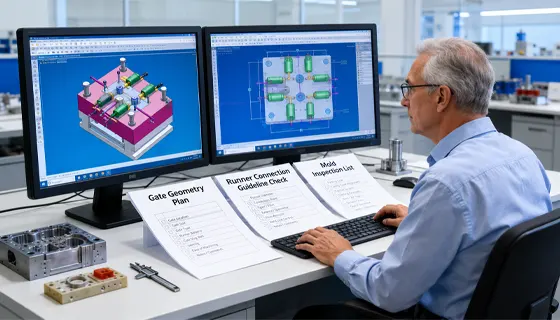
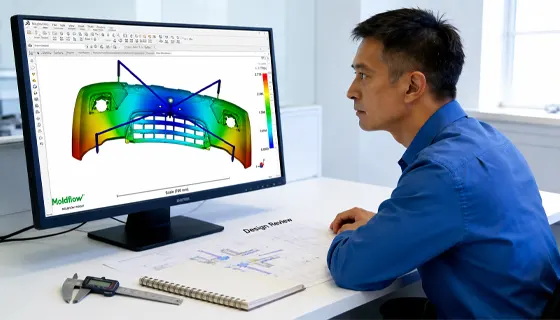
Digital validation reduces physical trial risk.
-
Flow simulation
-
Cooling performance modeling
-
Structural stress analysis
Tool components are manufactured under controlled tolerances.
-
CNC precision machining
-
EDM processing
-
Surface finishing
All mold components are assembled and fine-tuned.
-
Mechanical alignment
-
Clearance optimization
-
Functional verification
Initial molding trials validate tool performance.
-
Sample part evaluation
-
Dimensional validation
-
Defect analysis




Trusted by Leading Businesses



 Get an Instant Quote

LKK Design: Your Partner Across Every Product Stage
Product development is not a linear process. Different challenges emerge at different stages — from early concept validation to engineering execution and large-scale manufacturing. LKK Design provides targeted support at each stage, helping teams move forward with clarity, efficiency, and confidence.
- Purpose: EDM for complex cavities/fine textures
- Equipment: High-speed engraving machine (±0.003mm)
- Electrode Wear: ≤0.1% per discharge
- Key Parameter: Electrode scaling 0.05-0.15mm (spark gap compensation)
Get an Instant Quote
Got Questions?
-
Q.What does your mold development service include?

Our full-cycle mold development covers mold structure design, 3D modeling, mold flow analysis, mold opening, sample trial, debugging optimization, and mass production technical support.
-
Q.What types of molds can you develop?
We specialize in precision injection molds for plastic parts, including small precision components, large structural parts, multi-cavity molds, and complex appearance molds for consumer hardware.
-
Q.What is the general mold development cycle?
The development timeline varies by mold complexity, part size and structural difficulty. Standard precision molds are completed within 3–5 weeks from design to qualified sample delivery.
-
Q.Do you provide mold flow analysis before mold opening?
Yes. We conduct comprehensive mold flow simulation analysis in advance to predict potential defects such as warpage, shrinkage and weld marks, and optimize mold structure in advance.
-
Q.Will you provide sample testing and debugging after mold opening?
We offer multiple rounds of mold trial, sample verification, parameter adjustment and structural optimization until the finished parts meet dimensional and appearance quality standards.
Let's Create Something Remarkable
Your vision deserves partners who understand excellence. Let's discuss how we can transform your product concept into a market success.


