
 Home /
Concept to Production Guide for Hardware Startups: Engineering a Manufacturable Product


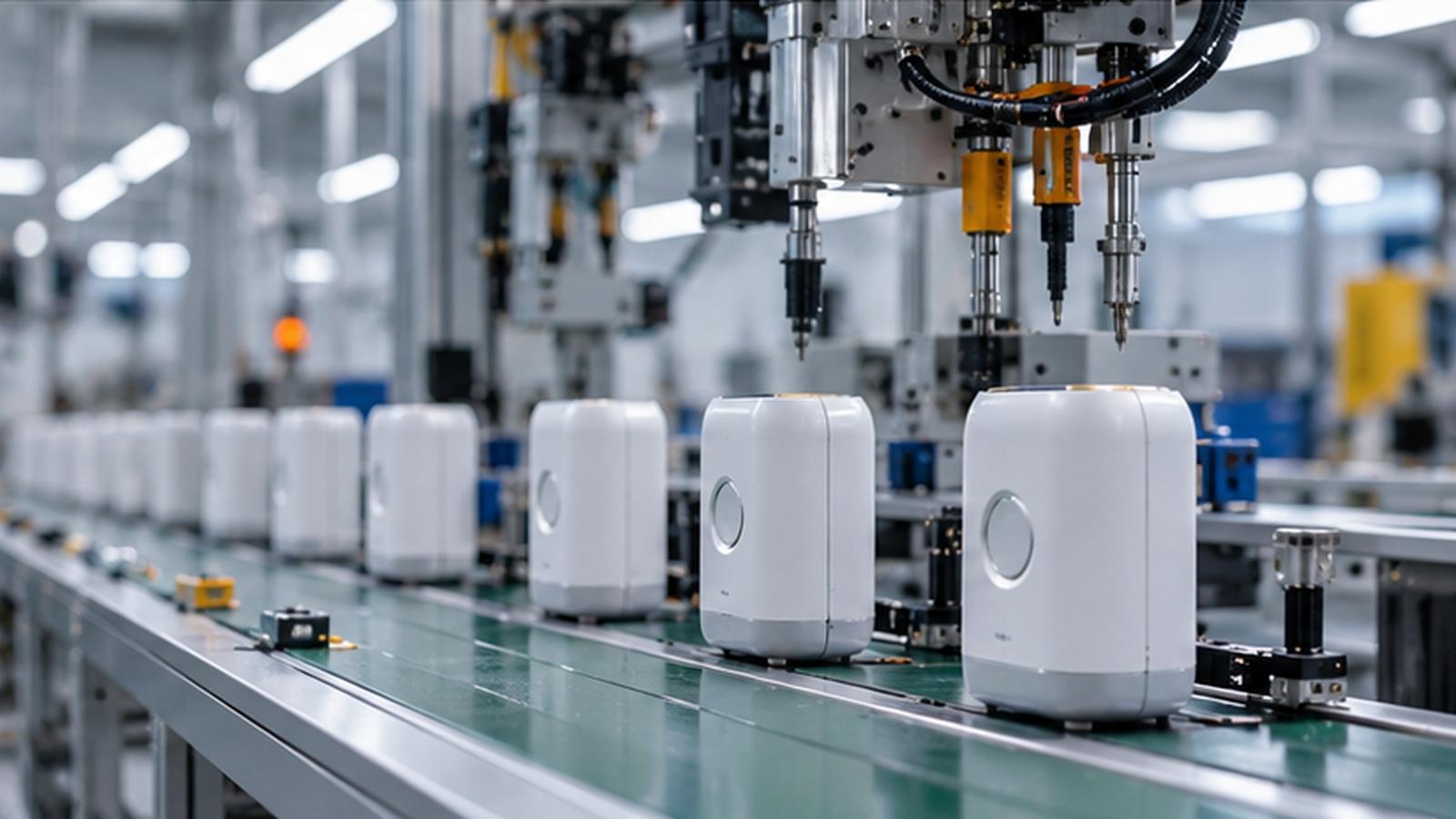

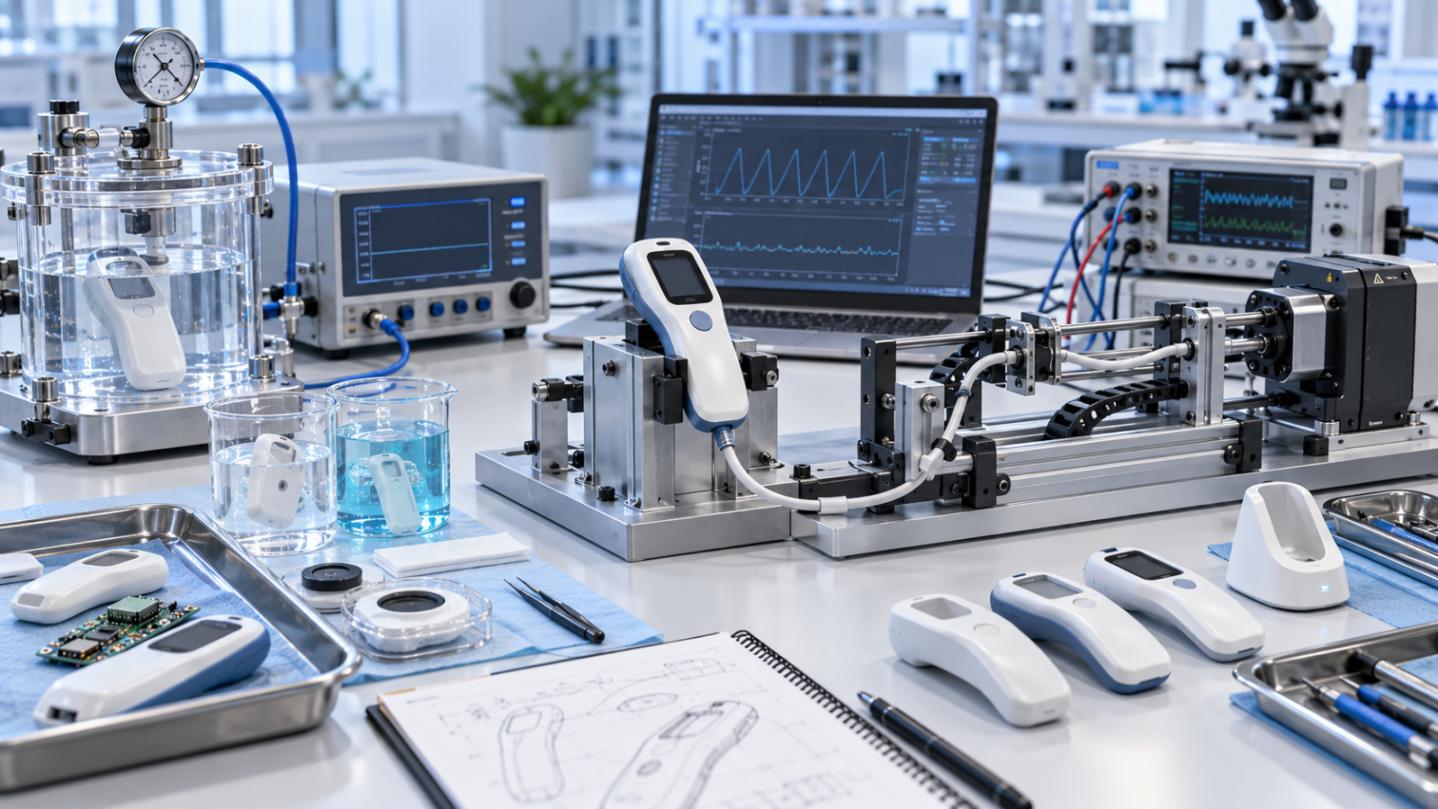
A practical Concept to Production Guide for Hardware Startups must answer more than “Does the prototype work?” The harder question is whether a product can meet its specification repeatedly, with available components, controlled processes, and sustainable unit economics. At LKK Design, we approach concept development and manufacturing planning as connected engineering decisions—not a drawing-to-factory handoff.
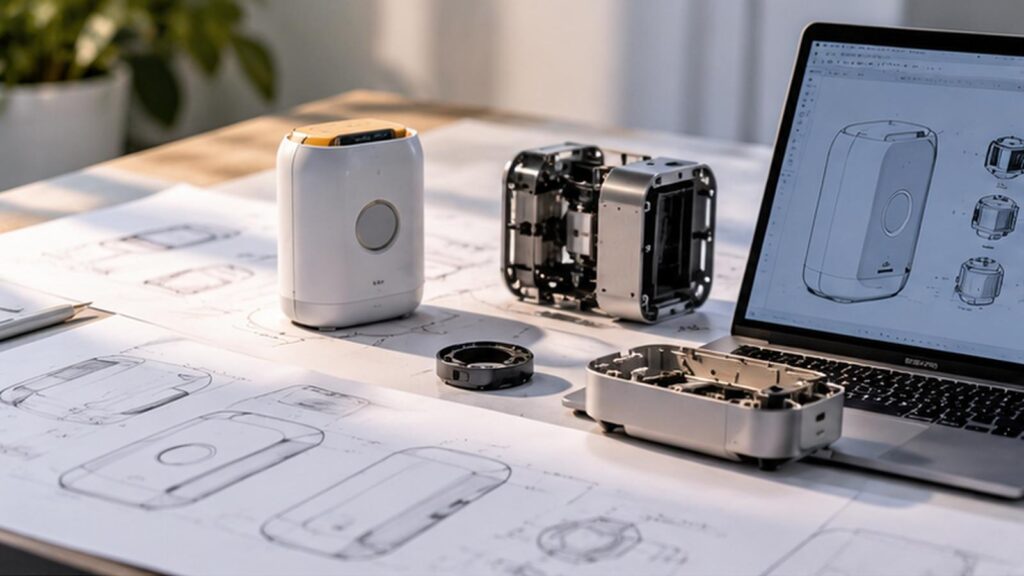
1. Translate User Needs into Technical Specifications
Understand User Requirements
Prioritize issues the user can identify during a market interview. Illustrate each using a “representative use case” in a PRD and define acceptable verification(s).
• Functional: Connections, sensing and/or actuation accuracy, response time, and firmware logic.
• Physical: Limits of size, weight and other physical constraints, and degrees of protection and/or environmental stresses.
• Commercial: Price and volume targets, and country/region of intended distribution.
• Technical: Runtime, and performance of the system, battery and RF components, thermal design and interconnects, and materials.
Industrial design, engineering and other functions must strike an early balance. Trade-offs, like volume and/or weight constraints on a system, may reduce system volume and/or increase the system weight. This may affect system serviceability and/or duration.
Decision gate: Can the system architecture be validated?
2. Use Prototypes and EVT/DVT/PVT as Investment Gates
A proof of concept (PoC) isolates one uncertain principle; a functional prototype tests subsystems together. Neither establishes repeatable manufacturing. Choose prototype processes according to the question being tested: 3D printing for geometry, development boards for electronics, and production-intent materials when validating fit or durability.
| Stage | Evidence Required | Main Release Decision |
| EVT (Engineering Verification Test) | Electrical/firmware functionality, power and thermal measurements, integration defect log | Is the architecture technically sound? |
| DVT (Design Verification Test) | Requirements-based reliability, environmental, safety and pre-compliance test reports | Does the design meet its specification? |
| PVT (Production Verification Test) | Tooling trials, assembly instructions, first-article inspection, pilot yield and process data | Can the factory reproduce approved units? |
| MP (Mass Production) | Incoming controls, traceability, quality records and change management | Can output remain controlled at volume? |
Failures should become tracked engineering changes with owners and retest criteria. For example, an EVT thermal issue may force a PCB-layout or enclosure change, which in turn alters DVT test samples and mold design. This is why design freeze must follow evidence, not a target date.
3. Overcome the Gap Between Prototype and Production with DFM
Consider Product as a System of Manufacturing
DFM utilizes a broad spectrum of concepts to evaluate part and product design to include manufacturing processes and the tools and equipment used to perform those processes. DFA focuses primarily on the number of parts and how they come together. DFT defines the means to perform in-line process checks.
A 3D-printed housing can function perfectly yet fail as an injection-molded design: uneven walls risk sink marks or warpage; insufficient draft complicates ejection; tight stack-up tolerances cause assembly interference.
Before tooling approval, review:
• Parting lines, draft, wall thickness, ribs and undercuts;
• PCB mounting, connector insertion, sealing surfaces and service access;
• Critical-to-quality dimensions, measurement methods and acceptance limits.
At LKK Design, mechanical, electronic and manufacturing engineering inform these reviews together. The deliverable is not only revised geometry but a documented production route and unresolved-risk list.
4. Model Real Costs, Supply Risk and Compliance
A Concept to Production Guide for Hardware Startups should distinguish one-time expenditure from recurring production cost. NRE, mold tooling, certification and test-fixture development are startup investments; BOM, assembly labor, inspection, packaging and expected rework affect each sellable unit. Amortizing tooling across an optimistic volume forecast can make a weak margin look attractive.
| Variable | Question for the Purchasing Decision |
| MOQ and lead time | How much cash is tied up before sales, and which component limits the schedule? |
| Approved Vendor List (AVL) | Is a qualified second source available for critical parts? |
| Yield and rework | What is the cost per accepted—not merely assembled—unit? |
| Change control | Will a component substitution require new testing or documentation? |
Plan regulatory work alongside design. Product type and destination determine whether requirements such as FCC authorization, EU EMC/RED, RoHS, electrical safety or battery transport testing apply. A certified radio module does not automatically certify the finished device.
Decision gate: Is there a costed BOM, component-availability plan, applicable compliance matrix, and contingency for redesign?
5. Qualify the Pilot Build and the Development Partner
Establish Measurable Production Readiness
Pilot production should use representative tooling, operators, fixtures and work instructions. Measure first-pass yield (FPY), categorize defects, verify first articles, and close corrective actions. Use revision-controlled drawings, firmware images, test limits and supplier records so the approved configuration can be reproduced.
Hardware Development Model Comparison
Partner choice is a case of make-versus-buy:
• Make: Requires capability across mechanical, electronic and firmware design as well as quality control and sourcing.
• Buy: Outsourcing to specialized design and contract manufacturing (CM) vendors requires clear ownership of the design-transfer process and active coordination between vendors..
• Partner: Integrated development partners connect design, prototyping and manufacturing under one roof. Founders should negotiate change orders, define quality standards and IP agreements.
Ask for sample verification plans, DFM outputs, tooling ownership terms, pilot acceptance criteria, capacity assumptions and defect-escalation processes—not just a unit quote.
Production should begin only when design configuration, supply readiness and process controls have been approved.
From Engineering Validation to Production Readiness
The value of a Concept to Production Guide for Hardware Startups lies in these evidence-based decisions. At LKK Design, we connect product strategy, industrial design, engineering, prototyping and manufacturing support so hardware teams can evaluate technical and production risks before committing to scale. Explore our approach to planning your next development milestone.
FAQs
Q1. What services does LKK Design provide for hardware startups?
LKK Design provides product strategy, industrial design, mechanical and electronic engineering, prototyping, DFM, and manufacturing support.
Q2. Can LKK Design support hardware startups from concept to mass production?
Yes. LKK Design offers an integrated development process covering concept validation, EVT, DVT, PVT, and mass production.
Q3. How does LKK Design validate a hardware product concept?
LKK Design uses product requirements, concept prototypes, feasibility assessments, and risk analysis to evaluate technical and commercial viability.
Q4. How does LKK Design support engineering verification testing (EVT)?
LKK Design develops engineering prototypes, verifies technical specifications, identifies integration issues, and supports engineering corrections.
Q5. What does LKK Design evaluate during design verification testing (DVT)?
DVT focuses on verifying product requirements, performance, reliability, and design readiness before production validation.
Contact Us



- 20+ Design Industries Serviced
- 200+ Product Categories
- 1,000+ Industry Leaders Served
- 10,000+ Products Successfully Launched

Founder and Chairman of LKK Design Group
Ready to get started? Connect with us today!
 Talk to Our Team