
 Home /
New Product Innovation Company: From AI Concept to Production




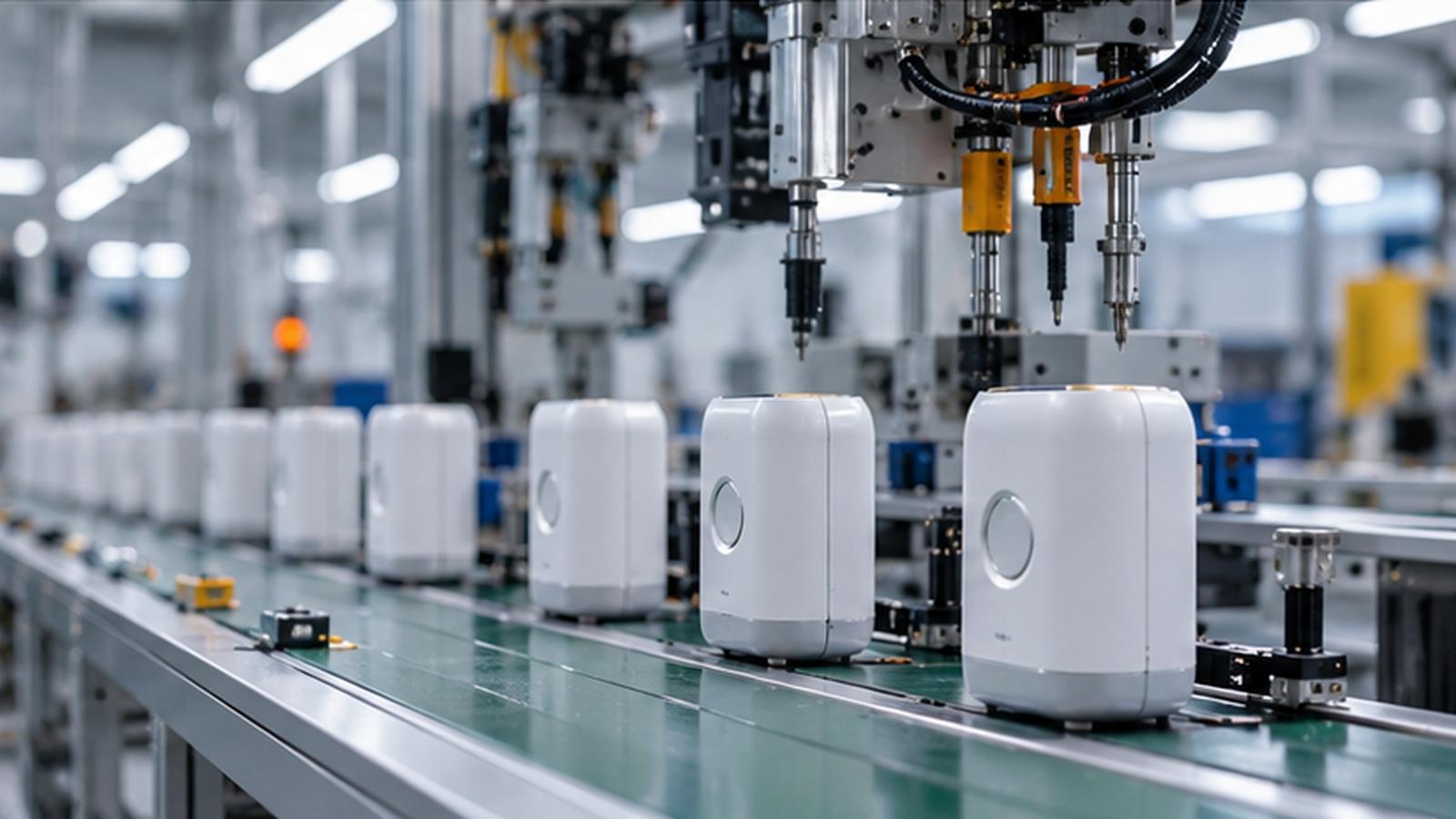
Development of AI hardware integrates performance and other factors related to electronics, mechanics, firmware, and manufacturing. A successful first demo is one early milestone. To reach production, a level of demonstrated performance has to be consistent within reasonable parameters pertaining to power, thermal, cost, and reliability.

As a New Product Innovation Company, LKK Design approaches development through product definition and engineering-informed planning. Our product strategy services connect user research, measurable requirements, architecture planning, and manufacturing considerations before teams commit to detailed development.
1. Define the Product Before Selecting the Processor
Turn User Expectations Into Acceptance Criteria
“Fast recognition” and “long battery life” are insufficient specifications. A development brief should identify the workload, operating conditions, and measurement method.
| Requirement | Specification to Establish | Development Implication |
| Recognition performance | False-positive and false-negative limits under representative conditions | Determines evaluation data and acceptance thresholds |
| Response time | End-to-end latency, including capture and preprocessing | Guides architecture and processor selection |
| Battery life | Operating hours under a defined duty cycle | Establishes average power budget |
| Environment | Lighting, noise, temperature, distance, and connectivity | Guides sensor and enclosure decisions |
| Commercial viability | Target unit cost, volume, and support period | Shapes tooling and lifecycle economics |
When evaluating defects and false rejects for a process, both need to be assessed separately. Looking at the end result for the entire process will not be sufficient.
In a New Product Innovation (NPI) Company, a responsibility matrix should be implemented to define ownership for training data, model development, and model evaluation. This work has to be included as a part of the project scope or outsourced to a specialist partner.
2. Compare Edge, Cloud, and Hybrid AI
Architecture selection determines both device requirements and recurring costs.
| Dimension | Edge AI | Cloud AI | Hybrid AI |
| Processing | On-device inference | Remote inference | Tasks divided between device and cloud |
| Connectivity | Core inference can work offline | Required for remote processing | Depends on the function |
| Latency | Local execution and data acquisition | Adds network and server variability | Depends on routing |
| Hardware burden | Compute, memory, cooling, and power | Local capture and communication remain necessary | Supports both local and remote workloads |
| Lifecycle costs | Hardware and device maintenance | Connectivity, hosting, and inference charges | Both, plus integration |
| Data controls | Local storage and access management | Transmission, access, and retention management | Explicit rules for each data flow |
A New Product Innovation Company should compare total ownership cost at expected usage levels. A lower-cost processor may create higher cloud expenditure over the product’s service life.
For processor evaluation, benchmark the intended model and software stack. Advertised compute throughput alone does not establish application performance.
3. Co-Design the Model Workload and Physical Device
Resolve Power, Thermal, and Sensor Constraints Together
AI performance depends on the complete signal path: sensor capture → preprocessing → inference → product response.
The key engineering checks comprise:
• Memory: Budget and allocate for model weights and account for working buffers, software, and updates.
• Sustained Operation: Measure latencies after the system has thermally stabilized and where, once the system has reached its throttling limit, throughput is not affected.
• Power: Evaluate power consumption at idle, sensing, inference and wireless transmission.
• Input Quality: Evaluate Camera Optics, Viewing Angles, Microphone Openings and Installation Tolerances.
• Model Optimization: Check accuracy and latency post deployment changes and quantization.
An enclosure that becomes a hindrance to cooling, isn’t able to sustain inference. Similarly, changing the sensor attributes, may alter the Input characteristics, even if the Sensor resolution remains the same.
At LKK Design, our product architecture planning brings industrial design, mechanical layout, electronics, and tooling strategy into one development framework. This supports early review of manufacturing constraints alongside the intended user experience.
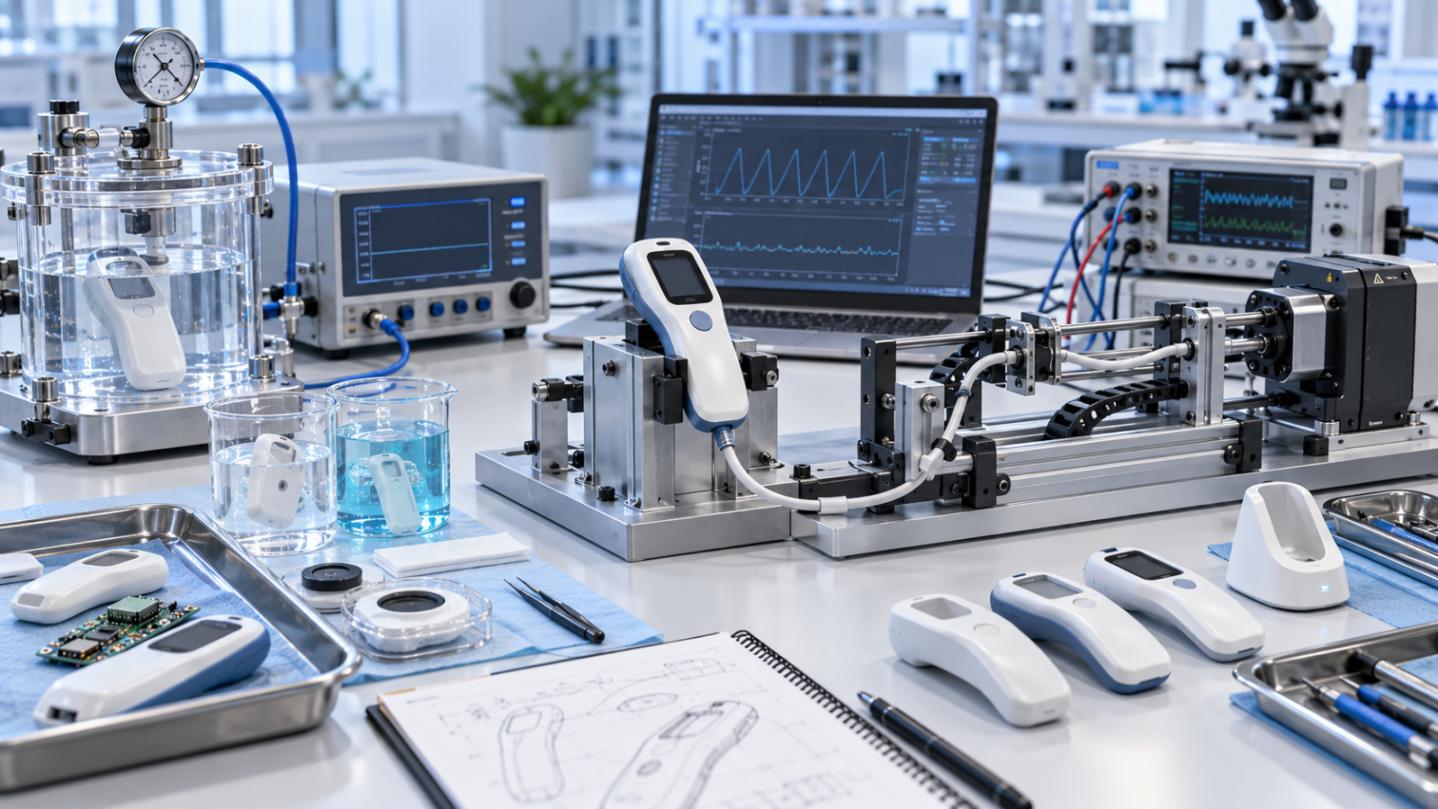
4. Use Prototype Stages as Evidence Gates
A New Product Innovation Company should define what each build must demonstrate before authorizing the next investment.
| Stage | Primary Question | Required Evidence |
| Proof of Concept | Is the proposed function technically feasible? | Representative data, candidate-hardware results, initial resource budget |
| Engineering Validation | Does the integrated system operate reliably? | Power integrity, thermal behavior, sensor integration, firmware stability |
| Design Validation | Does the intended design satisfy requirements? | Environmental, mechanical, usability, and applicable compliance results |
| Production Validation | Can the process repeatedly build acceptable units? | Pilot yield, calibration repeatability, fixture verification, defect records |
Stage terminology varies; documented exit criteria matter more than labels.
Ensure AI Results are Reproducible
Capture the hardware/model revision and firmware as well as the configuration for preprocessing. Evaluate data should be provided, however, it should be distinguished from training data.
Document network interruptions and poor quality inputs as well as inputs that fall beyond acceptable limits. Capture the observable failure response as an alert, a retry, a constraint on the functionality, or other application-specific response.
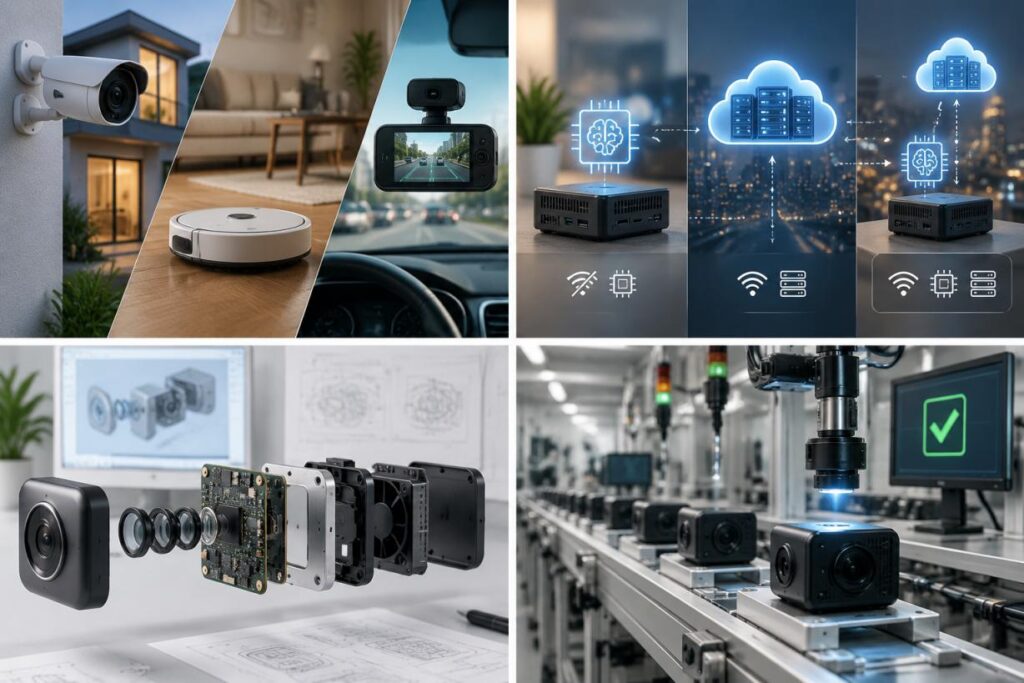
5. Capture the Production Process Before the Design Freeze
Construction readiness is not just about CAD files.
• DFM: Analyze the stack of tolerances, wall thickness, assembly, tooling and fasteners.
• Continuity of Supply: Identify alternatives and state what substitutions require revalidation.
• Testability, Reprogramming, Calibration and Limiting Functionality should be accommodated.
• Traceability: Ensure that each component has a unique hardware, firmware and model identification.
Create a policy that defines the parameters for updating the system and the supporting services.
A New Product Innovation Company should distinguish Factory Screening from Applications Validation. Both require Complete Test Coverage and Electric Checks cannot determine Field Identification.
6. Evaluate a New Product Innovation Company by Its Deliverables
Ask for a defined package covering:
• Requirements, architecture rationale, and cost assumptions.
• Design files, BOM, interface specifications, and test records.
• Model, dataset, software, and intellectual-property responsibilities.
• Tooling ownership, pilot acceptance criteria, and change control.
• Production handover and post-launch maintenance scope.
LKK Design’s product strategy offering connects planning with design, prototyping, and production support. Confirm project-specific responsibilities and deliverables before development begins.
Move Toward Production With Clearer Decisions
Reliable AI hardware requires evidence at every transition, from model feasibility to repeatable manufacturing.
For teams selecting a New Product Innovation Company, LKK Design’s product strategy services provide a starting point for discussing application requirements, engineering constraints, and production priorities—so the next prototype answers the questions that matter.
FAQs
Q1. What Does LKK Design Do as a New Product Innovation Company?
LKK Design connects product strategy with industrial design, mechanical and electronic engineering, prototyping, and production support. Its product strategy services include user research, requirement definition, architecture planning, and development roadmaps. Explore LKK Design’s services.
Q2. What Should I Prepare Before Discussing an AI Hardware Project With LKK Design?
Prepare your target application, intended users, operating environment, essential features, target unit cost, expected volume, and launch goals. Share existing prototypes or specifications and identify who will provide the AI model, datasets, and software.
Q3. Can LKK Design Help Define Requirements Before Hardware Development Begins?
Yes. LKK Design’s product strategy scope includes functional requirements, feature prioritization, performance targets, and product scope planning. For AI hardware, the brief should translate these into measurable criteria such as response time, recognition performance, battery life, and operating conditions.
Q4. Can LKK Design Help Compare Edge AI, Cloud AI, and Hybrid Architectures?
LKK Design offers product architecture planning and technology selection guidance. Request an architecture assessment covering connectivity, latency, power, memory, data handling, and operating costs. Confirm the scope of AI-specific benchmarking and any specialist involvement before development starts.
Q5. Does LKK Design Develop the AI Model as Part of Every Hardware Project?
AI model development should not be assumed to be included. Confirm responsibilities for training data, model selection, optimization, evaluation, and deployment in the project agreement. Hardware engineering and AI development need clearly defined interfaces and acceptance criteria.
Contact Us



- 20+ Design Industries Serviced
- 200+ Product Categories
- 1,000+ Industry Leaders Served
- 10,000+ Products Successfully Launched

Founder and Chairman of LKK Design Group
Ready to get started? Connect with us today!
 Talk to Our Team