
 Home /
How to Move from Prototype to Mass Production: An Engineering-Led Guide


A functional prototype proves that a design can work—not that a factory can build it repeatedly at the target cost. Hand-fitting, substitute materials, and one-off testing conceal risks that appear only when tooling, operators, and suppliers are introduced.
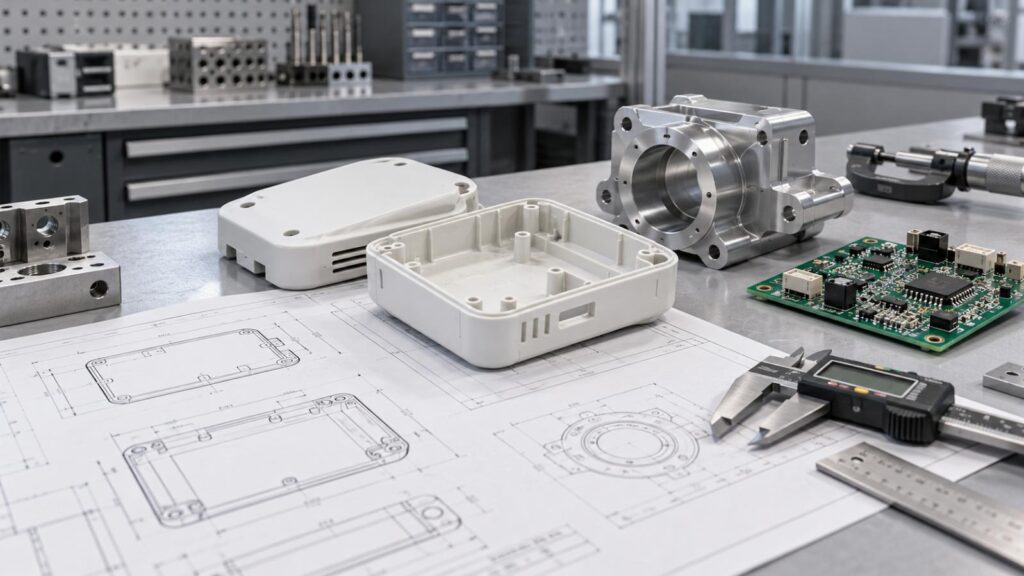
How to Move from Prototype to Mass Production is therefore a controlled engineering release process: verify the product, validate its manufacturing method, and scale only when production data supports the decision.
1. Establish A Production-Ready Design Baseline
Set controlled engineering specifications from prototype findings and create them before requesting a production quotation.
• Product Requirements: Establish measurable performance, environmental, lifetime, safety and aesthetic acceptance criteria.
• Design Documentation: Create and control revisions of CAD models, prepare engineering drawings, provide GD&T, and assembly instructions as well as a structured Bill of Materials.
• Critical Characteristics: Establish limits on dimension, mechanical interfaces, inspection features and traceability requirements.
• Material Validation: For production-grade materials, provide alternatives if any. Compare and Contrast Polymer 3D printing (strength, shrinkage, fatigue, etc.) vs Injection Molding.
Do not freeze the design unless critical test failures are resolved/ tolerances are defined, or component availability ensures fit, or tolerance stacks are defined.
2. Use EVT, DVT, and PVT as Manufacturing Release Gates
Our process at LKK Design is Concept –> EVT –> DVT –> PVT –> Mass Production.
| Stage | Technical Objective | Release Evidence |
| EVT (Engineering Verification Test) | Validate mechanical, electronic, and firmware functions | Test results, failure analysis, resolved critical issues |
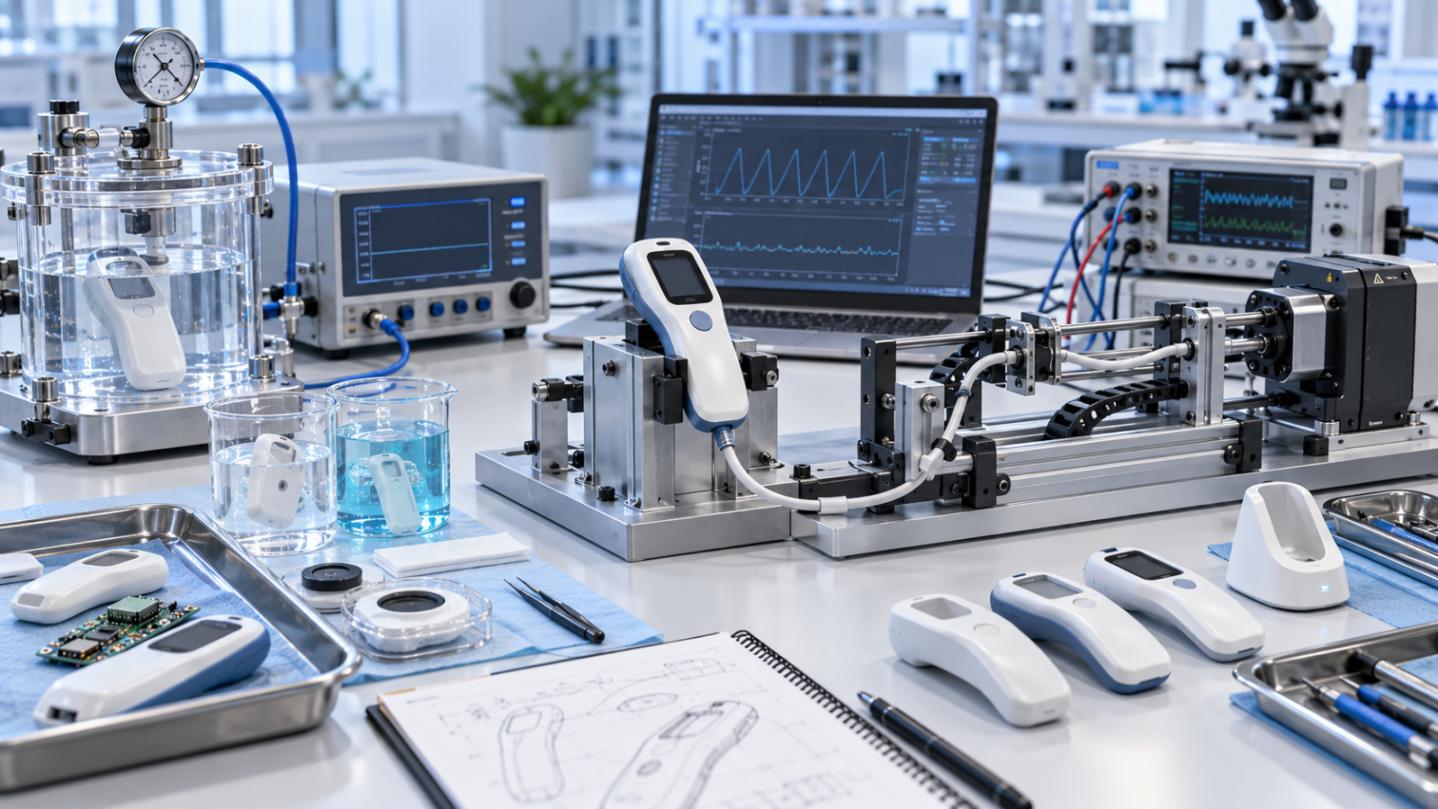
| DVT (Design Verification Test) | Confirm design conformity and reliability | Environmental tests, durability reports, approved design revision |
| PVT (Production Verification Test) | Verify repeatability using intended manufacturing processes | First-article results, pilot yield, cycle-time data, work instructions |
Each stage should contain defined acceptance criteria and documented exceptions to the acceptance criteria.
DVT approval is not considered production release. Production release is only given when the product is assured to be acceptable to the customer.
3. Design for Manufacture and Assembly (DFM/DFA)
Consider key engineering constraints before investing in production tools.
• CNC Machining: Think about tooling limitations and internal corners, finishes and how a part is put together.
• Injection Molding: Think about wall thickness, transitions, draft, gates, weld lines, sink, and undercuts.
• Sheet Metal: Consider bend, material and thickness, sequences, and clearances.
• Assemblies: Consider tolerancing and serviceability, and think about how a product is put together.
Risk and Manufacturing
Not all features on a design require tight tolerances. Define critical to quality (CTQ) features.
At LKK Design, our DFM process assists engineering teams in identifying cost and risk in design and its impact on manufacturing prior to production tooling finalization.
Tooling investment becomes more justified when part/product geometry is stable and the demand for the part/product requires mass production.
When comparing CNC fabrication to molding, the total landed cost of the alternative options, considering several demands, should be compared to quote piece prices.
4. Select Production Processes Based on Volume and Cost
Sustainability and the impact of each component of the supply chain should be analyzed, considering renewability, lifecycle cost and recyclability. Determine the processes that are appropriate for the expected volume. For the required production processes, consider part geometry and other constraints, and the limits of manufacturing.
| Manufacturing Process | Suitable Application | Main Limitations |
| 3D Printing | Prototypes or low volume end use parts | Size and complexity; material choice |
| CNC Machining | Precision parts, small batches | Geometry and tooling |
| Injection Molding | Tens of thousands of parts | Thin walls; draft; and dimensional stability |
| Metal Stamping | Tens of thousands of parts | Limits of sheet metal forming |
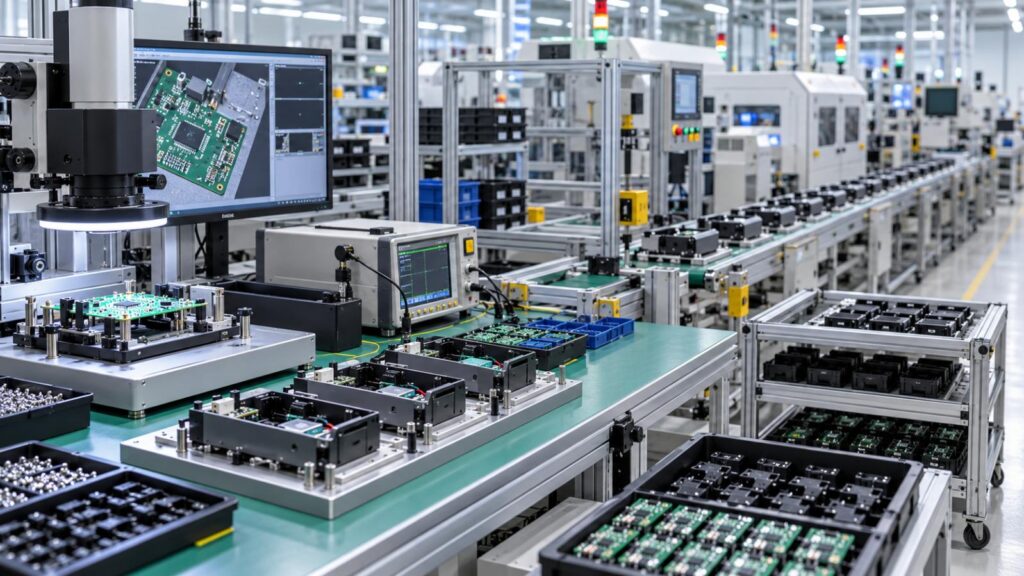
5. Assess Suppliers, Materials and Production Quality
A supply-ready BOM (bill of materials) is not guaranteed with a complete BOM. The availability of components and the capability of suppliers affect production the most.
Supply Chain Qualification
• Lead times and MOQ for critical components should be evaluated against the production plan.
• Evaluate your suppliers’ capability of manufacturing components to the required quality. Inspect components. Identify potential suppliers. Qualify critical components from alternate sources. Do not assume components are interchangeable.
• Establish approved vendor lists, specifications, and change control procedures for materials.
• LKK Design’s manufacturing engineering services cover supply chain integration, BOM cost planning and manufacturing risk assessment.
Quality Control and Process Capability
Quality control and assurance practices need to progress from inspecting individual prototypes to control of production process.
| Quality Metric | Manufacturing Significance |
| First-Pass Yield (FPY) | Percentage passing without rework |
| Scrap/Rework Rate | Lost material and labor |
| Measurement System Analysis | Inspection gage repeatability and reproducibility |
| Cp/Cpk | Process capability and specification limits |
| First Article Inspection (FAI) | Confirm initial production conformance |
Design Failure Mode Effects Analysis (DFMEA) to assess risk and determine appropriate actions.
First-article inspection or FAI does not validate process capability. Capability analysis of a process is reliant on a stable and suitable measurement system.
Regulatory verification must also match the product and market. Appropriate regulations for the product may include medical device, REACH, RoHS, or FCC regulations. Having ISO 9001 certification does not validate that a product meets the regulations.
6. Validate Pilot Production
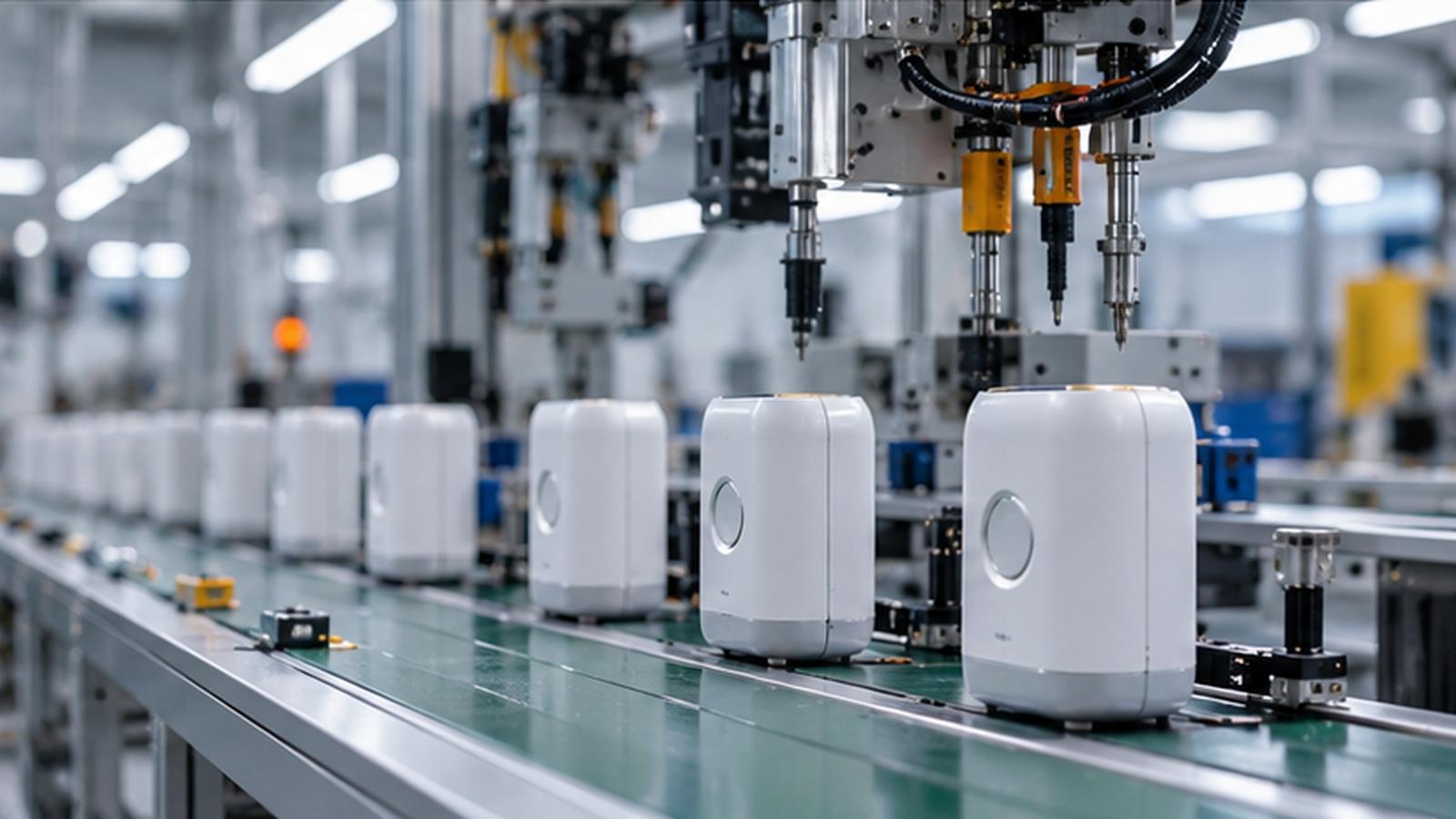
The final determination in “How to Move from Prototype to Mass Production” will be based on learnings from pilot production using the intended tools, materials, methods of assembly, and inspection.
Mass Production Readiness Checklist
Prior to any volume production, confirm the following:
• Design Readiness: Drawing approval, completed BOM, verification of CTQs, closed critical Engineering issues.
• Process Readiness: Validated tooling, standardized work, trained operator, and equipment validation.
• Supply Readiness: Approved suppliers, materiel availability, and contingency plan.
• Quality Readiness: First article inspection, pilot FPY, root cause analysis, inspection and measurement plans, and action plans.
• Commercial Readiness: Unit cost target, capacity, logistics and delivery commitment.
Identify the reason for any gap between actual work station cycle time and required takt time. Repeat production trials for repeated changes in process and/or material.
When stabilized, slowly but incrementally increase volume, and evaluate yield, defects, and on-time delivery. Mass production stability cannot always be assured by a successful pilot batch.
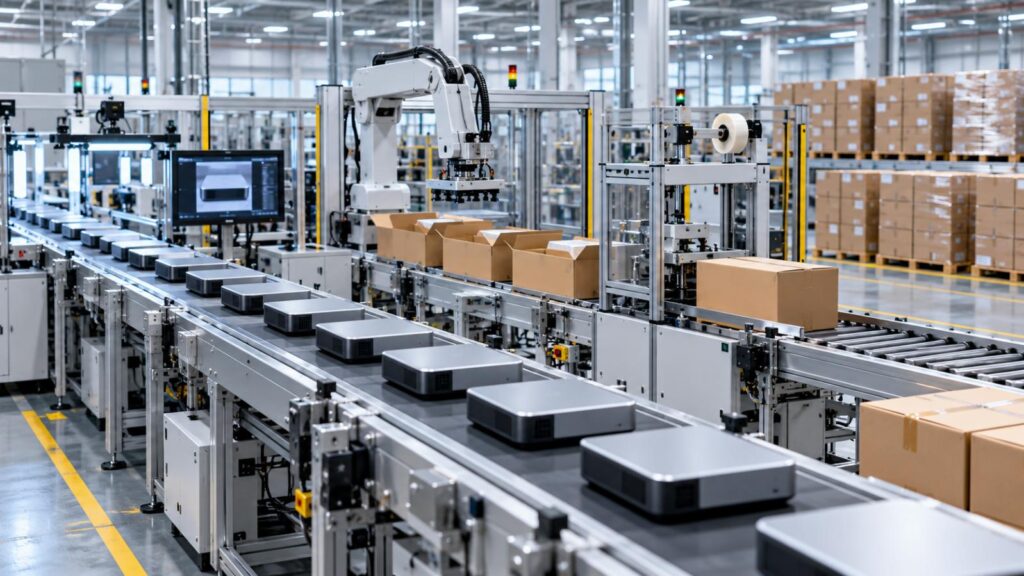
LKK Design‘s Approach to Mass Production
LKK Design integrates DFM, manufacturing and tooling engineering throughout product development for EVT to PVT transitions.
Our engineering-led approach helps clients evaluate risks associated with mass production and establish the next steps prior to scale-up, from the verification of Production readiness.
To understand your product requirements and help plan for your next development step, contact us at LKK Design.
FAQs
Q1: How does LKK Design help companies move from prototype to mass production?
LKK Design integrates product engineering, prototyping, DFM, tooling development, pilot production, and contract manufacturing to support the transition to volume production.
Q2: Does LKK Design support EVT, DVT, and PVT testing?
Yes. LKK Design follows a structured Concept–EVT–DVT–PVT–Mass Production process to verify engineering performance, design requirements, and manufacturing readiness.
Q3: How does LKK Design evaluate whether a prototype is ready for manufacturing?
LKK Design reviews design specifications, material selection, critical tolerances, assembly requirements, and manufacturing feasibility through engineering and DFM assessments.
Q4: What manufacturing processes does LKK Design support?
LKK Design supports CNC machining, injection molding, die casting, sheet metal fabrication, SMT assembly, surface finishing, and product assembly.
Q5: Can LKK Design help reduce manufacturing costs before tooling investment?
Yes. Its DFM services evaluate part geometry, tooling complexity, tolerances, assembly operations, and material choices to identify potential cost drivers before production.
Contact Us



- 20+ Design Industries Serviced
- 200+ Product Categories
- 1,000+ Industry Leaders Served
- 10,000+ Products Successfully Launched

Founder and Chairman of LKK Design Group
Ready to get started? Connect with us today!
 Talk to Our Team