
 Home /
Product Design and Innovation Company in Shenzhen


A Product Design and Innovation Company based in Shenzhen has to be more than just a provider of industrial styling or sourcing from local factories. True engineering excellence is blending product architecture, mechanical design and electronic design, prototype validation, and manufacturing prior to expensive tooling decisions.
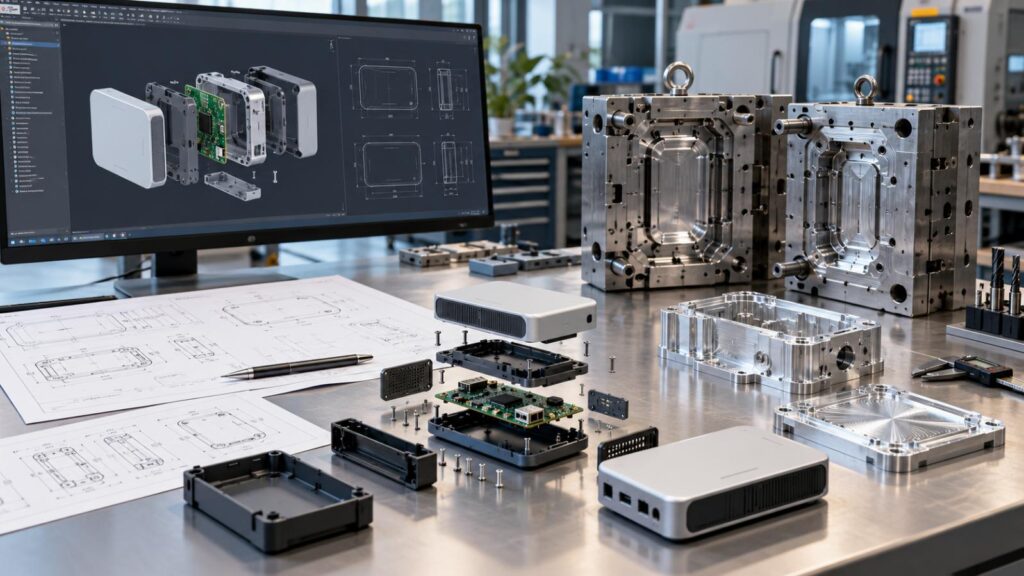
This is what LKK Design does best. We integrate these design disciplines to help our clients, be it hardware startups or established brands, validate design-to-production risks through a coordinated development process.
Why Shenzhen is Perfect for Integrated Product Development
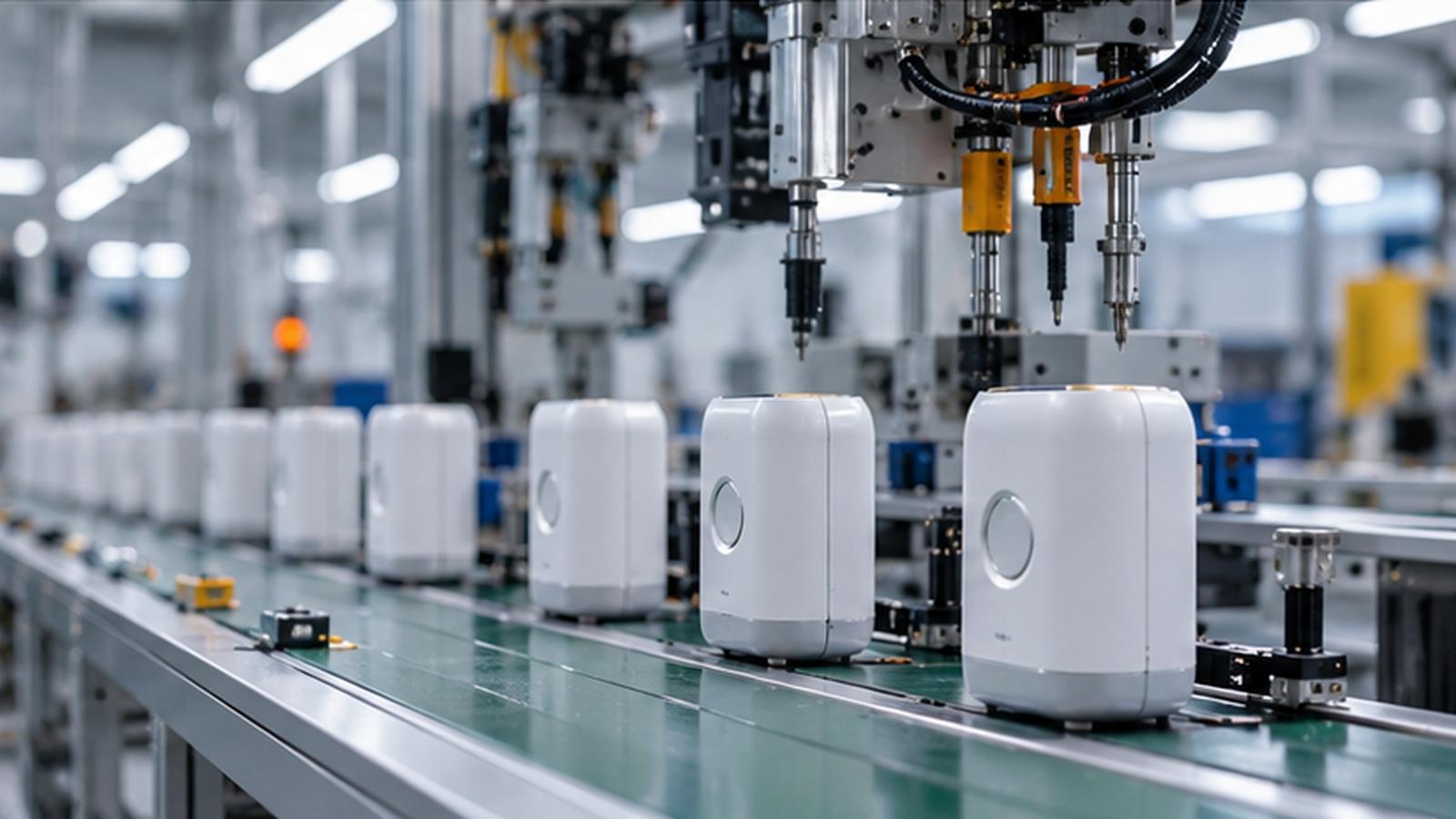
Shenzhen’s extensive electronics and manufacturing ecosystem brings PCB assembly, CNC machining, injection molding, and tooling suppliers into close proximity. This integrated network offers significant advantages for product design and development companies across four key stages.
Component Sourcing
Identify, compare, and qualify electronic components and modules based on availability, cost, technical compatibility, lead times, and supplier lifecycle support.
Prototype Development
Accelerate electronic and mechanical prototyping through close collaboration with local suppliers, enabling rapid design iterations and efficient integration of engineering changes.
Validation
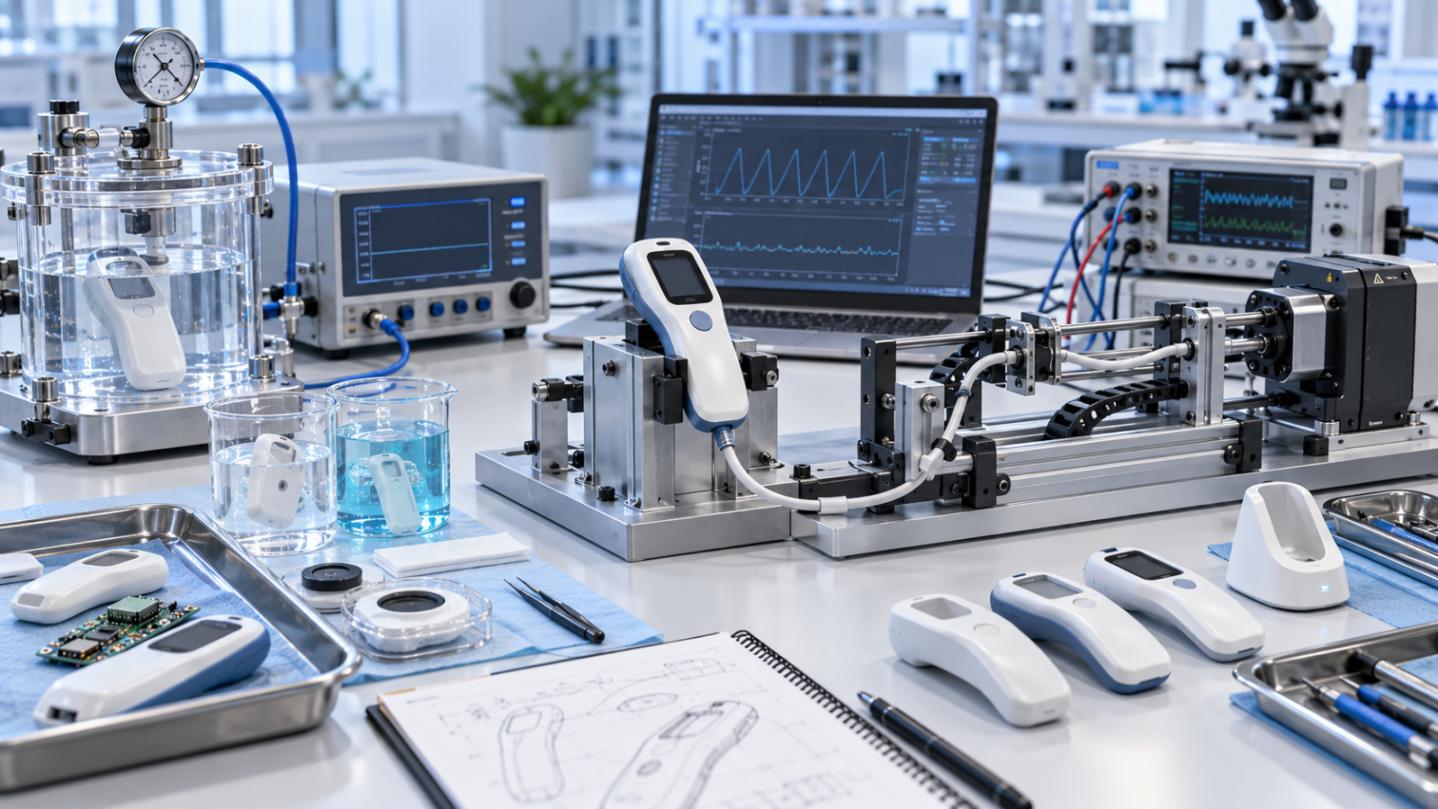
Verify product performance, reliability, and manufacturability through prototype testing and supplier feedback. Identify material, assembly, and tooling constraints before production.
Manufacturing
Coordinate tooling, PCB assembly, and mechanical part production to support a smooth transition to mass manufacturing. Optimize production processes, quality control, and manufacturing yield.
Integrated Product Design
Most companies in the product development space take a traditional approach whereby industrial, mechanical and electronic design and development happen independently and are only unified at the manufacturing stage.
Without integration and technical reviews, product design requirements become vague and lead to inconsistencies between product requirements and supplier capabilities.
| Evaluation Factor | Separate Suppliers | Integrated Development |
| Engineering interfaces | Independent design teams | Coordinated design reviews |
| DFM implementation | Often after design approval | Introduced during engineering |
| Design changes | Multiple handoffs | Centralized revision control |
| Cost assessment | Separate quotations | Lifecycle cost evaluation |
| Manufacturing readiness | Factory-dependent | Evaluated across development stages |
| Key risk | Interface misalignment | Dependence on partner capabilities |
An integrated Product Design and Innovation Company can reduce interface-related rework by identifying conflicts before designs are released for tooling.
The Electronics and Mechanical Designs Must Be Developed Together
When creating a compact IoT device, the PCB size determines the size of the enclosure. Battery placement and the mechanics to clear antennas and achieve thermal management affect the internal mechanisms.
There are a number of considerations when developing a product:
• Mechanical design, PCB placement, and fitting
• Managing assembly and production tolerances
• Thermal design: placement of heat sources, material selection, and ventilation
• Reliability and durability testing
LKK Design has the required capabilities to support these considerations in an integrated manner.
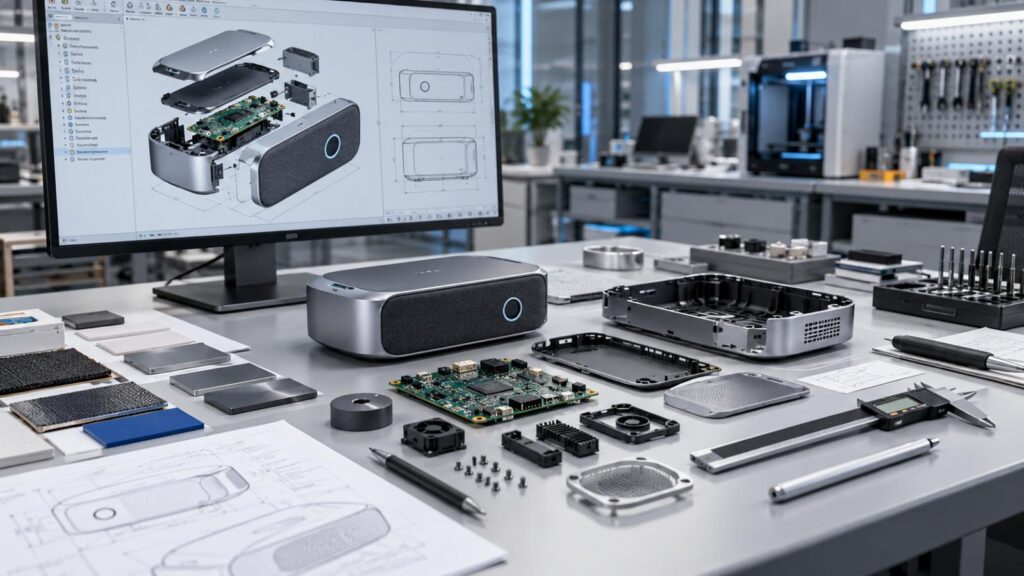
From a Functional Prototype to Production-Ready Hardware
A functional prototype is usually constructed using different materials from those that would be used in the final product. Hence it doesn’t always demonstrate compatibility with the production process.
The company should be able to distinguish between validation of the product design and engineering and validation for production.
| Primary Engineering Focus | Required Evidence |
| Design and Engineering Focus | Functional tests, draft specifications, procurement process, Bill of Materials |
| Validation Focus | Prototype, firmware, PCB, mechanical fit and test |
| Reliability and Durability Focus | Environmental tests and EMC pre-compliance |
| Process Validation and Product Consistency Focus | Tooling, assembly process, yield |
At LKK Design, the integrated development framework supports our client’s efforts during the Concept, EVT, DVT and PVT stages. It also addresses manufacturing and integration for mass production.
Effects of DFM Decisions on Manufacturing Costs
Design for Manufacturing (DFM) assesses a product’s specification in relationship to the intended method of manufacture. DFM helps improve manufacturability while ensuring the cost of goods sold is optimized.
1. Injection Molded Components
Designing molded parts, such as balancing wall thickness, draft angles and geometry of ribs, and the location of the gate; anticipating material shrinkage; and understanding the effects of mold warpage and dimensional stability are key to the manufacturability of the part. Defects in part design and mold fabrication may be analyzed using the finite element method and mold flow analysis.
2. Electronic Assemblies
Soldering and testing accessibility, and the coverage of test-points are important when placing components during SMT assembly and inspection.
3. Selection of Manufacturing Processes
CNC machining is better for low volume, functionally integrative parts, whereas injection molding becomes cheaper per unit at high volume, once tooling cost is amortized.
Among others, considerations when selecting the process should be the product’s function, manufacturability, volume and tooling costs.
Evaluating a Product Design and Innovation Company
When international customers evaluate a project, they should consider manufacturing accountability, engineering capability, total cost, and compliance readiness, in addition to design fees.
Total Development Cost and Manufacturing Economics
A project cost model should include the following:
Total Project Cost = Engineering NRE + Tooling + Manufacturing + Testing/Compliance + Logistics + Expected Rework
When going over a project, consider the following:
• Tooling Ownership and NRE: Separate engineering costs from mold costs.
• Production Volume: Consider unit costs for different order quantities.
• Manufacturing Yield: Consider costs related to scrap, rework and inspection.
• Supply Continuity: Consider alternatives materials, lead times for components and end of life.
• Change Control: Establish controls for BOM, Firmware and Tooling changes.
Higher quotes may represent increased tooling costs and design revisions.
Quality, Compliance, and Intellectual Property Verification
Prior to working with a Product Design and Innovation Company, potential clients should request verifiable objective engineering data.
| Verification Area | Documents or Evidence to Review |
| Engineering capability | CAD, Schematics, GD&T, Design reviews |
| Prototype validation | Test logs, Issue logs, Corrective actions |
| Manufacturing readiness | DFM, tooling trials, Pilot production |
| Quality management | Inspection plans, traceability, QMS evidence |
| Regulatory compliance | Test reports |
| Ownership of IP | NDA, CAD/firmware rights, tooling ownership |
Regulatory requirements vary by product category and the targeted market. Quality management certification alone does not validate product-level regulatory compliance.
Choosing the Right Integrated Development Partner
Certain products may only require specific aspects of turn-key product development. For example, some products may only need assistance with Design for Manufacturing (DFM), tooling, and manufacturing. Other products, such as new platform hardware, may require a complete, end-to-end product development process.
LKK Design has the advantage of an integrated design and engineering facility along with mold fabrication and manufacturing in Shenzhen, China. This gives us the opportunity to become a complete source for product development and manufacturing.
When your team is looking for a Product Design and Innovation Company to partner with to assist in the development of new platform hardware, or to transform your hardware design to a production partner, we welcome the opportunity to hear more about your specific requirements, and to discuss our organization.
FAQs
Q1: What services does LKK Design provide?
LKK Design provides integrated product development services, including industrial design, mechanical engineering, electronics development, prototyping, tooling, and contract manufacturing.
Q2: Why choose LKK Design as a Product Design and Innovation Company in Shenzhen?
LKK Design combines multidisciplinary engineering with access to Shenzhen’s electronics, prototyping, and manufacturing supply chains to support coordinated product development.
Q3: Does LKK Design provide both mechanical and electronic product design?
Yes. LKK Design supports mechanical engineering, electronic hardware development, and embedded systems integration to address product structure, PCB layout, thermal design, and assembly requirements.
Q4: How does LKK Design incorporate DFM into product development?
LKK Design integrates Design for Manufacturing (DFM) into engineering reviews to assess material selection, tolerances, tooling feasibility, assembly methods, and production constraints.
Q5: Does LKK Design support EVT, DVT, and PVT testing?
Yes. LKK Design’s development framework includes Engineering Verification Testing (EVT), Design Verification Testing (DVT), and Production Verification Testing (PVT) before mass production.
- PREV: Electronic Product Design and Development for Wearables
- NEXT: Null
Contact Us



- 20+ Design Industries Serviced
- 200+ Product Categories
- 1,000+ Industry Leaders Served
- 10,000+ Products Successfully Launched

Founder and Chairman of LKK Design Group
Ready to get started? Connect with us today!
 Talk to Our Team