
 Home /
Low Volume Manufacturing Costs: Tooling, Materials, and Order Quantity Explained

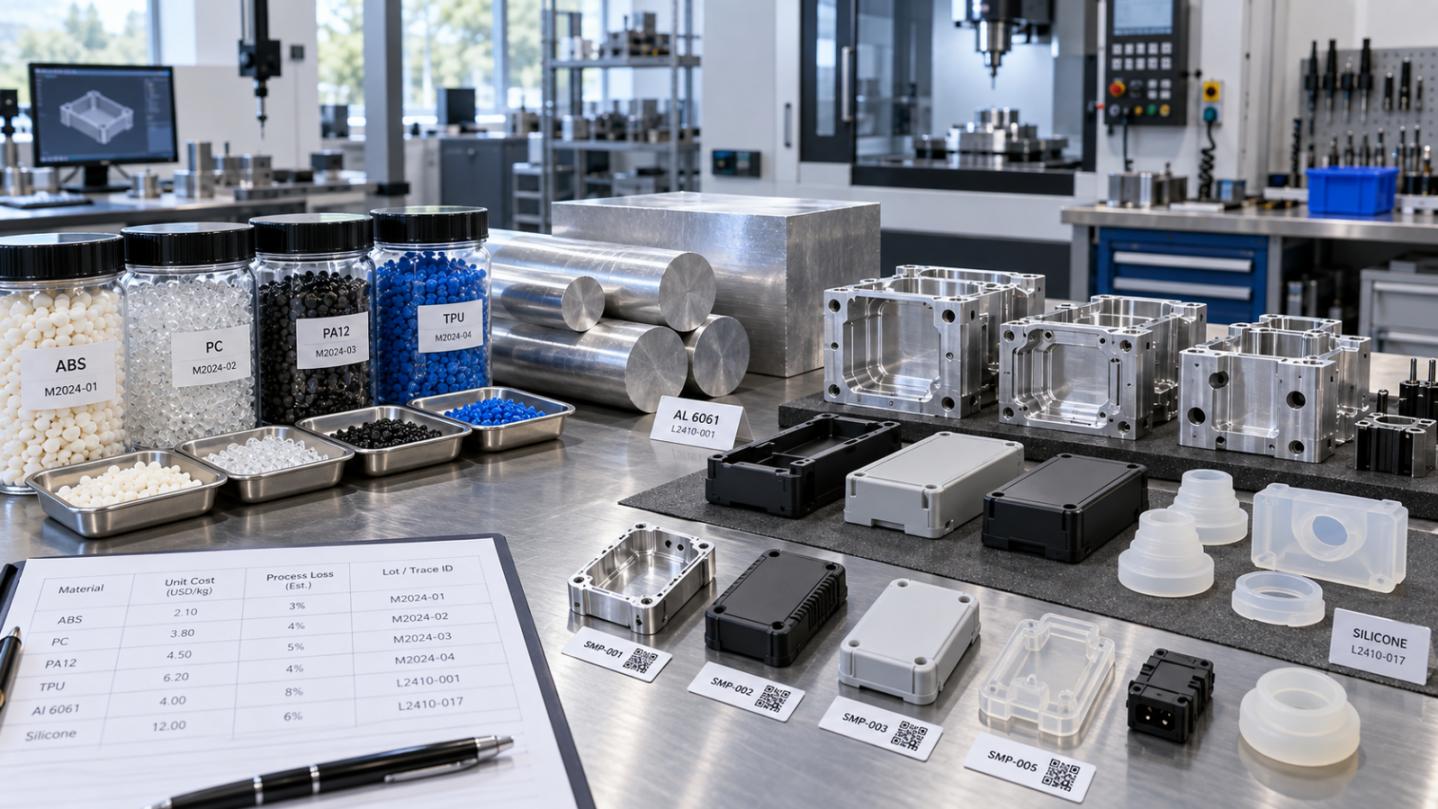
Table of Contents


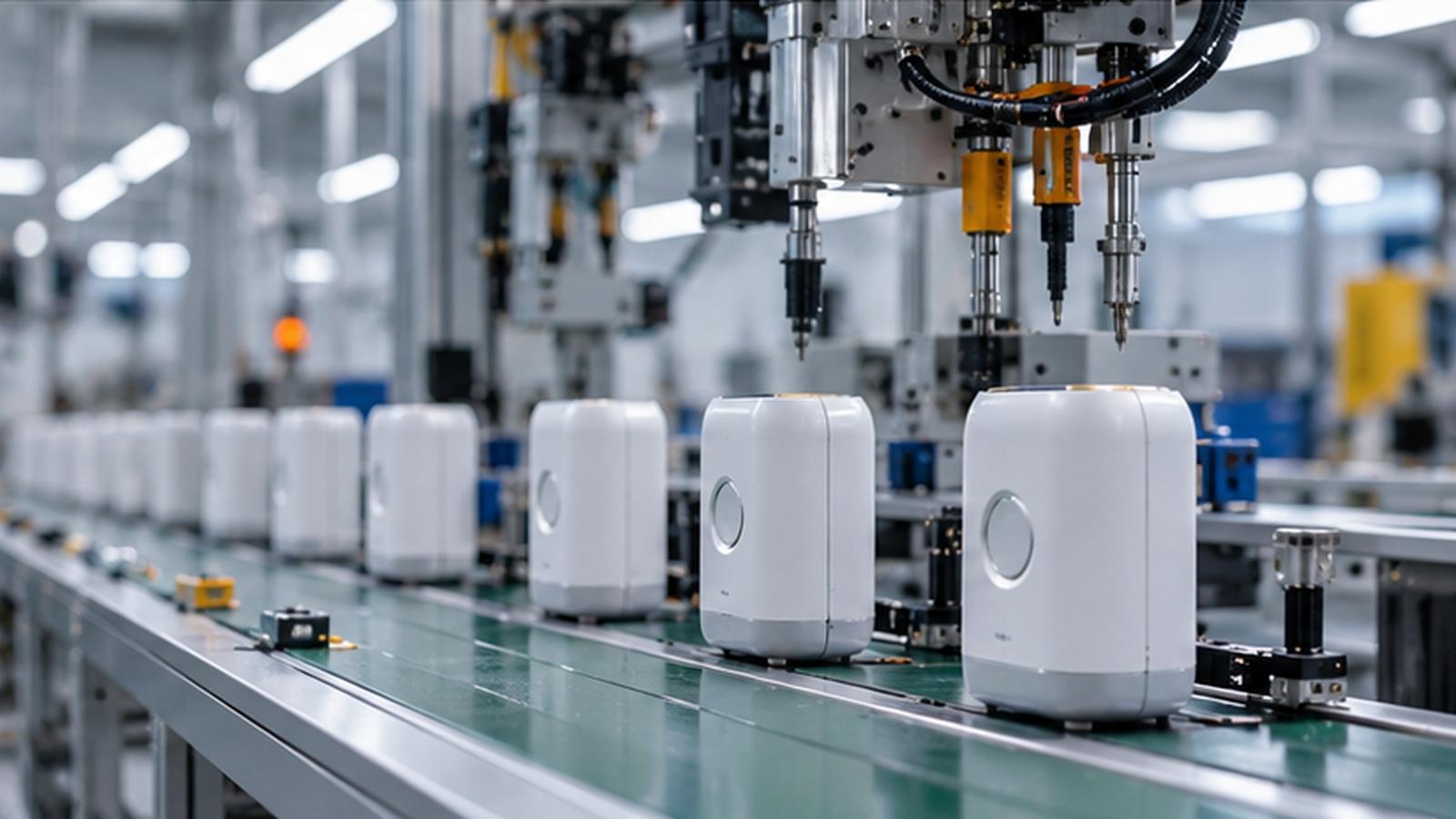
Low Volume Manufacturing costs are a combination of design, preparation for production, and output. A quoted price for components may look attractive, but tooling and design execution costs, scrapped components, and inventories that are not needed may mean that a project becomes more expensive.
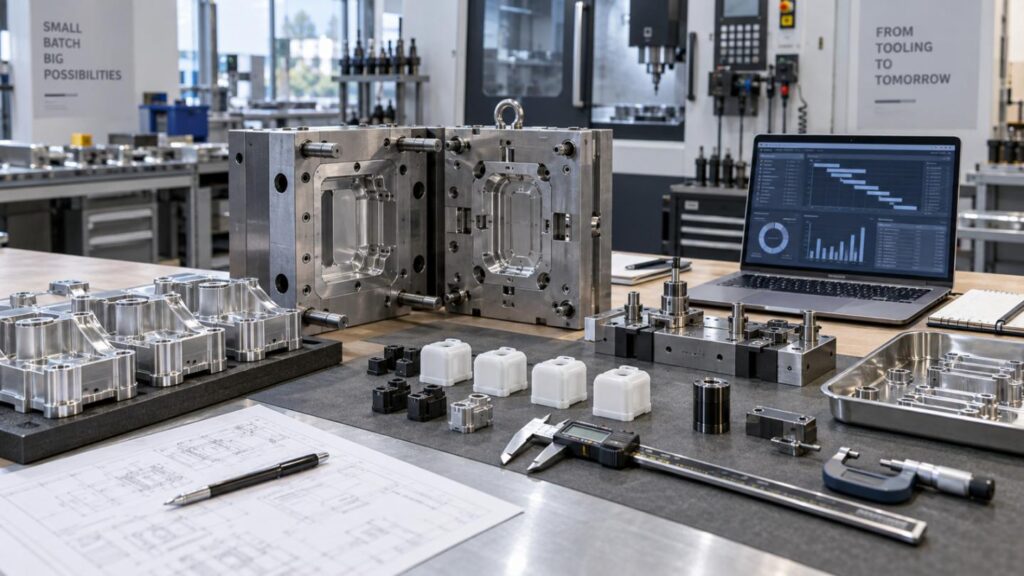
At LKK Design, we combine industrial design with mechanical engineering and manufacturing planning to look at the balance where cost, preparation, design, and output meet. The first step for Low Volume Manufacturing is a firm specification: a function that the part must perform, and controlling the characteristics for which demand is certain and justifies the investment.
Establish the Cost Boundary Before Comparing Quotes
Separate non-recurring engineering (NRE), recurring batch charges, and costs that vary with production quantity.
| Cost Category | Typical Items | Purchasing Check |
| Engineering and tooling | DFM, CAM programming, molds, fixtures, initial validation | Identify ownership, reuse conditions, and revision charges |
| Batch preparation | Setup, changeovers, trial runs, inspection preparation | Confirm which charges repeat with each release |
| Part production | Material, processing, finishing, assembly, inspection | Confirm yield assumptions and responsibility for rejects |
| Delivery | Packaging, freight, applicable import charges | Align delivery terms and destination |
Average accepted-part cost = Total cost within the agreed scope ÷ Accepted quantity delivered
A component quotation may exclude product development, functional testing, or assembly. Compare equivalent scopes and avoid counting costs already included in the supplier’s unit price twice.
Tooling Investment Depends on Design Stability
Low Volume Manufacturing can require machining fixtures, silicone molds, injection molds, assembly jigs, and inspection gauges. Even production without a dedicated forming mold involves preparation.
Tool Matching to Optimal Usage
When making tooling decisions it is also important to consider the following:
• Geometry: Molds will become more complex with deep ribbing, side actions, undercuts, and tricky mold ejections.
• Material compatibility: Tooling will also depend on the use of abrasive fillers, processing temperatures, and resin chemistry.
• Cavity count: Each additional cavity will increase the cost and the balancing complexity of the mold.
• Revision exposure: If there are changes to an interface, wall thickness or external geometry this may require inserts, welding, or machining.
For both aluminum and steel molds, considerations should be made for the resin, finish, and expected service life. Loss per unit should not be the deciding factor between the two material types.
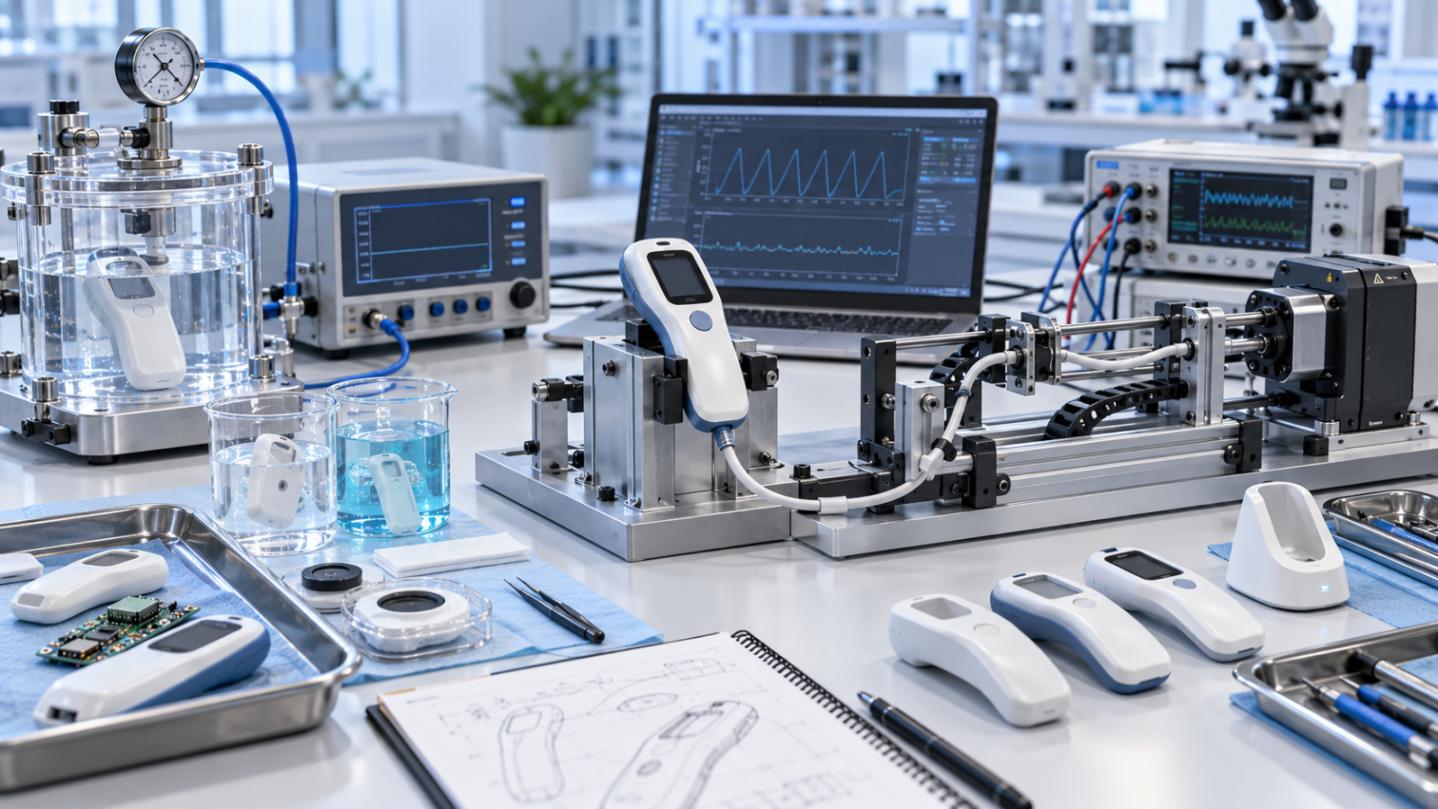
At LKK Design, tooling decisions interface with the mechanical design of the product during the assessment of moldability. Validation of the prototype can alleviate concerns with uncertain interfaces and prevent the need for costly revisions.
Material Cost Includes Processing and Purchasing Losses
In low-volume manufacturing, a direct comparison of material cost per kilogram is insufficient.
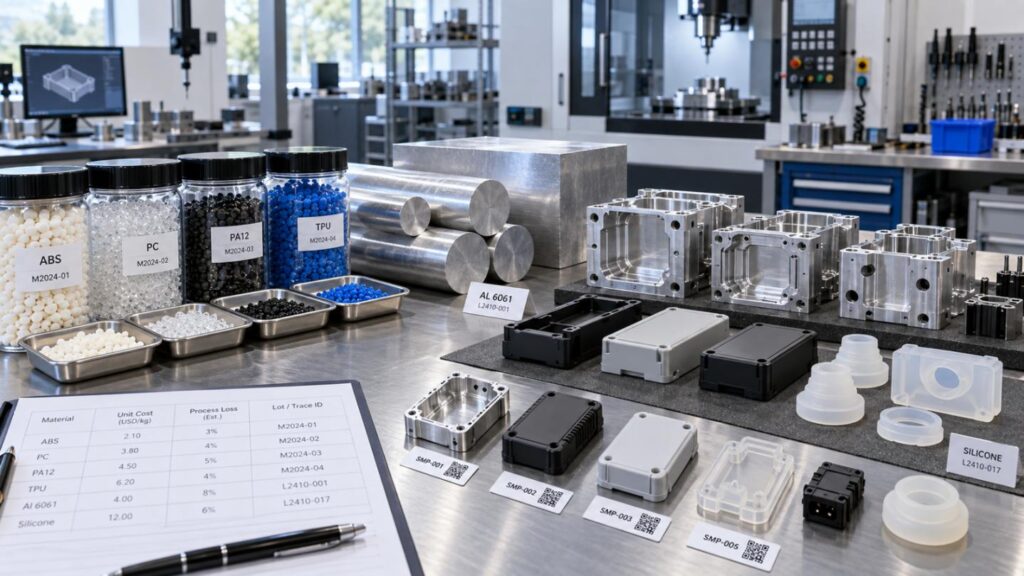
A machined housing will lose a large part of the purchased billet due to deep pockets. Thin walls also increase the time taken to machine the part and may require additional support.
Cost may also increase due to slower processing times or even the rejection of the part. For plastic components consider the following:
• Availability of the desired grade of resin and additives, as well as color.
• The minimum purchase volume and any leftover plastic.
• Shrinkage and warpage.
• Shrinkage and compatibility with finish.
• Certification and traceability of batches.
An “ABS-like” casting resin should not automatically substitute for injection-molded ABS. Validate the properties relevant to the application, including temperature resistance, impact behavior, and chemical exposure.
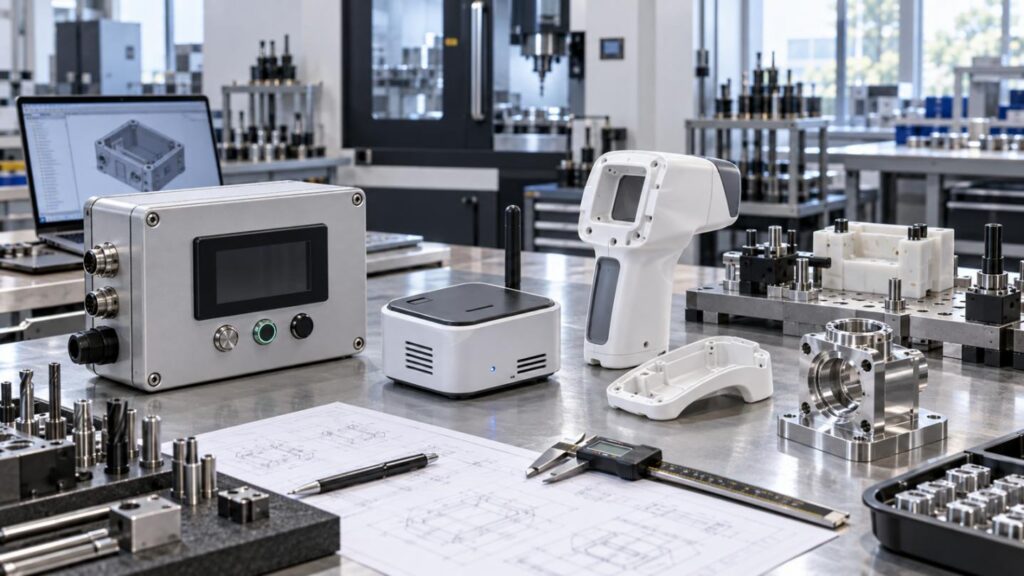
Order Quantity Changes Both Cost and Risk
Low Volume Manufacturing often has a steep initial cost curve because fixed expenses are spread across relatively few parts.
| Quantity | Fixed Cost | Variable Cost per Part | Total Production Cost | Average Part Cost |
| 50 | $2,000 | $20 | $3,000 | $60 |
| 200 | $2,000 | $20 | $6,000 | $30 |
| 500 | $2,000 | $20 | $12,000 | $24 |
Illustrative calculation, not LKK Design pricing. Assumes one batch, constant variable cost, and all parts accepted; excludes logistics and inventory costs.
The 500-piece order decreases the average unit cost, but requires four times the cash as the 50-piece order.
Decompose the number of releases from total demand. Repeated releases include setup costs. Blanket orders may impose an inventory commitment. Assess your confidence with the forecast, the cost of storage, the cash exposure, and the changes to the design that you expect to happen.
Consider Competing Processes Against One Another
Low Volume Manufacturing (LVM) processes need to have both technical functional capability and be economical.
| Process | Initial Investment | Recurring Costs | Main Trade-Off |
| CNC Machining | Programming and workholding Setup | Cutting time, Setup, Tool wear, Inspection | Complex material removal can be expensive |
| 3D Printing | Build preparation | Build Time, Packing, Supports, Post Production | Flexible changes to geometry, orientation and material performance require validation |
| Vacuum Casting | Master and silicone molds | Labor, Curing, Mold replacement | Useful for short runs; limited mold life and different material behavior |
| Injection Molding | Mold manufacture and trials | Cycle time, Cavities, Resin, Yield | Lower recurring costs may justify molding when demand and design are stable |
Where process B has higher fixed costs and lower variable costs:
Crossover Quantity = (Fixed Cost B – Fixed Cost A) / (Variable Cost A – Variable Cost B)
Note: This simplified approach assumes equal acceptable output. Process transfer validation, replacement tooling, and batch charges should be included when considering a process change.
Use DFM to Control Accepted-Part Cost
Our reviews on Low Volume Manufacturing consider manufacturability, assembly and inspection.
• Tolerances: Assess tolerance stack up, determine if relaxation is applicable.
• Geometry: Look into tool access, thin sections, draft and undercuts, and workholding.
• Design Exercise – Acceptance Criteria: Consider ease of assembly, test, inspection, ship and store.
• Assembly: Review common fasteners, part consolidation, access and service difficulties.
• Finish: Indicate zones requiring appearance or masks and texture, and zones that are acceptable.
• Quality: Stipulate limits and means of control of first article inspection, measurements, changes, batch release, etc.
Small batches provide limited evidence for statistical capability claims. Inspection should reflect feature risk and available process evidence.
LKK Design’s industrial design, engineering, prototyping, and manufacturing support bring these decisions into one development workflow.
Plan the Next Production Step
Send to LKK Design unprotected CAD and drawings, bill of materials, first-tier quantity break, critical features, types of inspections and levels required, and delivery conditions. We can assess and develop a low-volume manufacturing plan that aligns with your anticipated demand and budget and the level of design maturity.
FAQs
Q1. What Low Volume Manufacturing services does LKK Design offer?
LKK Design supports industrial design, mechanical engineering, DFM, prototyping, tooling development, manufacturing, and assembly. These capabilities help teams connect product requirements with a suitable production process and cost structure.
Q2. What information should I provide for a Low Volume Manufacturing quote from LKK Design?
Provide revision-controlled CAD files, technical drawings, material grades, order quantities, critical tolerances, surface finishes, and inspection requirements. Include your delivery destination and schedule so the quotation can cover the intended scope.
Q3. Can LKK Design help reduce manufacturing costs before tooling begins?
LKK Design’s DFM services address geometry, material selection, tooling complexity, assembly, and inspection access. Reviewing these factors before tooling helps identify changes that may reduce production effort while preserving functional requirements.
Q4. How does LKK Design evaluate the right manufacturing process for my project?
LKK Design’s design and manufacturing capabilities support comparisons between CNC machining, 3D printing, vacuum casting, and injection molding. Selection should consider material performance, geometry, tolerances, finish, design stability, and expected cumulative demand.
Q5. Does LKK Design have a fixed minimum order quantity for Low Volume Manufacturing?
A single minimum order quantity cannot be assumed across all LKK Design processes. Ask for project-specific quantities based on the part design, material purchasing requirements, tooling strategy, and production setup.
Contact Us



- 20+ Design Industries Serviced
- 200+ Product Categories
- 1,000+ Industry Leaders Served
- 10,000+ Products Successfully Launched

Founder and Chairman of LKK Design Group
Ready to get started? Connect with us today!
 Talk to Our Team