

 Home /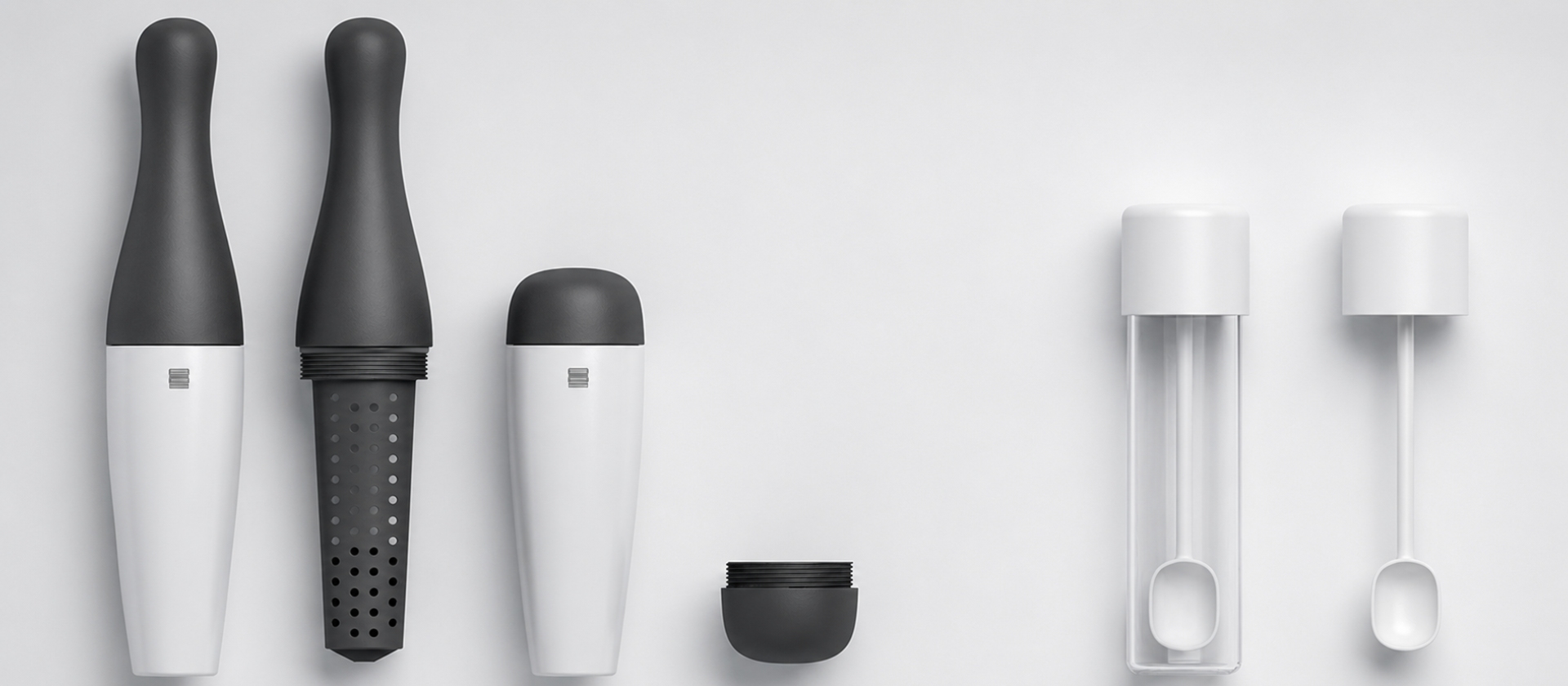
Quantitative Health Sample Collection Device
Creating a Sample Collection Tool That Balances Functionality and Aesthetics



Innovation Insights
User Challenges
Quantitative Health is one of China’s leading biotechnology companies specializing in individual microbiome research.
The company provides customers with a complete microbiome testing service, covering sample collection, laboratory analysis, and personalized reports.
Although the company possessed advanced microbiome technology, its original sample collection tool was similar to many low-quality stool collectors available on the market.
These conventional products often lacked reliable functionality, thoughtful interaction, refined appearance, and a comfortable user experience.
Stool sample collectors had traditionally received little attention from users and manufacturers, and many people believed that such tools did not require professional design.
However, the product plays an essential role in determining sample quality and influencing the overall testing experience.
A complete and disruptive design solution was therefore required to redefine the collection process and establish a new product benchmark for the industry.
Innovation Value
The stool sample collection device received positive feedback from users after entering the market.
It helped Quantitative Health provide a more user-friendly microbiome sampling and analysis service while improving the overall quality of the customer experience.
The product also obtained relevant technical patents, demonstrating the value of its structural and functional innovations.
Through distinctive functional and aesthetic design, this previously overlooked product attracted greater public attention and showed how professional design could improve even the most basic medical sampling tools.
Design Strategy
Product Strategy
The LKK Design team provided Quantitative Health with a complete, end-to-end product design service.
The goal was to create a sample collection tool that combined reliable functionality with refined aesthetics.
The process began with user experience research and the redevelopment of the sample collection method, allowing the team to redefine the product from its fundamental operating principles.
The project then covered exterior styling, functional structure, packaging design, material selection, prototyping, and detailed optimization.
Every product detail was carefully examined to improve sampling efficiency, hygiene, comfort, and usability.
During the later stages, the team also supported supply chain implementation and production quality, helping the client successfully transform the concept into a distinctive and commercially viable product.
Structural Optimization
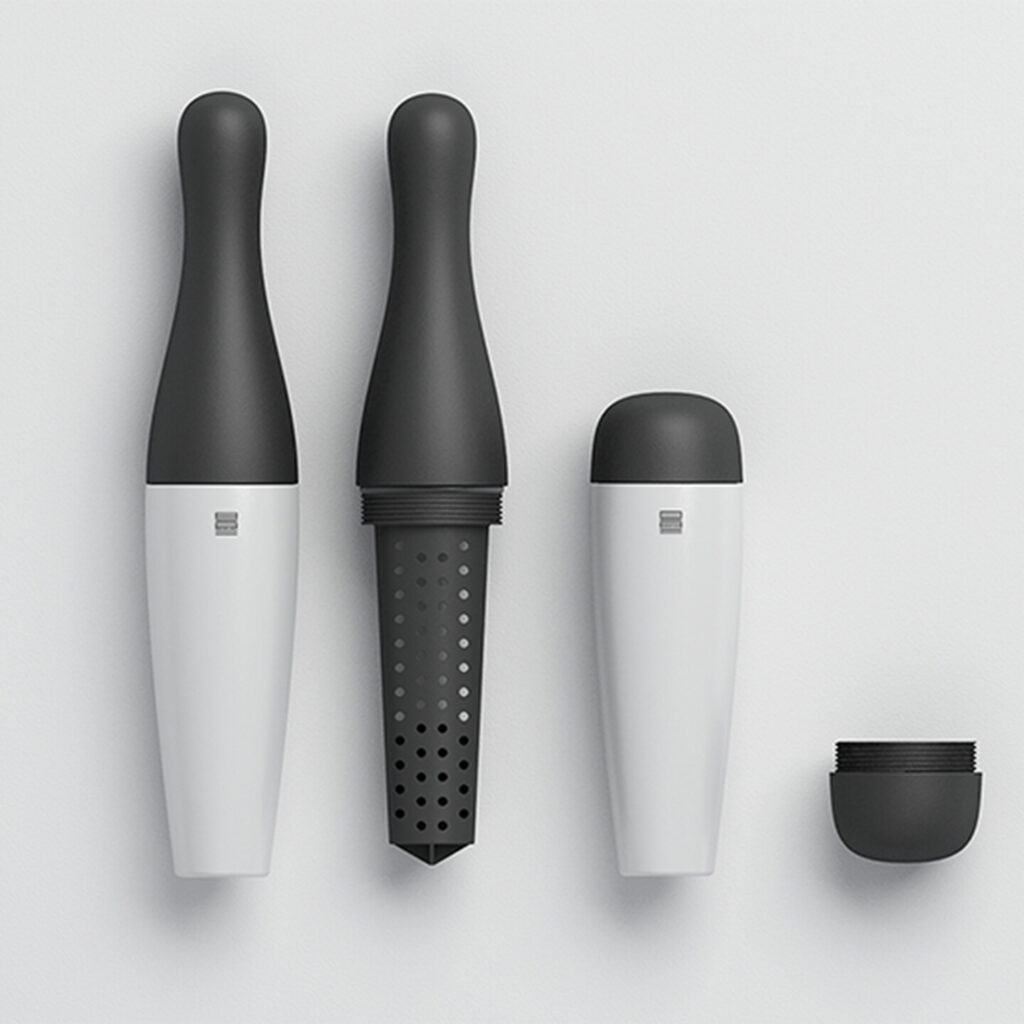
A series of openings was designed into the wall of the collection tube.
These openings use the principle of air-pressure balance to help the stool sample enter the tube more completely and smoothly.
The openings also allow the collected material to make sufficient contact with the lysis solution inside the collection bottle.
This improves the reaction between the sample and the solution and prepares the specimen more effectively for subsequent laboratory analysis.
User Experience
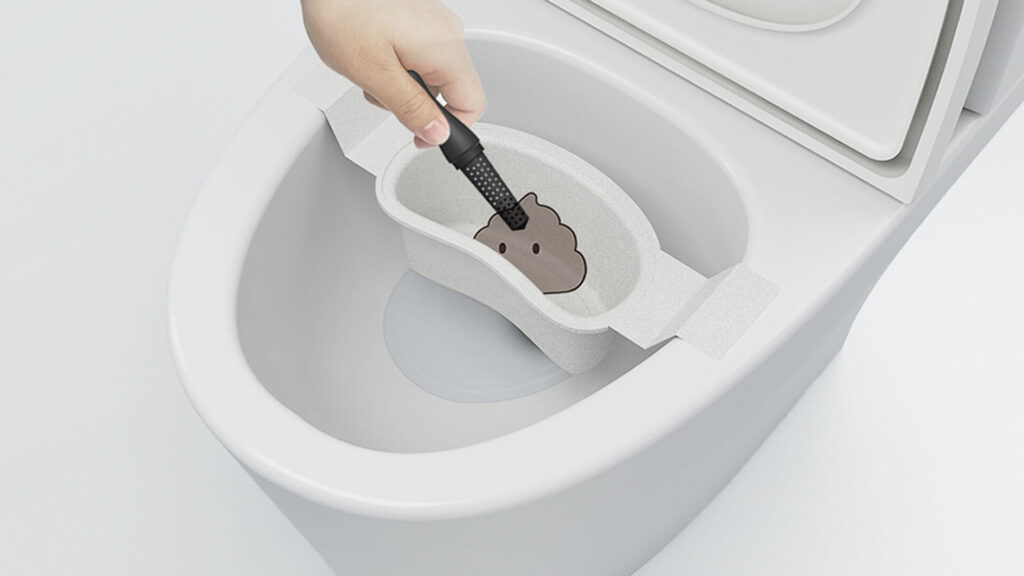
The design team carefully considered the sensitive and potentially uncomfortable experience associated with collecting a stool sample.
The collector was therefore equipped with an elongated handle featuring a smooth and visually rhythmic form.
Its increased length helps users maintain greater distance from the sample during collection.
A soft-touch coating was applied to the handle to provide a more comfortable and secure grip.
Opaque engineering plastic was also selected for the main structure.
While maintaining collection efficiency, the nontransparent material reduces direct visual contact with the stool sample and helps lower the user’s psychological discomfort during the process.
Innovation Upgrade
A thin but durable nylon cutting component was incorporated into the collection tube.
As the stool sample enters the tube, the nylon element separates it into smaller sections.
This increases the contact area between the sample and the lysis solution, supporting a more complete and efficient reaction.
The feature helps improve sample preparation and provides better conditions for accurate subsequent microbiome analysis.
💡 Solution
1. Separated Collection Components and Reliable Leak Protection
The collection tube and the collection bottle adopt a separated structural design.
This ensures that the lysis solution remains completely clean and sterile before the sample collection process begins.
Because liquid leakage may occur during transportation, the product uses a threaded connection combined with an O-ring sealing structure.
This dual leak-prevention method helps preserve the sterility of the collected sample while maintaining the cleanliness and hygiene of the product and its packaging.
To prevent users from having to repeat the unpleasant collection process because of an insufficient sample quantity, the collection tube volume was precisely calculated.
Users can collect the required amount of material through a single operation, improving efficiency and reducing inconvenience.
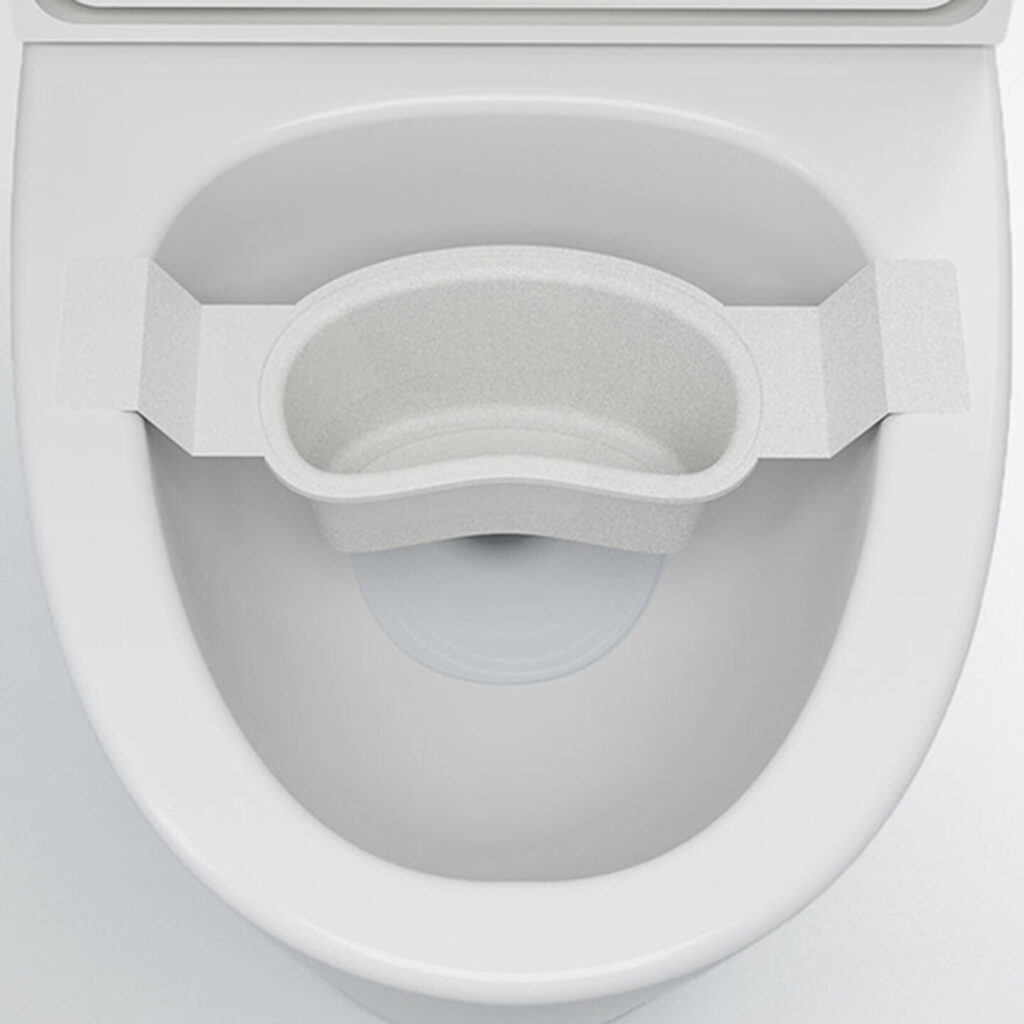
2. Gender-Inclusive Collection Box Design
The collection box was developed with consideration for the physical differences between male and female users and the need to separate stool and urine during collection.
Its structure effectively prevents urine from contaminating the stool sample, helping maintain sample reliability and improve the accuracy of subsequent laboratory analysis.
Because the collection box is intended for one-time use and is difficult to recycle, biodegradable sugarcane pulp was selected as the primary production material.
This material reduces the environmental impact commonly associated with disposable medical supplies while still meeting the functional requirements of the collection process.
3. Clear and Sustainable Packaging Design
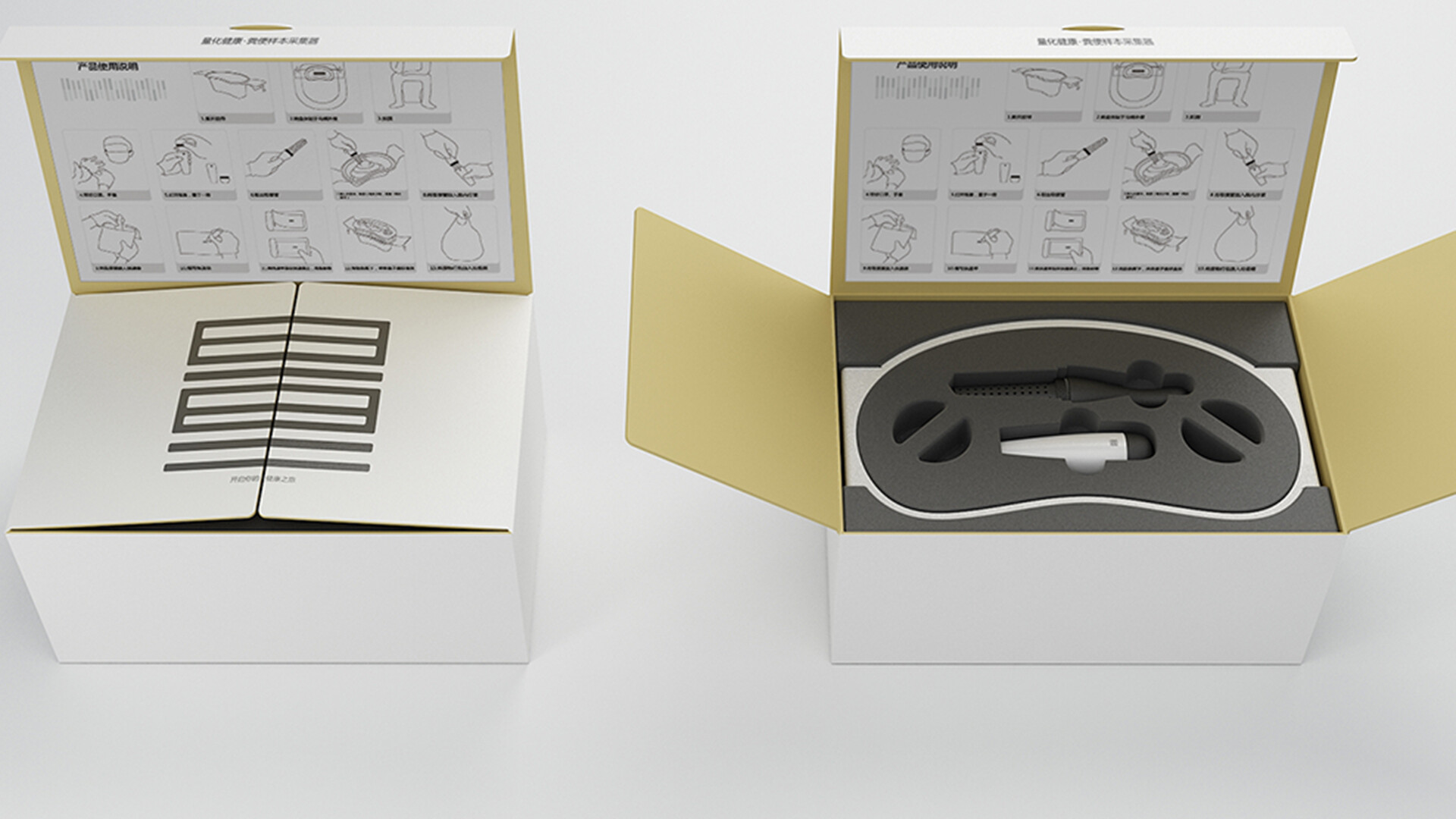
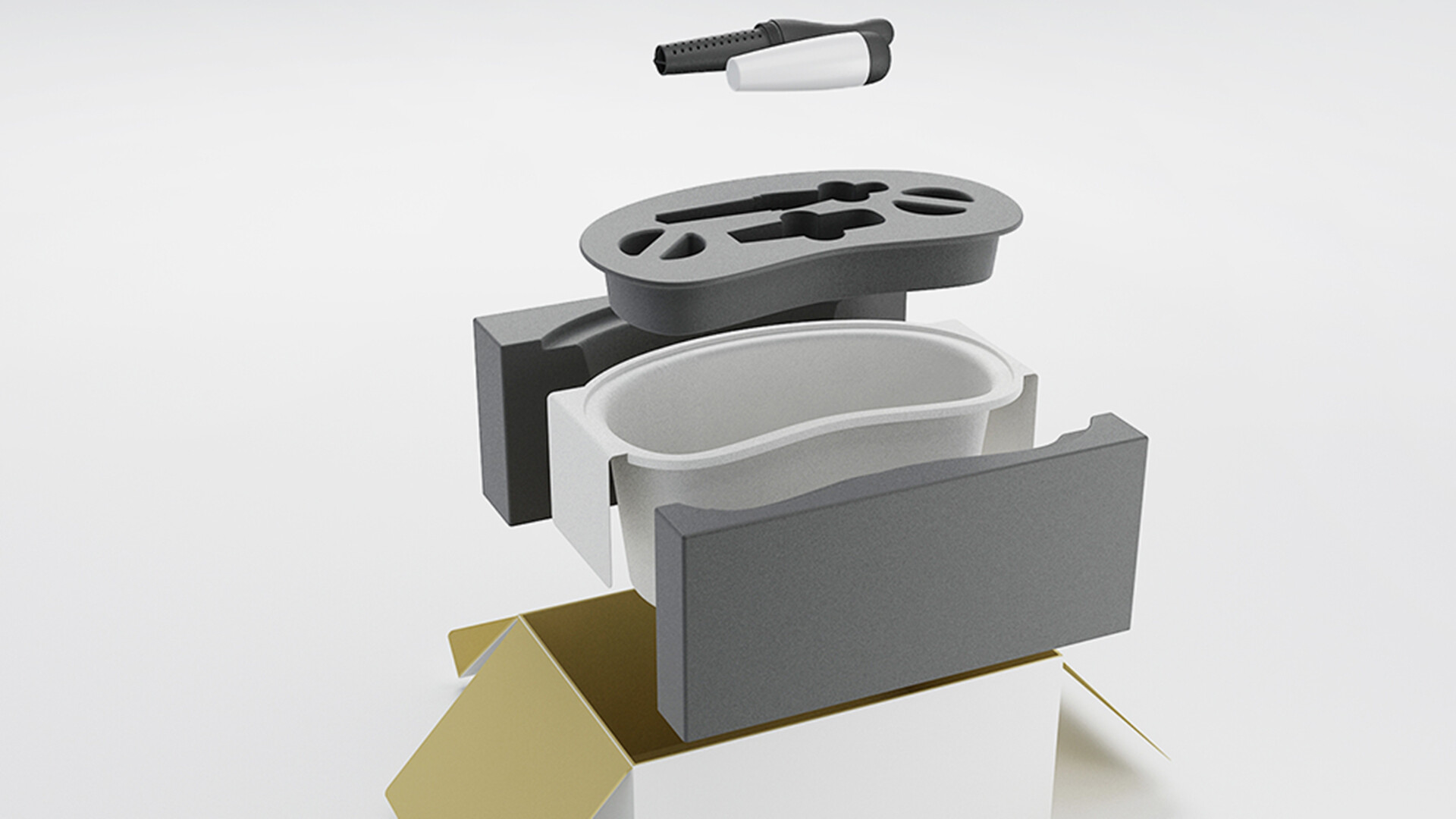
The product packaging uses affordable and widely available corrugated cardboard.
Its appearance is simple and refined, balancing cost control with a clean and professional brand image.
The interior is divided into clearly organized functional sections according to the different product modules.
This arrangement allows users to immediately understand where each component is located and the order in which it should be used.
A skin-friendly and nonpolluting EVA insert provides protection for the components during transportation.
Special finger-access areas were added to the insert, allowing users to remove each item more easily.
The complete packaging system improves product organization, operating clarity, transportation safety, and the overall customer experience.
Like What You See?
 Let's Talk About Your Project