

 Home /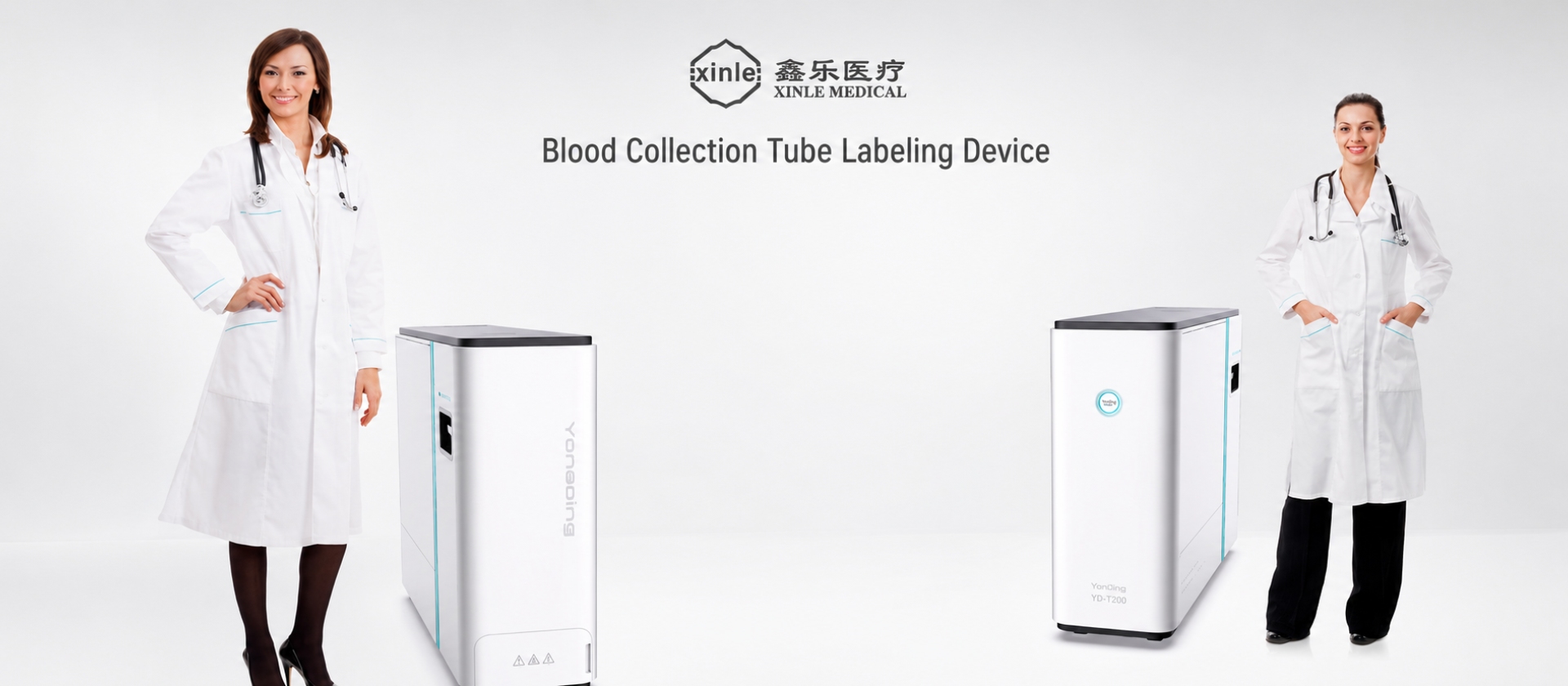
Yongding Intelligent Blood Collection Management and Tube Labeling System
Supporting Standardized Blood Collection Management in Hospitals



Innovation Insights
Project Background
In professional medical environments, intelligent blood collection tube labeling equipment had not yet been widely adopted, making this project relatively forward-looking within the industry.
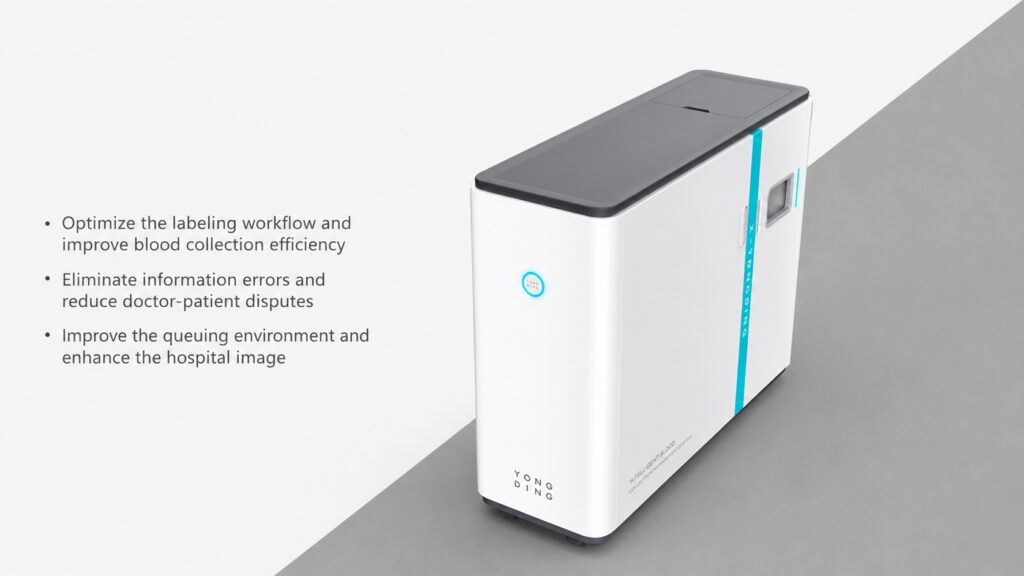
The intelligent blood collection management and labeling system currently in hospital use consists of one main unit and multiple client terminals.
Each main unit can be paired with two client terminals, with each terminal corresponding to an individual blood collection window.
Because the system includes several functional modules and a relatively complex internal structure, the project required more than the exterior improvement of an existing prototype.
The complete design process needed to transform an early technical concept into a reliable medical product suitable for real hospital environments.
The project also needed to balance the different experience requirements of medical staff and patients.
For healthcare professionals, the equipment had to provide accurate, intuitive, convenient, and time-saving operation.
For patients, the system needed to communicate safety and reliability while reducing waiting times and improving the overall blood collection experience.
User Requirements
The client expected the product to simplify the blood collection workflow through systematic design.
The equipment needed to shorten the time required for each patient, increase the number of patients served by each blood collection window, and reduce overcrowding, repeated queuing, and long waiting periods.
By improving workflow efficiency, the system could increase patient satisfaction and support more complete digital and information-based management of hospital blood collection services.
Design Strategy
Product Strategy
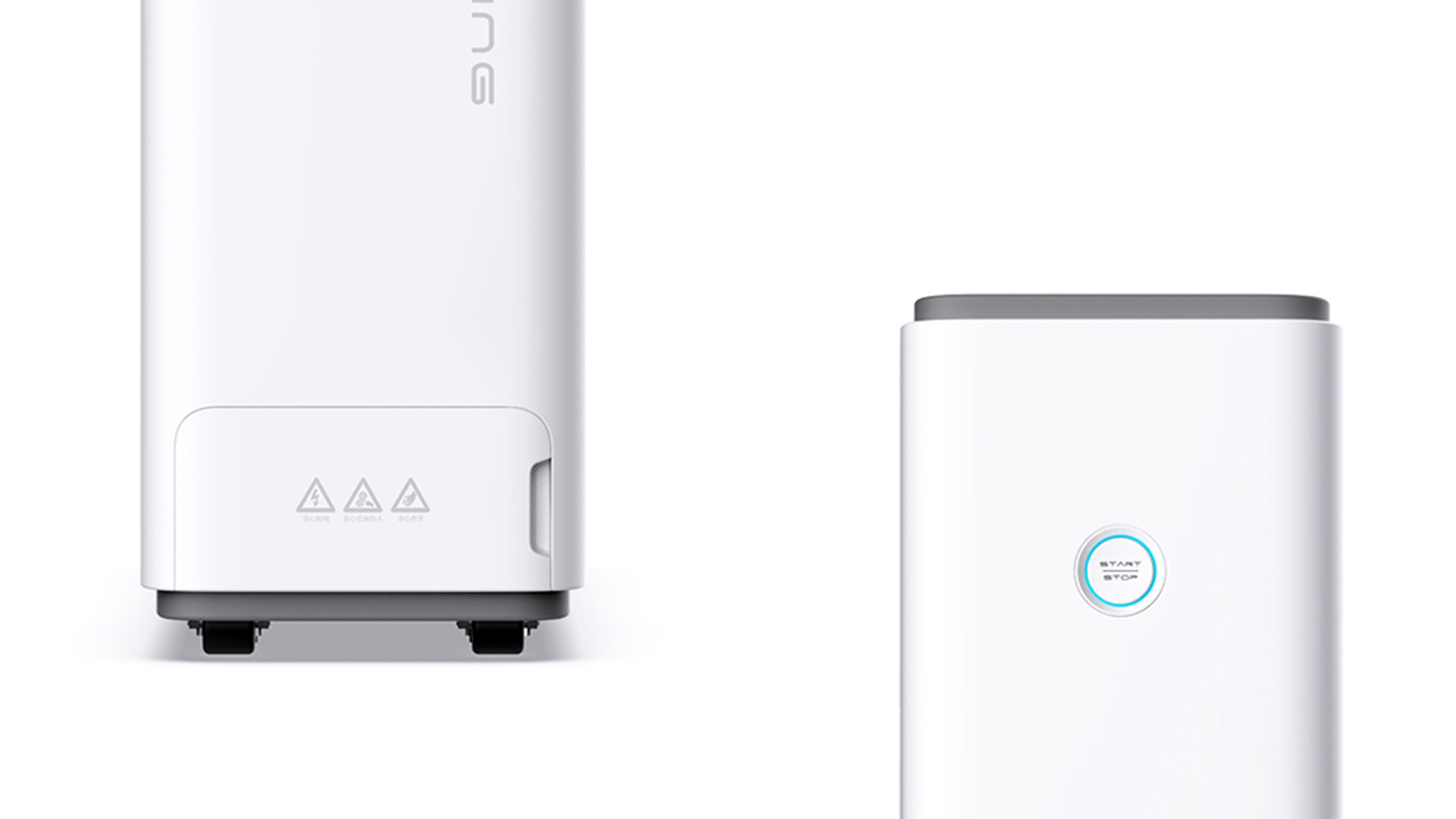
Rounded rectangular elements were used throughout the product to create a refined, reliable, and professional appearance.
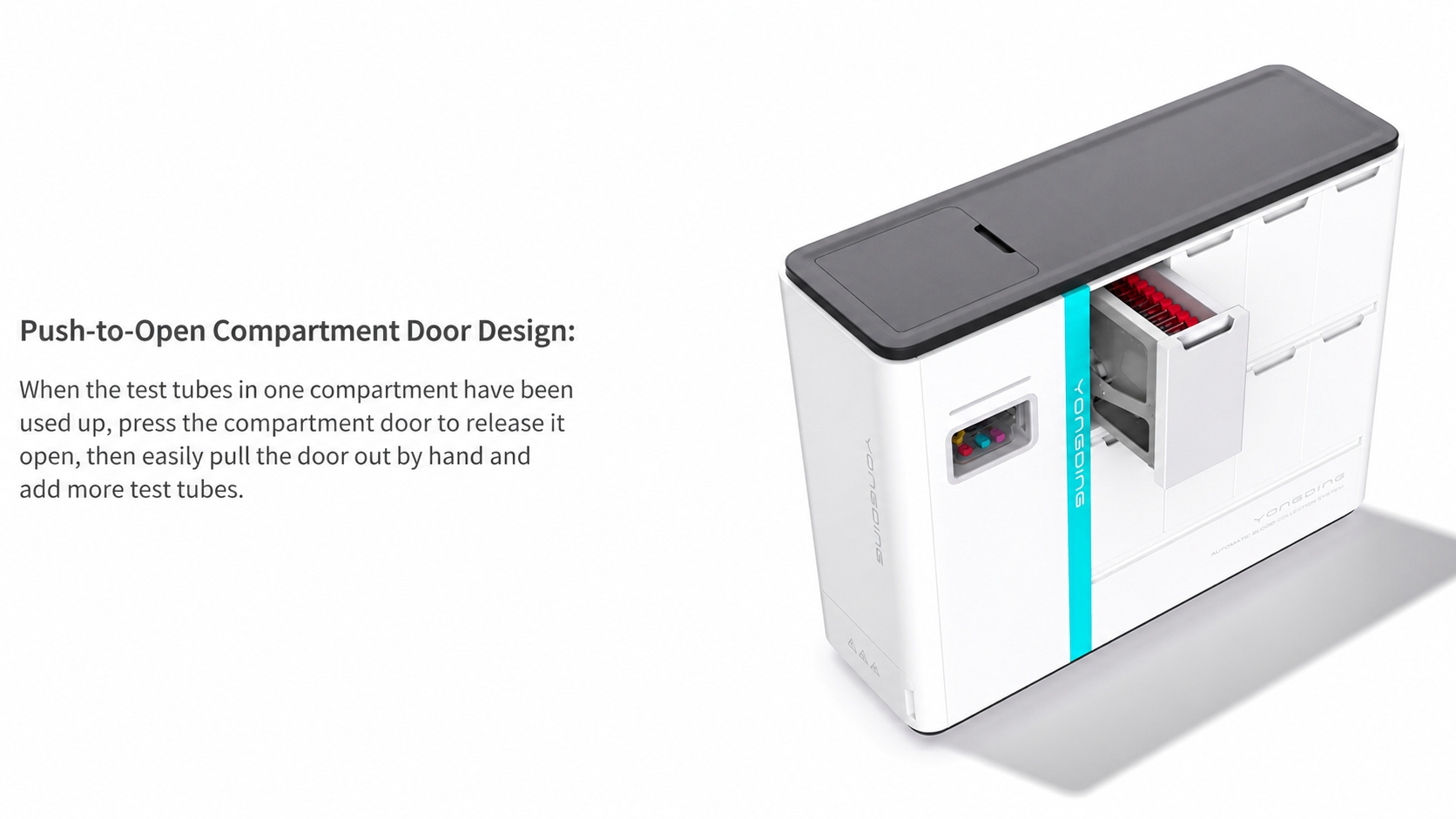
On the side of the equipment, the dividing lines of the access doors were incorporated into the overall exterior design, giving the product a more integrated and intelligent visual identity.
The side doors use a push-to-open structure, allowing medical staff to access internal components conveniently during maintenance.
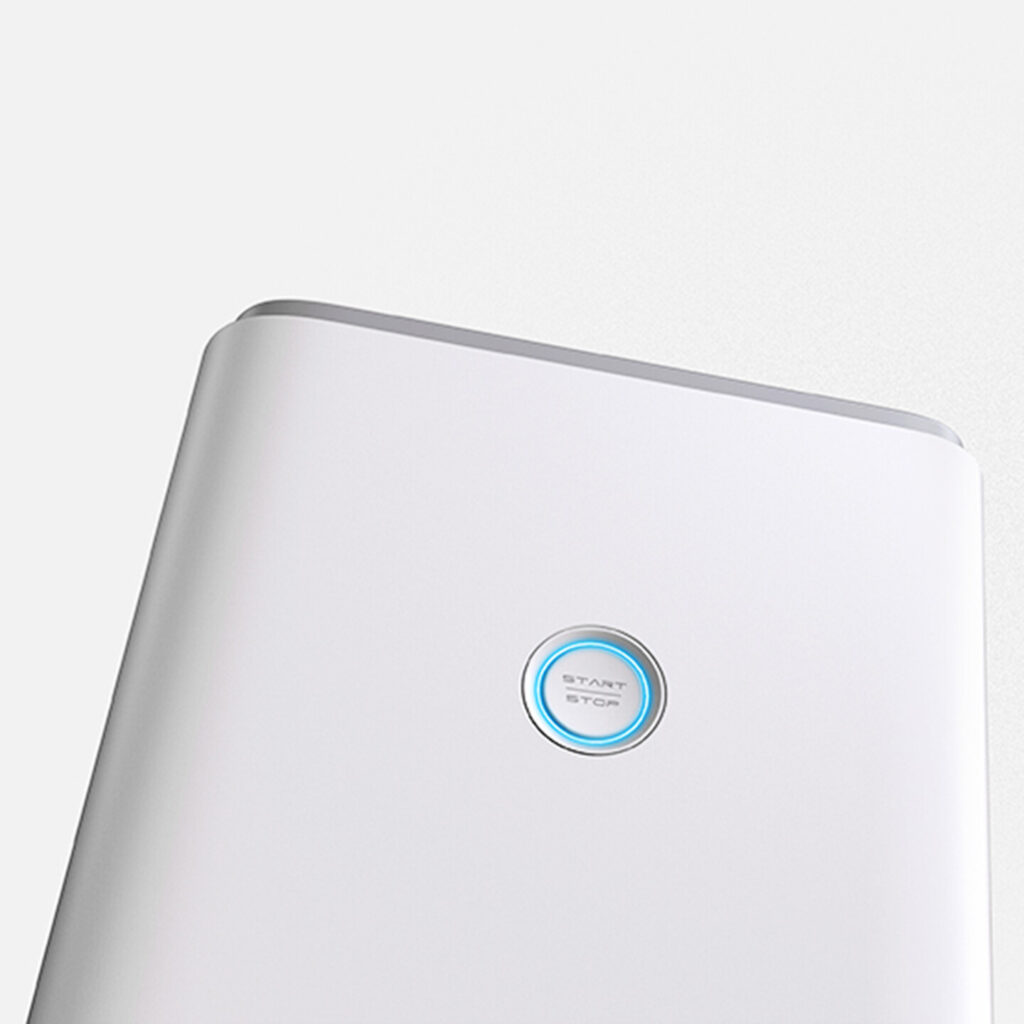
A professional medical color palette and carefully controlled details further strengthen the product’s sense of cleanliness, precision, quality, and technological sophistication.
Experience Optimization
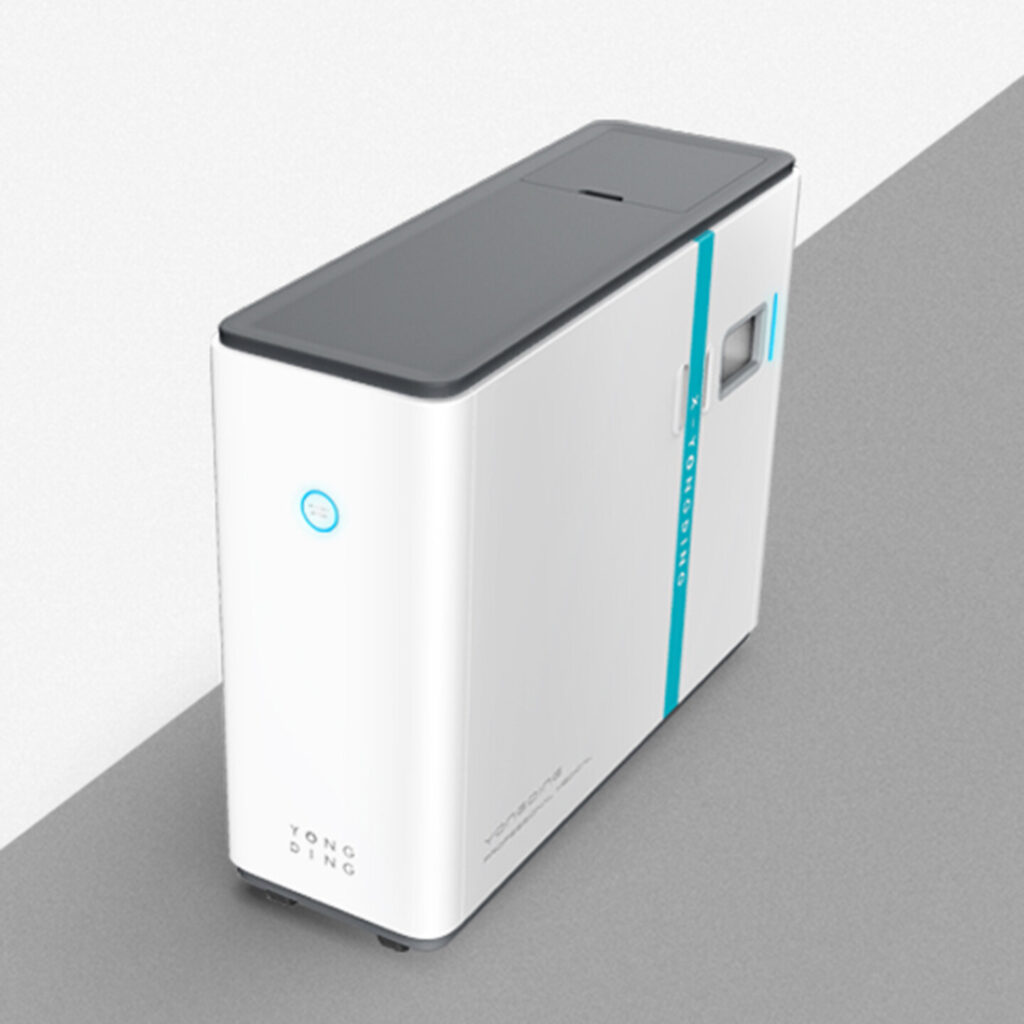
The entire body uses door-opening structures as a consistent design language.
Dividing lines on the front separate the product into two clearly recognizable operating zones, helping users identify and access different functions more easily.
The LKK Design team placed particular emphasis on operating experience and product safety.
For medical products, stable and reliable operation is essential. The complete system therefore needed to maintain consistent performance during frequent and continuous hospital use.
💡 Solution
1. Integrated Design and Service Development
For this project, the LKK Design team provided Yongding Medical Technology with exterior design, structural design, and supply chain management services.
The design focused primarily on human-machine interaction and practical hospital use.
Through systematic optimization, the team helped the client improve the product’s functions, operating procedures, and interaction methods.
The equipment was successfully developed and introduced into hospitals.
The blood collection management and labeling system manages patient queues and automatically generates a unique identification number for each label.
It then applies the correct label to the corresponding blood collection tube and directs the tube to the designated blood collection window.
This automated process reduces the working time required from medical staff and allows hospitals to use personnel and medical resources more efficiently.
2. Standardized and Intelligent Blood Collection Management
The system supports blood collection rooms and clinical laboratories in establishing standardized, intelligent, information-based, electrical, mechanical, and automated management processes.
By replacing repetitive manual procedures with automated identification and labeling, the equipment reduces unnecessary delays caused by human error.
The blood collection tube is digitally linked with the patient’s identity and required laboratory tests.
This connection improves sample traceability, reduces the risk of mismatched tubes or test items, and strengthens the hospital’s overall management quality for blood collection procedures.
Through queue management, automatic tube labeling, sample identification, and window allocation, the system creates a safer, faster, and more organized blood collection experience for both patients and medical professionals.
Like What You See?
 Let's Talk About Your Project