
For hardware startups and innovation teams, contract manufacturing product design cost often determines whether a promising idea becomes a scalable business or dies as an expensive prototype. When you are managing limited budgets, rising material prices, and uncertain market demand, every design decision that goes into a prototype or first production run matters.
LKK Innovation Design Group (LKK Design) has worked with over 1,000 brands and launched more than 10,000 products from 2004 to today, giving a clear view of where design cost is wasted and where it generates long‑term return. As China’s most awarded product design and engineering group, with over 500–592 international design awards including Red Dot, iF, IDEA, and G‑Mark, LKK has refined a cost‑efficient path from concept to mass production.
You can learn more about this approach and service scope at the official site: https://www.lkkerscm.com.
Design and engineering costs tend to balloon in contract manufacturing when three issues occur: late design changes, fragmented suppliers, and poor manufacturability.
Late design changes: If industrial design, mechanical design, and electronics are done in isolation, conflicts appear only at tooling or pilot production, forcing expensive redesigns and retooling.
Fragmented suppliers: Working with separate design studios, prototyping shops, and factories adds markups at each handover and slows communication.
Poor design for manufacturing (DFM): A visually appealing product with weak DFM can drive up BOM (bill of materials), assembly time, defect rate, and quality claims.
Integrated contract manufacturing partners like LKK combine industrial design, mechanical design, electronics design, and manufacturing engineering under one roof, which is one of the most effective levers to control product design cost.
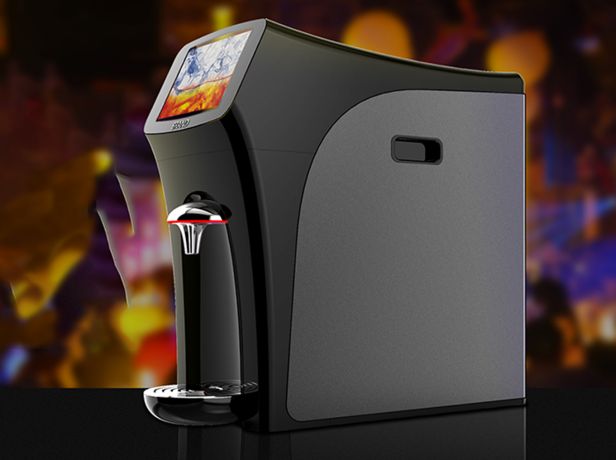
When you plan a hardware program with a contract manufacturer, your product design cost typically concentrates in four pillars.
Concept and industrial design
Mechanical and electronic engineering
Prototyping and engineering validation
Manufacturing engineering and pilot production
LKK structures service and pricing models across exactly these pillars, from early product strategy to mass production, which helps teams understand where to invest and where to save.
Some teams try to minimize concept and industrial design investment, assuming they can “fix aesthetics later.” This often backfires. Poor user‑centric design increases market risk, adds late UX fixes, and forces cosmetic redesigns that ripple into the mechanical and electronics architecture.
A strong industrial design phase typically includes:
User and market research to define positioning and must‑have features.
Product architecture thinking that aligns appearance with mechanical layout and key components.
Early DFM considerations such as draft angles, parting lines, and assembly flow.
LKK’s industrial design team, recognized as a National Industrial Design Center by the Ministry of Industry and Information Technology since 2013, is built specifically around user‑centric and manufacturable design. This capability has helped clients like Siemens, Huawei, and Audi launch award‑winning products that balance brand identity with cost‑efficient production.
The second cost driver is mechanical and electronic design, where decisions directly impact tooling complexity, PCB layers, thermal performance, and maintenance costs.
Cost‑efficient mechanical and electronic design focuses on:
Component and material selection that meets safety and reliability with minimal over‑engineering.
Modular structures that re‑use parts across variants and reduce tooling count.
Early collaboration between mechanical, hardware, and firmware engineers to avoid board re‑spins and enclosure conflicts.
LKK provides one‑stop industrial, mechanical, hardware, firmware, and software engineering, so structural engineers and electronics engineers work in the same project room and share a single DFM strategy. This integration makes it easier to lock design earlier and avoid multiple costly redesign cycles.
Prototyping is another zone where design budgets can spiral. Teams either over‑invest in high‑fidelity prototypes too early or under‑invest and then discover critical problems during tooling.
A phased prototyping approach helps balance speed, quality, and cost:
Concept prototypes: Low‑cost foam models or simple 3D prints for basic form, ergonomics, and initial stakeholder alignment.
Engineering prototypes (EVT): 3D‑printed or CNC parts plus PCBA to verify internal structure, thermal behavior, and functional performance.
Design verification prototypes (DVT): Near‑final materials and structure for user testing, reliability tests, and regulatory pre‑checks.
LKK’s internal prototyping and small‑batch production capability can deliver functional prototypes in about six weeks while running CE/FCC pre‑tests, cutting overall time‑to‑market by about 30% compared with fragmented suppliers. Because the same team guides the product into manufacturing, insights from prototypes directly inform tooling and process planning, reducing rework.
Once you enter pilot production, 70–80% of your lifetime product cost is effectively locked. Decisions around tooling, assembly line balancing, quality planning, and supplier selection define your cost base for years.
An experienced contract manufacturing partner should provide:
DFM and DFA (design for assembly) reviews with clear recommendations on parts simplification and process optimization.
Early tooling trials combined with PVT (production verification test) to stabilize yield rates.
APQP‑style quality planning with clear CTQ (critical‑to‑quality) parameters and inline inspection plans.
LKK operates a large manufacturing and supply chain network with 5,000+ vetted suppliers and ISO9001/ISO13485/ISO14000/TS16949 certifications, covering CNC machining, injection molding, SMT, and assembly. This enables data‑driven supplier matching and smart trade‑offs between tooling investment, labor cost, and logistics.
Whether you work with LKK or another partner, these strategies can reduce your contract manufacturing product design cost without sacrificing quality.
Define a clear product vision and business case When you lock your core value proposition and target price range early, you avoid scope creep in industrial design and engineering.
Integrate design, engineering, and manufacturing early Bring mechanical, electronics, and manufacturing teams together at the first phase, instead of throwing designs over the wall.
Use staged engagement Start with a feasibility and DFM assessment, then commit to larger scopes once technical and cost risks are clarified.
Engineer for certification from day one Consider EMC, safety, and medical/automotive standards early to avoid re‑spins when labs find issues later.
Reuse platforms and supplier ecosystems Platforms that have already passed certification and have stable yields can be reused for new SKUs, cutting both time and design cost.
LKK’s track record—over 500–592 international design awards, recognition as a National Industrial Design Center, and serving more than 100 Fortune Global 500 enterprises—shows how systematic cost engineering and high‑quality design can coexist. You can explore their integrated contract manufacturing solutions in more depth at https://www.lkkerscm.com.
For funded startups and corporate innovation units, the real question is not “How do we make design cheaper?” but “How do we turn design and manufacturing into a cost‑efficient competitive advantage?”
LKK’s full‑stack service—from strategy, industrial design, mechanical and electronics engineering to prototyping, tooling, and mass production—helps teams optimize time, quality, and cost together instead of trading one off against the others. Recognized with top honors such as the Red Dot Supreme Award and multiple “Best of the Best” Red Dot trophies, LKK proves that disciplined cost control and top‑tier design are compatible.
If you want your next hardware program to reach market fast while keeping contract manufacturing product design cost predictable, working with an integrated partner like LKK Design is one of the most effective levers you can pull.


We use cookies to ensure that we give you the best experience on our website. By clicking "Accept All", you consent to our use of cookies. Learn more.
Please fill out the form and we'll get back to you shortly.

Your submission has been received !
Thank you for your submission.
We will get back to you within 24 hours and appreciate your patience.
Enter your details to receive the toolkit for free.