

 Home /
 Product Manufacturing Engineering Services for Efficient Product


Product Manufacturing Engineering Services: Turning Ideas into Scalable Products
To take a product to the market, it needs more than a good design. A product should be producible, economical, dependable, and capable of mass production. Product manufacturing engineering services are important in this.
- Most products appear fantastic in CAD software, but they are faced with problems when they start production. A project can be easily slowed down by assembly problems, quality flaws, high manufacturing expenses, and supplier constraints. Engineering manufacturing fills the gap between designing and successful production of products, since all components, processes, and assembly methods are optimized before mass production begins.
- At LKKER SCM, manufacturing engineering is incorporated in the entire development cycle, which assists companies in transitioning from concept to production more confidently, efficiently, and with quality. Its aim is not merely to produce products, but to produce products that can be produced at scale and in a cost-effective manner.
Why Manufacturing Engineering is Important in Product Development
The process of launching a product starts way before the initial unit of production is out of the factory. Each choice taken in the development process determines the cost of manufacturing, the speed of production, the quality of the product, and the reliability in the long term. Professional manufacturing engineering services help companies:
• Improve product manufacturability
• Reduce production risks
• Increase manufacturing efficiency
• Support supplier coordination
• Lower production costs
• Improve product quality
• Speed up time to market
• Enhance scalability
Manufacturing engineers consider the designs in terms of production, and they can see the pitfalls that might arise before they turn out to be costly issues at the factory level.
Product Concept to Production Success
The process of taking the idea to a commercial product is a process that incorporates several engineering disciplines. Good product development engineering integrates the design, manufacturing, testing, sourcing, and quality assurance into a systematic development process. An average product development process involves:
1. Concept development
2. Engineering feasibility analysis
3. Product design engineering
4. Prototype development
5. Product validation
6. Manufacturing process development
7. Production launch
8. Product commercialization
Such a systematic process minimizes uncertainties and enhances decision-making in the project lifecycle. Firms that invest in appropriate engineering product development usually have easier launches of the products and improved long-term product performance.
Manufacturing Process Engineering: Construction of Effective Production Systems
A product design can be technically superior, but it will not succeed without being able to be manufactured efficiently. Manufacturing process engineering aims at coming up with production processes that are balanced in terms of quality, speed, consistency, and cost. Key activities include:
• Process engineering
• Assembly process development
• Production line engineering
• Manufacturing workflow optimization
• Factory process engineering
• Production planning
• Process validation
The goal is to develop repeatable and dependable industrial manufacturing processes that can sustain the present production requirements and future expansion. The manufacturing engineering strategy of LKKER SCM focuses on the planning of processes, coordination of tools, optimization of assembly, integration of quality control, and evaluation of production readiness to facilitate the successful implementation of manufacturing.
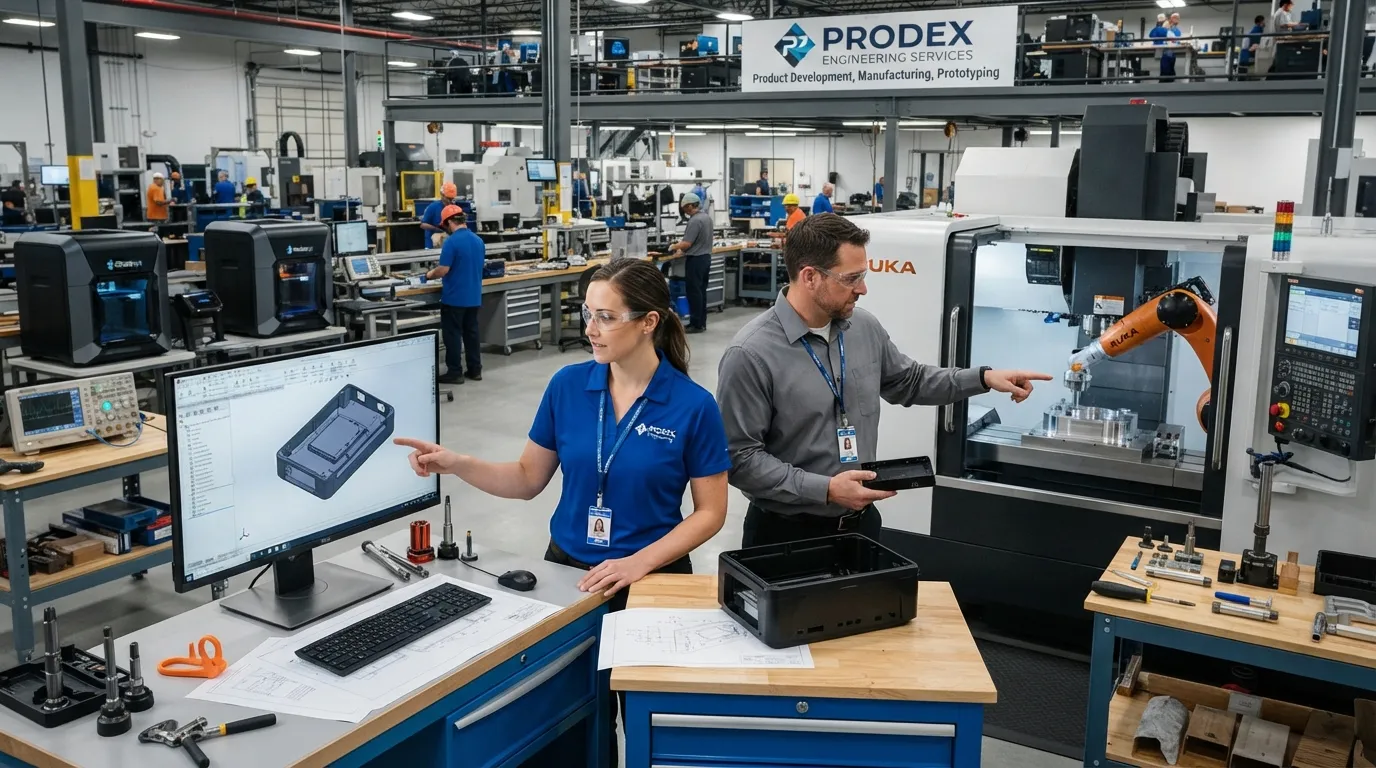
Design to Manufacturing Produces Superior Products
Design for manufacturing, also referred to as DFM, is one of the most crucial manufacturing disciplines. DFM assists the engineering departments in developing products that are simpler, quicker, and less costly to produce without affecting performance. A thorough DFM engineering analysis usually looks into:
• Material selection
• Part geometry
• Assembly complexity
• Tolerance requirements
• Tooling feasibility
• Manufacturing costs
• Production risks
• Quality considerations
Early DFM analysis assists in removing unwanted complexity and enhancing the overall manufacturability.
Professional DFM Services: Benefits
• Improved production yield
• Reduced tooling modifications
• Faster production cycles
• Lower assembly costs
• Better product consistency
• Enhanced manufacturing readiness
DFM reviews are also part of the development projects at LKKER SCM to determine the manufacturing constraints prior to making investments in production. This proactive approach helps in facilitating easier engineering-to-manufacturing transitions.
Design Engineering Vs Reality in Manufacturing
A lot of development teams pay a lot of attention to product functionality. Nevertheless, successful products also need to meet manufacturing needs. Strong product design engineering balances:
• User experience
• Product performance
• Manufacturing feasibility
• Quality requirements
• Regulatory considerations
• Cost targets
This balance assists in developing a production-ready design that is efficient in testing and real production manufacturing conditions.
Manufacturing engineers often perform:
• Manufacturing design review
• Engineering design validation
• Manufacturing feasibility analysis
• Manufacturing risk assessment
• Product optimization
Such tests are useful in ensuring that the end design is producible at the necessary volume of production.
Rapid Prototyping in Manufacturing Engineering
Engineering teams normally test designs with prototyping before investing in production tooling. Rapid prototyping helps engineers to test fit, functionality, assembly, and performance without huge investments.
Typical prototype activities are:
• Engineering prototypes
• Functional prototypes
• Prototype testing
• Prototype validation
• Design verification
The iterations of prototyping usually show the possibilities of design enhancement, optimization of processes, and cost minimization.
Contemporary prototyping techniques can involve:
• CNC machining
• 3D printing
• Soft tooling
• Vacuum casting
• Sheet metal fabrication
Early validation of designs can help companies tremendously mitigate manufacturing risks and enhance the overall project results.
Manufacturing Workflow Optimization Improves Efficiency
Efficiency in production does not come by chance. It involves thorough planning and constant enhancement. Workflow optimization in the manufacturing industry is aimed at developing effective production systems that ensure maximum production and quality. Optimization areas could be:
• Workstation design
• Material flow
• Assembly sequencing
• Production balancing
• Inventory management
• Equipment utilization
Lean manufacturing principles are also embraced by many manufacturers to help them eliminate waste and enhance productivity.
Examples include:
• Reducing unnecessary movement
• Eliminating process bottlenecks
• Improving cycle times
• Standardizing work instructions
• Minimizing inventory levels
These enhancements lead directly to increased efficiency in manufacturing and reduced operating expenses.
Product Lifecycle Management After Launch
Engineering in manufacturing does not stop when the production process starts. Product lifecycle management strategies enable successful companies to keep on enhancing products during their lifecycle. Post-launch engineering activities can involve:
• Process improvement
• Production optimization
• Cost reduction initiatives
• Quality enhancement programs
• Supplier optimization
• Product updates
Continuous improvement assists in being competitive and achieving long-term profitability. This continuous emphasis on optimization is what usually makes the difference between successful and unsuccessful products in competitive markets.
Conclusion
Only when engineering and manufacturing collaborate in the first place, a product manufacturing engineering services can be successful. Designs that take into account the realities of production early tend to be of high quality, less expensive, and enter the market quicker. Want to take an idea and make it a scalable product? Collaborate with LKK SCM to obtain professional manufacturing engineering services, DFM analysis, prototype validation, process optimization, and production readiness solutions that can be used to launch products in the market more quickly and efficiently.
Contact Us



- 20+ Design Industries Serviced
- 200+ Product Categories
- 1,000+ Industry Leaders Served
- 10,000+ Products Successfully Launched

Founder and Chairman of LKK Design Group
Ready to get started? Connect with us today!
 Talk to Our Team


