

 Home /
 Product Innovation and Manufacturing Company |Complete Guide


Product Innovation and Manufacturing Company: Turning Ideas into Products
An excellent product concept does not end there. The truth of the matter begins when that concept must address a real customer issue, operate on a realistic budget, be reliable, attractive, and get to production without continuous redesigns.
- It is where a product innovation and manufacturing company can make a difference. Rather than dividing strategy, design, engineering, and manufacturing into disjointed processes, an integrated team can bridge the gap early on.
- This strategy assists firms in transitioning from an early opportunity to a tested, manufacturable, and commercially viable product. It also opens space to make superior decisions prior to costly tooling, manufacturing, or supply chain obligations.
- LKK integrates strategy, industrial design, engineering, prototyping, manufacturing, and delivery as part of its product development strategy. Its Product Strategy service is aimed at transforming market opportunities and user needs into product development plans. (LKK)
First Step to Product Innovation
A new product is not warranted by all customer problems. Good product innovation starts with the realization of where there is a significant opportunity. Product development market research can show evolving customer behavior, new categories, price expectations, technology trends, and existing product gaps. Competitive product analysis is then used to make teams aware of what is already available in the market and where the market is yet to be served. An effective discovery process can investigate:
• Consumer insights
• User research
• Customer needs analysis
• Strengths and weaknesses of competitors
• Technology trends
• Pricing expectations
• Unmet customer needs
• Manufacturing feasibility
The Product Strategy process at LKK involves: market sizing and trend analysis, user research, competitive landscape mapping, opportunity identification, and gap analysis. (LKK) This provides a better basis for product innovation strategy since development is based on evidence and not assumptions.
Product is Realized in Industrial Design
After setting the direction of the product, the industrial design services determine the appearance, touch, and performance of the product. Good industrial design is not an ornament to be added afterwards. It affects ergonomics, component layout, manufacturing decisions, material selection, and customer interaction with the product. Development may include:
• Product industrial design
• Consumer product design
• Physical product design
• Custom product design
• Product styling
• Product aesthetics
• Ergonomic product design
• Functional product design
• User-centered product design
• Human-centered product design
An experienced industrial design company considers the relationship between the user's expectations and the product's physical limitations. The product development capabilities of LKK include industrial design, concept sketches, 3D rendering, and CMF design, which can be used to define the visual direction and the physical product character. (LKK)
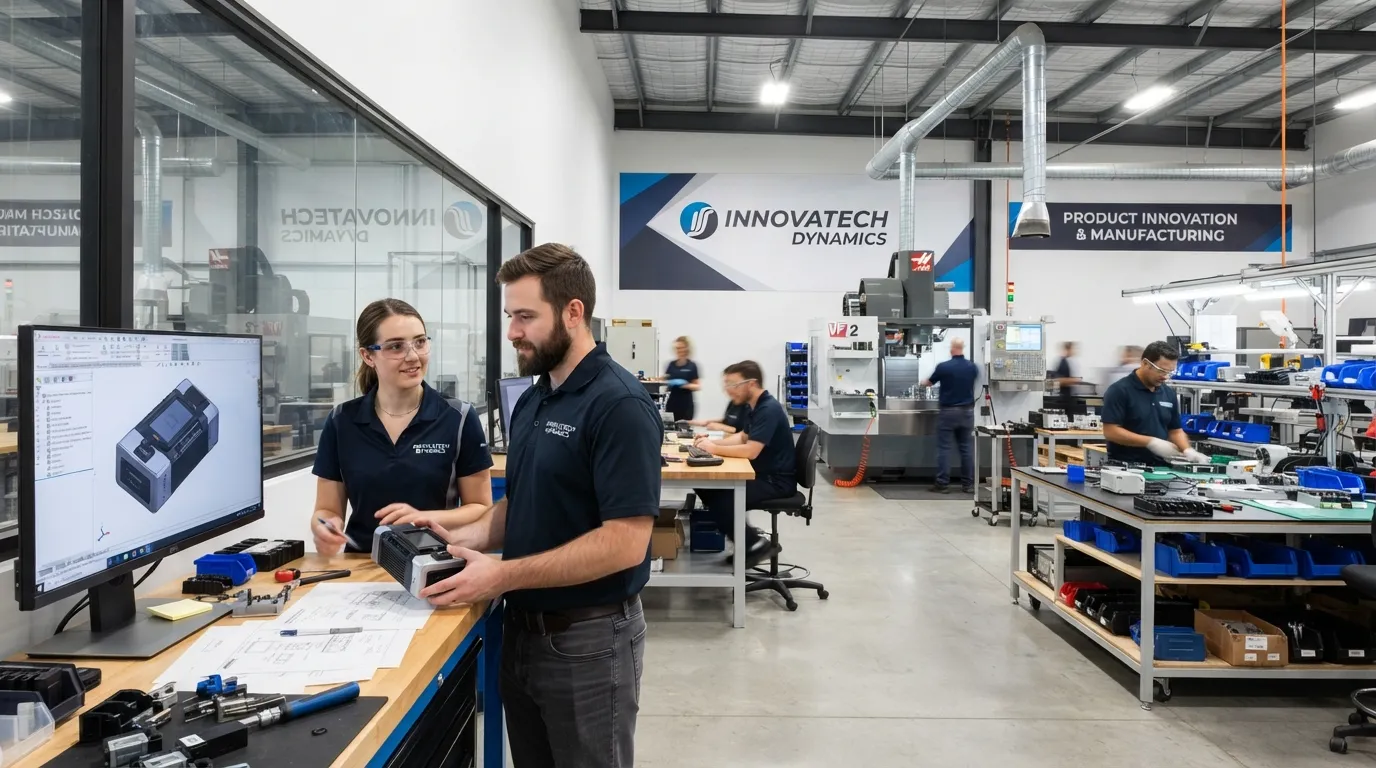
Prototypes Transform Assumptions to Evidence
Regardless of the power of the digital design, physical testing can demonstrate the details that cannot always be demonstrated by models. Product prototyping provides teams with time to test form, fit, function, usability, assembly, and performance prior to investing more in production. Some of the questions that a prototype can provide answers to include:
• Is the product comfortable?
• Do the controls have easy access?
• Do components fit correctly?
• Is the structure strong enough?
• Is the product assembleable?
• Are manufacturing tolerances realistic?
• Is the physical product as per the intended design?
The prototype testing also provides a chance to repeat. This is where product improvement services and product redesign services come in handy. A minor modification in the prototyping stage can help to avoid a significant change once the tooling or mass production has started.
Design to Manufacturing Bridges the Gap Between Innovation and Production
A product may be a good one and yet hard to produce. DFM assists in finding these issues when the changes are still quite simple to implement. Engineers check materials, component selection, tolerances, assembly processes, tooling, manufacturing processes, and projected volumes of manufacturing. DFM can be used to enhance:
• Product manufacturability
• Assembly efficiency
• Production consistency
• Manufacturing yield
• Tooling requirements
• Production cost
• Quality control
The design and development of products should thus incorporate the manufacturing considerations at an early stage, particularly when the product is anticipated to attain high levels of production. This is among the greatest merits of collaborating with a product development firm that is knowledgeable in engineering and production.
Production is a Component of Product Innovation
An engineered product could be converted to repeatable production with the assistance of a competent product manufacturing company. Engineering of manufacturing, planning of production, quality control, coordination of the supply chain, tooling, and process development influence the outcome.
Here, the product manufacturing services, product manufacturing solutions, and production engineering are linked to innovation. In the case of businesses, it is easy to achieve: to design a product that can be manufactured in the same way, at the necessary quality and quantity, without losing the initial design purpose.
First Product is Not the End of Innovation
It makes innovation a continuous process and not a one-time launch. The innovation of the product portfolio can assist businesses in discovering opportunities in the existing product lines. Others might require new features, others might require superior materials, ease of use, reduced cost of production, or redesign. A long-term product life cycle strategy may thus comprise:
• New product development
• Product improvements
• Product redesign
• New market opportunities
• Feature extensions
• Manufacturing optimization
• Product commercialization
• Product launch development
This strategy enables organizations to continue enhancing their portfolio and react to actual market requirements.
Conclusion
Ideas for the strongest products are the ones that do not fall apart when they come into contact with the real world. An effective product must have more than creativity. It requires market validation, articulated needs, intelligent design, good engineering, viable prototypes, manufacturability, and a viable path to commercialization. Are you willing to get out of the idea phase? Collaborate with LKK, a product innovation and manufacturing company, to formulate the strategy, design the product, test the engineering, and develop a viable path to manufacturing and commercialization.
Contact Us



- 20+ Design Industries Serviced
- 200+ Product Categories
- 1,000+ Industry Leaders Served
- 10,000+ Products Successfully Launched

Founder and Chairman of LKK Design Group
Ready to get started? Connect with us today!
 Talk to Our Team


