
 Home /
 Mechanical Design Prototyping: From Concept to Mass Production

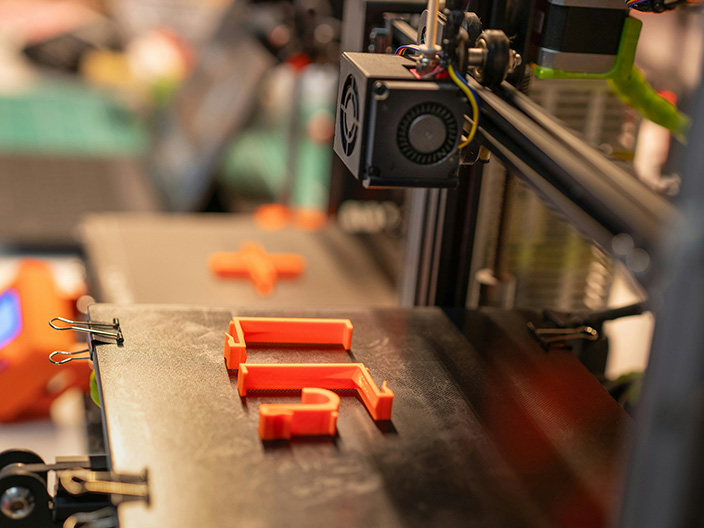
Table of Contents


Mechanical design prototyping is the critical bridge between innovative ideas and successful mass-produced products. In today’s highly competitive global markets, companies can no longer afford design failures, cost overruns, or production delays. A structured and engineering-driven mechanical design prototyping process ensures that concepts are not only visually compelling but structurally sound, manufacturable, reliable, and commercially viable.
As a user-centered international innovation design group founded in 2004, LKK integrates industrial design, mechanical engineering, electrical development, manufacturing engineering, and contract manufacturing into a unified end-to-end solution. This guide explores the complete mechanical design prototyping process, from concept validation to production readiness.
What Is Mechanical Design Prototyping?
Definition and Core Objectives
Mechanical design prototyping is the structured engineering process of transforming product concepts into functional, testable mechanical systems. It involves:
- Mechanical architecture planning
- Structural design and 3D modeling
- Tolerance analysis and GD&T documentation
- Simulation and validation
- Prototype fabrication
- Iterative testing and refinement
The goal is not simply to create a physical model, but to validate performance, durability, manufacturability, and cost feasibility before committing to mass production.
At LKK, mechanical prototyping is deeply integrated with user research and industrial design to ensure that structural engineering aligns with real-world usage scenarios.
Why Mechanical Prototyping Matters in Competitive Markets
Modern product innovation demands speed, reliability, and cost control. Mechanical design prototyping plays a decisive role in:
- Reducing development risks
- Identifying structural weaknesses early
- Validating manufacturing feasibility
- Shortening time-to-market
- Improving production success rates
Without a structured prototyping phase, companies often encounter tooling redesign, supply chain disruptions, or quality failures during mass production. Early engineering validation prevents these costly setbacks.
The Complete Mechanical Design Prototyping Process
At LKK, mechanical design prototyping follows a clearly defined engineering framework that ensures traceability, performance validation, and manufacturing alignment.
Requirement Analysis and Mechanical Architecture Design
The process begins with a thorough analysis of product requirements, including:
- Functional specifications
- Environmental operating conditions
- Performance KPIs
- User interaction requirements
Engineers create a mechanical system architecture diagram to define load paths, motion mechanisms, structural layout, and integration interfaces. Clear KPI definition ensures that performance metrics are measurable throughout development.
Detailed Engineering Design and Simulation
Once the architecture is established, engineers move to detailed design.
Deliverables include:
- High-precision 3D CAD models
- Engineering drawings with GD&T annotations
- Tolerance stack-up analysis
- Material selection documentation
Finite element analysis (FEA) simulations evaluate:
- Structural strength
- Deformation
- Thermal behavior
- Fatigue performance
Simulation reports reduce reliance on physical trial-and-error and allow faster optimization before prototype fabrication.
Prototype Development and Iterative Testing
After digital validation, physical prototypes are fabricated using technologies such as:
- CNC machining
- Rapid prototyping
- Low-volume tooling
Testing focuses on:
- Mechanical functionality
- Durability
- Environmental resistance
- Assembly feasibility
Each iteration is carefully documented through Engineering Change Notices (ECN), ensuring controlled modifications and traceable improvements.
Design for Manufacturing (DFM) Optimization
Design for Manufacturing is a critical checkpoint in mechanical design prototyping.
DFM evaluation includes:
- Draft angle analysis
- Wall thickness optimization
- Tolerance feasibility
- Mold complexity rating
- Cost impact assessment
LKK delivers structured DFM risk matrix reports that prioritize improvement areas, ensuring the design is optimized for efficient tooling and production.
Manufacturing Engineering and Production Readiness
Mechanical design prototyping does not end with a functional prototype. Transitioning to mass production requires:
- Tooling engineering validation
- Pilot production runs
- Standard Operating Procedure (SOP) documentation
- Quality inspection criteria
- Supply chain capability matching
By integrating manufacturing engineering early, LKK minimizes the gap between design validation and scalable production.
Mechanical Design Prototyping vs. Traditional Product Development
Traditional product development often follows a linear model that delays manufacturability checks until late stages. Modern mechanical prototyping is iterative and integrated.
| Aspect | Traditional Approach | Modern Mechanical Prototyping |
|---|---|---|
| Design Flow | Linear | Iterative |
| Validation | Physical trial-based | Simulation-driven |
| DFM Integration | Late stage | Early stage |
| Risk Exposure | High | Controlled |
| Production Transition | Reactive | Pre-validated |
This integrated approach significantly improves first-time production success rates.
Key Technologies Used in Modern Mechanical Prototyping
Rapid Prototyping Technologies
CNC machining and additive manufacturing allow fast creation of structural components for functional validation.
Finite Element Analysis (FEA)
FEA simulations reduce development cycles by predicting structural performance under real-world stress conditions.
GD&T and Tolerance Engineering
Precise geometric dimensioning ensures assembly compatibility and consistent manufacturing quality.
Material and Surface Validation
Mechanical performance depends on correct material selection and surface treatments, validated during prototyping to ensure durability and aesthetic alignment.
How Mechanical Design Prototyping Controls Cost and Risk
Early DFM Assessment
By analyzing manufacturing feasibility early, design revisions are less expensive and more controlled.
Manufacturing Feasibility Evaluation
Wall thickness, material compatibility, and tooling complexity are evaluated before tooling investment.
Supplier Capability Matching
Supply chain integration ensures selected suppliers can meet tolerance, material, and volume requirements.
Preventing Mass Production Failure
Prototyping reduces:
- Tooling redesign
- Assembly mismatch
- Structural failure
- Quality inconsistency
From Prototype to Mass Production: The Critical Transition
Tooling Engineering
Tool design must reflect validated mechanical structure and tolerance requirements.
Pilot Production and Process Validation
Pilot runs confirm:
- Assembly workflow
- Production efficiency
- Quality consistency
Lean Production Roadmapping
Manufacturing engineering teams optimize:
- Workstation layout
- Process flow
- Changeover efficiency
Quality System Implementation
Quality documentation and inspection standards are finalized before mass production scaling.
Why Choose LKK for Mechanical Design Prototyping
User-Centered Innovation Methodology
LKK places users at the center of mechanical design decisions. Structural engineering supports real-world usability and performance.
End-to-End Engineering and Manufacturing Integration
Unlike isolated engineering studios, LKK integrates:
- Industrial design
- Mechanical engineering
- Electrical development
- Manufacturing engineering
- Contract manufacturing
This unified structure reduces communication gaps and accelerates product commercialization.
Cross-Disciplinary Collaboration
Mechanical design works alongside electrical and firmware development to ensure system-level reliability.
Global Supply Chain Coordination
With experience serving international B2B clients, LKK aligns design feasibility with global manufacturing standards and supplier capabilities.
Frequently Asked Questions About Mechanical Design Prototyping
How long does mechanical design prototyping take?
Development timelines vary based on complexity, but structured workflows typically range from several weeks for initial validation to extended cycles for high-complexity systems.
What deliverables should be expected?
- 3D CAD models
- Engineering drawings with GD&T
- Simulation reports
- DFM analysis
- ECN documentation
- Manufacturing readiness documents
How do you know when to move to tooling?
Tooling begins after structural validation, DFM approval, tolerance confirmation, and prototype performance testing.
Conclusion
Mechanical design prototyping is not merely about creating a physical sample. It is a systematic engineering process that validates performance, manufacturability, reliability, and scalability. Companies that invest in structured mechanical prototyping significantly reduce production risk and improve time-to-market performance.
By integrating user-centered innovation with rigorous mechanical engineering and manufacturing expertise, LKK transforms product concepts into market-ready solutions with higher production success rates and stronger competitive positioning.
For organizations seeking reliable, scalable, and cost-efficient mechanical design prototyping solutions, a comprehensive and integrated engineering approach is the foundation of sustainable product innovation.
Contact Us



- 20+ Design Industries Serviced
- 200+ Product Categories
- 1,000+ Industry Leaders Served
- 10,000+ Products Successfully Launched

Founder and Chairman of LKK Design Group
Ready to get started? Connect with us today!
 Talk to Our Team