
 Home /
 Mechanical Prototype Development for Hardware Products | Guide


Mechanical Prototype Development for Hardware Products: Guide
All successful hardware products begin with an idea, but ideas do not tell whether a product can survive in the real world, or whether it can fit together, or even more efficiently into the production process. Companies require a consistent method of measuring performance, structure, usability, and manufacturability before investing in production tooling and large-scale production.
- Mechanical Prototype Development for Hardware Products comes in here. A mechanical prototype converts digital ideas into tangible models that can be tested, refined, and validated. It enables engineering teams to detect problems at an early stage, minimize the risk of development, and enhance the quality of the product before the production process.
- In the case of startups, product innovators, and established manufacturers, mechanical prototype development provides a pathway between the generation of concepts and the hardware that is production-ready.
Importance of Mechanical Prototype Development
A digital representation can offer some useful information, yet it cannot be as close to the experience of holding, assembling, and testing a physical product. A prototype enables teams to check:
• Structural performance
• Component fit and clearance
• Assembly processes
• Material behavior
• Ergonomics
• Product functionality
• Manufacturing feasibility
• User interaction
In the case of hardware product development, such insights are used to make informed decisions by teams prior to spending large sums on tooling and production resources. Mechanical prototypes are also useful in communication between design, engineering, manufacturing, and business teams as they offer a physical representation of the product.
Product Concept to Mechanical Prototype
The process starts with the development of the product concept. At this level, teams establish the purpose of the product, functionality of the product, users, and technical requirements. The initial stage may involve:
• Product design research
• Market evaluation
• Concept generation
• Industrial design exploration
• Functional requirements definition
• Product specifications
• Mechanical architecture planning
A good idea assists in directing all subsequent steps of mechanical product development.
The mechanical design process of LKK focuses on the requirements of the product, its functional purpose, user expectations, and manufacturing factors before the start of detailed engineering. This assists in creating a strong base for developing products and creating prototypes.
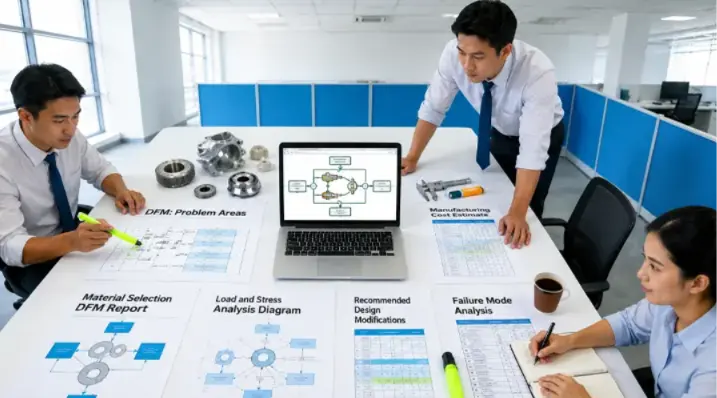
Choosing the Type of Prototype
Not all prototypes serve the same purpose. The various developmental stages necessitate varying degrees of fidelity.
Concept Prototype
Form, size, and overall functionality are frequently tested with a concept prototype. It assists teams in responding to simple questions like:
• Is the product right?
• Is the form factor feasible?
• Are dimensions appropriate?
• Is the layout user-friendly?
Appearance Prototype
An appearance prototype is concerned with the visual features. This may include:
• Surface finishes
• Product aesthetics
• Industrial design evaluation
• Studies of color and texture.
• User feedback sessions
Appearance prototypes can be useful when evaluating product presentation before production.
Functional Prototype
An operational prototype is developed to test real performance. Such prototypes can consist of:
• Moving mechanisms
• Structural components
• Electronic systems
• Mechanical assemblies
• User interfaces
The most significant phase of prototyping hardware products is usually functional prototyping since it demonstrates the behavior of the product in actual conditions.
Quick Prototyping Speeds Up Development
The current development cycles are fast, and rapid prototyping has become an effective way of shortening the timelines. Several fabrication techniques can be employed based on product needs:
• CNC machining
• 3D printing
• Vacuum casting
• Silicone molding
• Sheet metal fabrication
• Low-volume manufacturing
LKK enables prototype manufacturing with CNC machining, additive manufacturing, vacuum casting, and low-volume production techniques, enabling teams to test designs in a short amount of time before investing in production tooling. Rapid prototyping allows quicker feedback on design and increased development iterations.
Mechanical Pre-Testing
Engineering teams usually conduct digital testing before physical testing commences. Mechanical analysis is used to forecast the behaviour of a product in various conditions. These studies may involve:
• Structural analysis
• Stress evaluation
• Load simulations
• Vibration analysis
• Thermal performance reviews
• Deflection studies
These tests are used to determine the weak areas prior to constructing several prototypes.
Simulation does not substitute for physical testing, but in many cases it can shorten development cycles because it can point out serious risks at an early stage.
Test Prototyping and Testing
The construction of a prototype is just a start. The second step is prototype testing, during which the engineers check whether the design can fulfill the functional and performance requirements. Testing may include:
• Mechanical durability testing
• Assembly validation
• Fit verification
• Drop testing
• Environmental testing
• Functional performance testing
• User evaluations
• Reliability testing
This phase aids in the overall process of product validation and assists in the process of ensuring that the engineering assumptions are right. An effective testing program will help avoid expensive redesigns later in the development cycle.
Mechanical Prototyping and Preparation for Manufacturing
Among the most useful advantages of developing a prototype in engineering is the preparation of a product to be produced. Mechanical prototypes help validate:
• Assembly methods
• Material selection
• Tolerance requirements
• Tooling feasibility
• Manufacturing workflows
• Quality control requirements
LKK incorporates Design for Manufacturing (DFM) concepts into mechanical development, which assists engineering teams in minimizing risks in production and enhancing manufacturing efficiency prior to the start of tooling. This phase assists in converting a prototype into production hardware.
Sponsoring Hardware Product Engineering
The products of today seldom involve mechanical systems. In the majority of hardware solutions, there is a need to integrate:
• Mechanical components
• Electronics
• PCBs
• Embedded systems
• Displays
• Batteries
• Connectors
• Sensors
Effective engineering of hardware products entails teamwork in various fields. Mechanical teams should make sure that structural needs, thermal management, enclosure needs, and assembly are in line with the overall product architecture. This combined method enhances reliability and minimizes engineering conflicts in the later stages of development.
Prototype to Commercialization of a Product
Mechanical prototyping is not a solitary engineering activity. It is a critical phase in the overall hardware product lifecycle. An effective developmental trajectory tends to be:
1. Concept generation
2. Product design
3. Mechanical architecture
4. CAD development
5. Prototype fabrication
6. Prototype testing
7. Prototype validation
8. Design refinement
9. Manufacturing preparation
10. Product commercialization
Each phase minimizes uncertainty and enhances confidence in the end product. With the effective use of prototypes, organizations are able to make superior technical choices and transition into production with fewer surprises.
Conclusion
Mechanical Prototype Development of Hardware Products enables teams to test concepts, confirm engineering choices, perfect designs, and get ready to manufacture products with more confidence. Each prototype is a learning experience that enhances the end product. Are you ready to transform your hardware idea into a prototype, manufacturable product? Collaborate with LKK and speed up your prototype-to-production process.
Contact Us



- 20+ Design Industries Serviced
- 200+ Product Categories
- 1,000+ Industry Leaders Served
- 10,000+ Products Successfully Launched

Founder and Chairman of LKK Design Group
Ready to get started? Connect with us today!
 Talk to Our Team