

 Home /
 How DFM Reduces Manufacturing Cost | Design for Manufacturing Guide


How DFM Reduces Manufacturing Cost: Smarter Design Decisions That Save Money
The cost of manufacturing is hardly calculated at the factory floor. The largest cost drivers in most cases are designed long before, during the design stage. Complicated geometries, challenging assembly needs, large numbers of parts, and impractical tolerances can all add to the cost of production before a product gets to manufacturing.
- This is the reason why Design for Manufacturing (DFM) is becoming an important aspect of product development among companies. Rather than concentrating on functionality or looks, DFM makes sure that the products are made with manufacturing efficiency, cost control, and scalability.
- Learning how DFM Reduces Manufacturing Cost can assist companies in reducing development timelines, enhancing the efficiency of production, and preventing the high cost of redesigning the product later in the product lifecycle.
What is Design to Manufacturing?
Design for Manufacturing, or DFM, is a method of engineering that considers the way a product will be produced prior to manufacturing. This is aimed at making production processes easier without compromising on performance, quality, and functionality of the products. An effective DFM process analyzes all the facets of a product, such as:
• Materials
• Part geometry
• Assembly methods
• Manufacturing processes
• Tooling requirements
• Tolerances
• Supply chain considerations
• Production scalability
Instead of detecting manufacturing issues after the tooling is made, DFM solves them at the design stage. This proactive strategy opens up possibilities for high manufacturing cost savings.
The Reasons Behind the Rise in Manufacturing Costs
How DFM reduces manufacturing cost? The cost of producing many products is high as the design decisions are not made based on the realities of production. Such cost drivers are:
• Excessive part counts
• Complex geometries
• Tight tolerances
• Difficult assembly procedures
• Custom components
• Material waste
• Lengthy production cycles
• High tooling complexity
A product that is commercially difficult or expensive to produce can make a product that is performing well commercially a challenge. Here, design for manufacturability comes in handy. Businesses can save on unnecessary production costs by aligning engineering decisions with manufacturing capabilities.
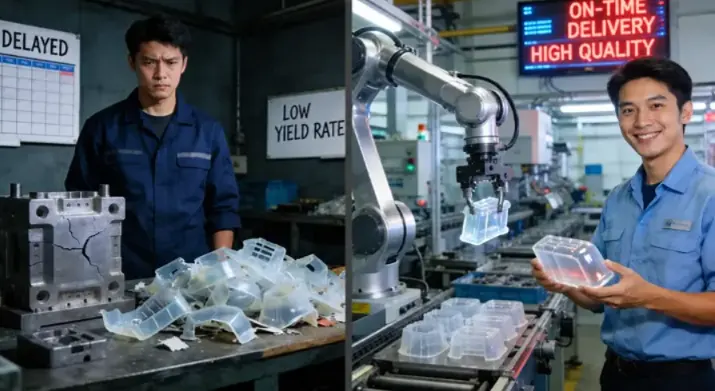
Simplification of Design Reduces the Cost of Production
Design simplification is one of the best DFM principles. Complex products typically require:
• More tooling
• Additional assembly steps
• Longer production cycles
• Increased quality control effort.
• Increased labor costs
Streamlining a design can lead to instant savings.
Examples include:
• Reducing unnecessary features
• Integrating several components into a single component.
• Eliminating redundant fasteners
• Standardizing component sizes
• Simplifying assembly sequences
These transformations are not huge in themselves, yet they tend to make significant gains in the efficiency of product production.
Reduction in Part Count Generates Significant Savings
Each element is costly. Every other component needs:
• Procurement
• Inventory management
• Inspection
• Assembly
• Quality verification
Engineers often find chances to cut down on the total number of parts through review of the design optimization process. As an illustration, a housing that initially comprises five distinct parts can be restructured into one molded component with inbuilt mounting capabilities.
Benefits include:
• Lower material costs
• Reduced assembly time
• Reduced supply chain dependencies
• Improved reliability
• Faster production
One of the best manufacturing optimizations is part consolidation.
Choice of Materials Has an Impact on the Cost of Manufacturing
The materials have a direct influence on the cost of production and performance of the product. DFM analysis is a thorough assessment of the alignment of the materials chosen with the manufacturing needs and the business goals. Engineers often assess:
• Material availability
• Processing requirements
• Cost per unit
• Mechanical properties
• Thermal performance
• Manufacturing compatibility
In other cases, an easier-to-obtain material can offer the same performance with a much lower cost of production. Material selection is done carefully to ensure that the product is designed in a cost-effective manner and the requirements are not compromised.
Optimization of Assembly Enhances Efficiency
The cost of assembly can constitute a major part of the manufacturing costs. Products that have many fasteners, involve complicated alignment processes, or require special assembly equipment tend to raise labor expenses. A powerful DFM plan is centered on simplification of assembly. This may include:
• Snap-fit features
• Self-locating components
• Reduced fastener counts
• Standardized hardware
• Simplified assembly sequences
These enhancements can minimize assembly time and enhance consistency between production batches. Even minor improvements in assembly can result in significant long-term savings as the production volumes grow.
Tooling Efficiency Lowers the Initial Investment
Tooling can be one of the biggest startup manufacturing costs. Ineffectively optimized designs can need:
• Complex molds
• Additional machining operations
• Specialized fixtures
• Multiple tooling revisions
DFM review activities enable engineers to determine whether product geometry can be simplified to minimize tooling complexity. In the case of injection molded products, DFM can deal with:
• Wall thickness consistency
• Draft angles
• Parting line placement
• Rib design
• Undercut elimination
These modifications contribute to enhancing manufacturability and lowering tooling expenses and production risks.
Manufacturing Feasibility Analysis Eliminates Costly Redesigns
One of the hidden costs in product development is redesign. Companies usually experience:
• Tool modifications
• Schedule delays
• Additional engineering work
• Validation testing costs
• Production interruptions
A detailed manufacturing feasibility study reveals possible issues prior to the start of production. This enables teams to undertake changes that are less costly and simpler to execute. The DFM consultation services of LKK are aimed at finding the manufacturing issues at the earliest stage of development, assisting companies to become better prepared to produce and minimize the chances of expensive reworking of the tools after they are developed.
Scalability Enhanced by Design Standardization
Another key element of DFM methodology is standardization. The standardization of components and processes can bring about several benefits:
• Lower procurement costs
• Faster sourcing
• Reduced inventory complexity
• Improved supplier availability
• Simplified assembly
With increased volumes of production, uniform components and production processes will enable quality maintenance and cost control. This strategy helps in saving in the short-term and long-term operational efficiency.
Optimization Engineering Aids in the Development of Products
DFM is not simply about reducing costs. It also enhances the quality of the products. Companies can strike a balance between:
• Performance
• Reliability
• Manufacturability
• Cost
• User experience
Such a combination enhances product design engineering by making sure that technical choices are made in line with product objectives and business objectives. Powerful DFM implementation tends to result in:
• Fewer production issues
• Better quality control
• Improved consistency
• Faster production ramp-up
• Enhanced customer satisfaction
Conclusion
The way DFM can save on manufacturing costs is through smarter engineering choices. DFM establishes a better base of efficient manufacturing by simplifying designs, enhancing manufacturability, minimizing materials, simplifying assembly, and detecting risks in production at an early stage. Need to lower the cost of production prior to production? Collaborate with LKK and develop products that are designed to perform and be manufacturable at the very beginning.
Contact Us



- 20+ Design Industries Serviced
- 200+ Product Categories
- 1,000+ Industry Leaders Served
- 10,000+ Products Successfully Launched

Founder and Chairman of LKK Design Group
Ready to get started? Connect with us today!
 Talk to Our Team