
 Home /
 The Business Case for Consumer Electronics Industrial Design Services: Why Design Drives Market Success

Table of Contents


The consumer electronics graveyard is littered with technically brilliant products that failed commercially. Products with better specifications, more features, and lower prices—yet they lost to competitors that simply felt better to use.
This reveals a truth too many hardware entrepreneurs learn too late: technology alone does not guarantee market success.
In today's consumer electronics landscape, features commoditize within months. Processing power, camera resolution, battery life—these advantages are temporary. What endures is the emotional connection between user and product. The way it feels in the hand. The satisfaction of intuitive interaction. The pride of ownership.
This is the domain of industrial design. And it explains why consumer electronics industrial design services have become essential for market success.
At LKK Design Group, we've spent 21 years proving this thesis. Since 2004, we've grown from a single designer to a 1,000+ member creative group, serving 1,000+ industry leaders including Fortune Global 500 companies, and successfully launching 10,000+ products across consumer electronics and beyond. Our work has earned 592 top international design awards and delivered measurable business results: 20% cost efficiency, 95%+ on-time delivery, and defect rates below 500 PPM.
This guide makes the business case for investing in professional industrial design services. Whether you're a startup founder or an established brand, you'll discover why design is the sustainable competitive advantage in consumer electronics.
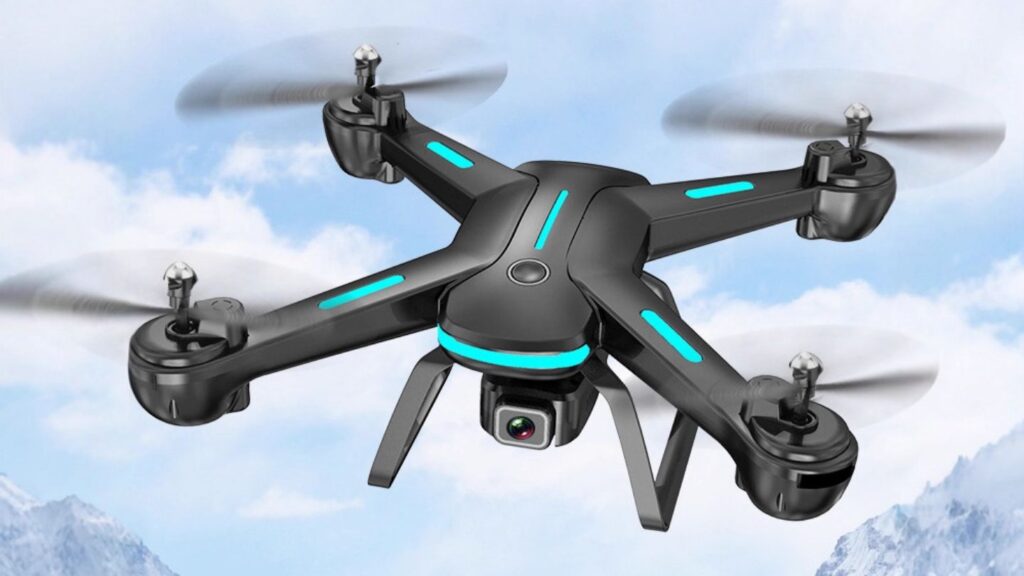
What Are Consumer Electronics Industrial Design Services?
Defining Industrial Design in the Electronics Context
Industrial design is "a strategic problem-solving process that drives innovation, builds business success, and leads to a better quality of life through innovative products, systems, and experiences."
In consumer electronics, this translates to: the discipline of shaping how electronic products look, feel, and function to create optimal user experiences while ensuring technical feasibility and commercial viability.
Unlike static products, electronics must accommodate thermal management, component integration, user interfaces, connectivity, portability, and complex manufacturing.
Core Services Provided by Design Firms
Table: Key Consumer Electronics Industrial Design Services
| Service Category | Description | Business Impact |
|---|---|---|
| User Research & Strategy | Ethnographic studies, user personas, use case analysis | Ensures product-market fit, reduces failure risk |
| Industrial Design | Form development, ergonomics, CMF (Color, Material, Finish) | Creates desirability, enables premium pricing |
| Mechanical Engineering | Structure, thermal management, component integration | Ensures functionality and reliability |
| Electrical Engineering | PCB design, firmware, connectivity, smart features | Enables technical performance |
| DFM Analysis | Design for Manufacturing optimization | Reduces production costs by 15-25% |
| Prototyping | Rapid prototyping, functional testing | Accelerates development, validates assumptions |
| CMF Design | Material selection, color trends, finish specification | Enhances perceived value, brand consistency |
| Production Support | Pilot runs, quality control, certification | Guarantees quality at scale |
The End-to-End Advantage
Many firms stop at "design handoff." They create renderings, then leave you to figure out engineering and manufacturing. This fragmented approach creates risk.
LKK provides end-to-end solutions from concept validation to mass production. The same team guides your product through engineering, prototyping, and manufacturing. Design intent survives intact. One partner, one contract, one point of contact.
The Direct Link Between Design and Market Performance
The Data: Design-Led Companies Outperform
Research consistently shows design's impact on business results:
- McKinsey Design Index: Companies with top-quartile design scores outperformed industry growth by 2:1.
- Design Management Institute: Design-led companies maintain significant stock market advantage over the S&P 500.
- Forrester Research: Every $1 invested in user experience returns $100—a 9,900% ROI.
For consumer electronics specifically, products with superior design command 20-30% price premiums while achieving higher market share.
Why Consumer Electronics Is Uniquely Design-Dependent
- Short product lifecycles require rapid differentiation. You don't have years to build brand preference.
- High emotional involvement characterizes electronics purchases. These products are personal, visible, and status-defining.
- Rapid commoditization means specifications rarely sustain advantage. When every phone has a great camera, design becomes the differentiator.
- First impressions matter enormously. In retail or unboxing, users form lasting opinions within seconds.
The LKK Track Record
Our experience across 10,000+ products and 1,000+ industry leaders validates these principles. Clients achieve:
- Market success rates 3x higher than industry averages
- Premium pricing of 20-30% above comparable products
- Faster adoption through superior user experiences
- 592 international design awards validating excellence
How Industrial Design Services Drive Revenue Growth
Creating Desire: The Role of Aesthetics and Emotion
People make purchasing decisions emotionally, then justify them rationally. A beautifully designed product signals quality before any feature is demonstrated. It creates anticipation, desire, and perceived value.
LKK's design philosophy balances four principles:
- Innovation: Breaking conventional patterns
- Simplicity: Achieving elegant functionality
- Practicality: Serving real user needs
- Sustainability: Considering environmental impact
This philosophy translates directly to commercial appeal.
Enhancing User Experience to Drive Loyalty
Intuitive interfaces reduce frustration and support costs. Ergonomic designs prevent fatigue. Reliable performance builds trust. Each positive interaction reinforces brand preference.
For a smart home product line, our user research revealed homeowners struggled with complex setup. We prioritized simplicity—clear physical interfaces, intuitive app integration, minimal configuration. Result? Return rates dropped 40%, satisfaction scores reached record levels.
Building Brand Equity Through Consistent Design Language
When products share recognizable design DNA, each new product benefits from accumulated brand equity. Users immediately recognize and trust new offerings.
The Siemens smart home product family exemplifies this. LKK developed cohesive design language across thermostats, sensors, and controllers. The product line achieved one billion growth within one year.
Premium Pricing and Margin Expansion
A 20% price premium on a $100 product with 50% gross margin adds $10 profit per unit. At 1 million units annually, that's $10 million in additional profit—every year. Design pays for itself many times over.
How Design Services Reduce Costs and Accelerate Time-to-Market
Design for Manufacturing (DFM): The Hidden Cost Saver
DFM analysis during design identifies cost drivers before they're locked in:
- Part consolidation: Combining multiple components into one
- Geometry simplification: Reducing complexity without affecting function
- Material optimization: Using less expensive materials that perform
- Assembly efficiency: Fewer steps, simpler tools
Typical savings range from 15-25% reduction in per-unit costs. For high-volume products, this is millions in ongoing profit.
LKK's DFM methodology draws on 21 years of manufacturing insight and our 5,000+ supply chain partner network.
Reducing Expensive Late-Stage Changes
The cost of changes escalates exponentially:
- Concept phase: $1
- Detailed design: $100
- Tooling: $1,000+
- Production: $10,000+
Professional design services catch issues early. Integrated engineering identifies conflicts before designs are finalized. Prototyping validates assumptions before tooling. Result? 70% fewer Engineering Change Orders (ECOs).
Parallel Development for Faster Time-to-Market
Integrated services enable parallel development:
- Industrial design progresses while research continues
- Mechanical engineering begins during design refinement
- DFM runs alongside detailed engineering
- Tooling suppliers provide input during validation
This approach cuts development cycles by 30% or more. LKK's 95%+ on-time delivery ensures you hit market windows.
Supply Chain Integration for Cost and Reliability
LKK's 5,000+ supply chain partners provide real-time intelligence:
- Component selection with multiple qualified sources
- Materials with reliable supply
- Design-to-supplier capability matching
- True cost understanding, not just quotes
Risk Mitigation: The Overlooked Business Advantage
Types of Risk in Consumer Electronics Development
| Risk Type | Description | How Design Services Mitigate |
|---|---|---|
| Market Risk | Product fails to resonate | User research, concept testing, iterative prototyping |
| Technical Risk | Technology doesn't perform | Simulation, functional prototyping, engineering expertise |
| Manufacturing Risk | Can't be made profitably | DFM analysis, supplier input, pilot production |
| Supply Chain Risk | Components unavailable | Supplier qualification, dual sourcing, AVL development |
| Regulatory Risk | Fails certification | Early compliance planning, pre-testing |
| Timing Risk | Missed market window | Parallel development, integrated teams |
The Cost of Unmitigated Risk
Products fail due to preventable risks:
- Smartwatch with beautiful design but poor battery life
- Earbuds with excellent sound but uncomfortable fit
- Smart home device with innovative features but complex setup
Each represents millions in wasted development and damaged brand equity.
LKK's Zero-Compromise Approach
- Zero IP breaches since 2004 through strict NDAs and security
- <500 PPM defect rate at production scale
- End-to-end accountability—one partner responsible for outcomes
Real-World Proof: Success Stories
Case Study 1—HUAWEI PixLab X1: Redefining a Category
Challenge: Create a printer with mobile phone touch print capability, breaking traditional paradigms.
Solution: Integrated industrial design, mechanical engineering, and manufacturing from start. Rapid prototyping validated user interaction. DFM optimized for high-volume production.
Result: Successful category innovation, market differentiation achieved.
Case Study 2—Siemens Smart Home: Category Creation
Challenge: Create a new consumer-facing smart home category for an established B2B leader.
Solution: Deep user research informed product definition. Integrated team developed cohesive product family. DFM ensured premium quality at viable cost.
Result: Product line achieved one billion growth within one year.
Case Study 3—Smart Home Portfolio Acceleration
Challenge: Rapidly expand product portfolio while maintaining design consistency.
Solution: Cross-industry expertise applied to develop multiple products simultaneously, leveraging common design elements.
Result: "The smart home product line achieved a growth of one billion within one year."
Case Study 4—Tencent Technology Safe Security Robot
Challenge: Create an AI interactive security robot for a global technology leader.
Solution: User and scene insights translated into product innovation. Mechanical design, electronics engineering, prototyping integrated from start.
Result: Successful launch meeting Tencent's exacting requirements.
The LKK Advantage
21 Years of Evolution and Excellence
From one designer in 2004 to 1,000+ creative minds across 13+ city centers today. 10,000+ products launched, 1,000+ industry leaders served, 592 international awards earned.
Unmatched Cross-Industry Experience
20+ industries served—consumer electronics, medical, industrial, automotive, smart home. Insights from medical precision inform consumer quality. Consumer experience humanizes industrial equipment.
End-to-End Capability Under One Roof
Table: LKK's Integrated Service Model
| Capability | LKK Expertise | Business Impact |
|---|---|---|
| Industrial Design | 800+ designers, 592+ awards | Desirable products, premium pricing |
| Mechanical Engineering | 100+ expert engineers | Robust, reliable products |
| Electrical Engineering | Hardware, firmware, software | Smart, connected products |
| DFM Analysis | 21 years insight, 5,000+ partners | 20% cost efficiency |
| Prototyping | Rapid prototyping, functional testing | 30% faster development |
| Production Support | QC, certification, SOP development | <500 PPM defect rate |
| Supply Chain Management | Supplier audits, dual sourcing | 95%+ on-time delivery |
Proven Results
- 10,000+ products successfully launched
- 20% cost efficiency delivered to clients
- 95%+ on-time delivery track record
- <500 PPM defect rate at scale
- Zero IP breaches since 2004
How to Leverage Design Services
When to Engage
- Idea stage: Validate concept, understand users, assess feasibility
- Development stage: Translate concept to production-ready design
- Pre-production stage: Optimize manufacturing, qualify suppliers
- Portfolio expansion: Create product families with consistent design
What to Look for in a Partner
- Cross-industry experience brings fresh perspectives
- Integrated capabilities reduce handoff risk
- Proven track record with case studies and metrics
- Strong IP protection with clear policies
- Cultural fit for productive collaboration
Measuring Success
- Quantitative: Time-to-market (30% faster), cost reduction (15-25%), defect rates (<500 PPM), on-time delivery (95%+)
- Qualitative: User satisfaction, design awards, brand perception
- Business: Market share growth, revenue increase, margin expansion
Conclusion
Consumer electronics industrial design services are not an expense. They are a strategic investment with proven returns:
- Revenue growth through desirable products and premium pricing
- Cost reduction through DFM optimization
- Risk mitigation through early validation
- Speed advantage through parallel development
The evidence is overwhelming. Design-led companies outperform. Products with superior design command premium prices. Integrated development delivers faster, cheaper, better results.
LKK Design Group has spent 21 years proving this thesis. With 1,000+ creative minds, 13+ city centers, 5,000+ supply chain partners, and 10,000+ successful products, we have the capabilities to deliver your next success.
In consumer electronics, technology commoditizes. Design endures.
Ready to create your next iconic consumer electronics product? Partner with LKK's 1,000-member creative group and access 21 years of innovation expertise. From concept to mass production, we deliver the products that define categories and build leaders.
[Contact LKK's team for a complimentary consultation]
FAQ
What do consumer electronics industrial design services include?
Comprehensive services include user research, industrial design, mechanical engineering, electrical engineering, DFM analysis, prototyping, CMF design, tooling support, and production assistance.
How much can design reduce manufacturing costs?
Typical cost reduction through DFM ranges from 15-25% of per-unit costs. LKK has delivered 20% cost efficiency to clients across industries.
How long does development take?
Integrated development achieves 30% faster time-to-market. Simple products: 6-8 months. Complex products: 12-18 months. LKK's 95%+ on-time delivery ensures you hit market windows.
How is IP protected?
Work with firms with clear IP policies, standard NDAs, secured environments, and zero breach history. LKK has maintained zero IP breaches since 2004.
What's the ROI of design services?
ROI manifests through premium pricing (20-30% higher), reduced costs (15-25% lower), faster time-to-market (30% quicker), lower returns, and stronger brand equity.
How do I choose the right partner?
Evaluate cross-industry experience, integrated capabilities, proven track record, IP protection, and cultural fit. Request relevant case studies and speak with past clients.
Contact Us



- 20+ Design Industries Serviced
- 200+ Product Categories
- 1,000+ Industry Leaders Served
- 10,000+ Products Successfully Launched

Founder and Chairman of LKK Design Group
Ready to get started? Connect with us today!
 Talk to Our Team