

 Home /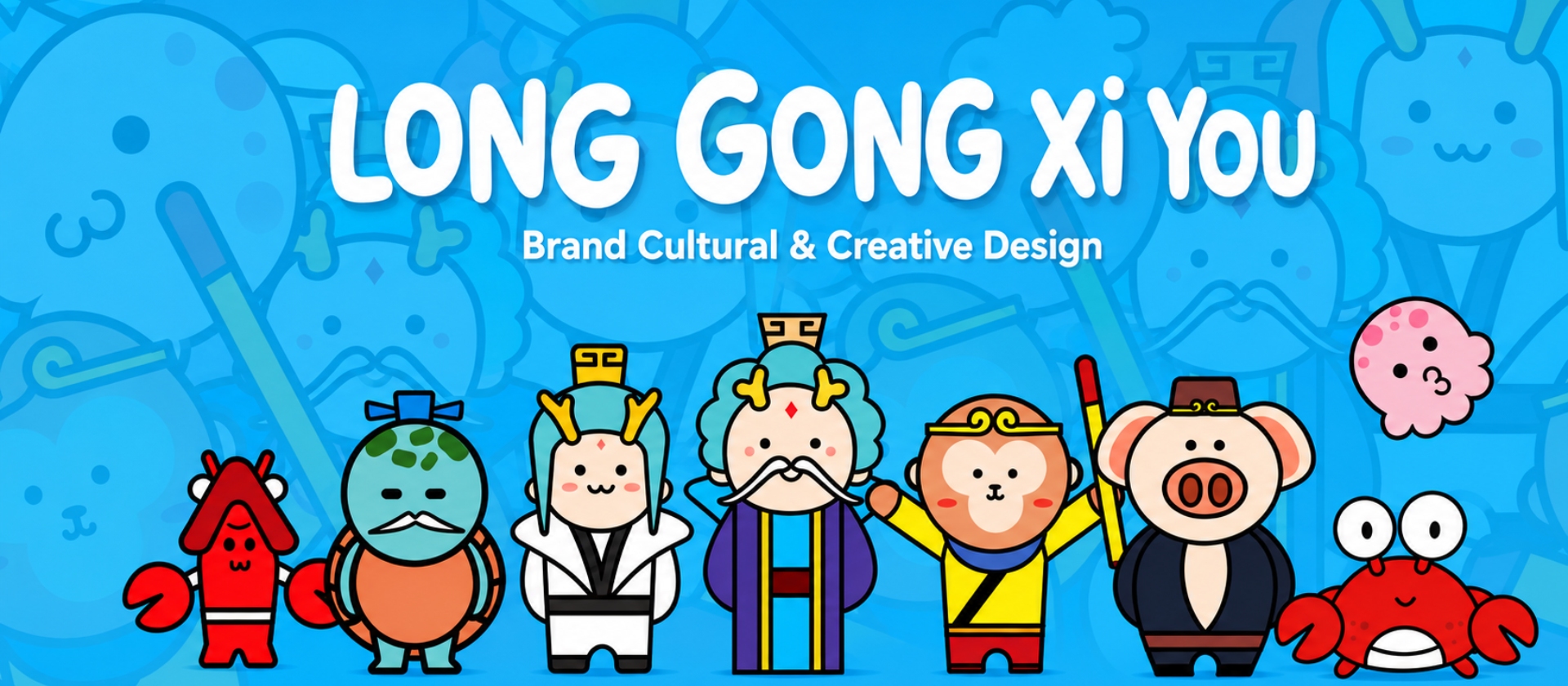
Lianyungang Dragon Palace Fun Journey City Brand and Cultural Creative Design
Redesigning Traditional Dragon Palace and Journey to the West Culture




Innovation Insights

Cultural Commercialization
Lianyun District in Lianyungang possesses abundant tourism and cultural resources.
Transforming these cultural assets into sustainable commercial value is an important part of creating a healthy and long-term tourism economy.
The project aimed to convert local myths, traditional stories, scenic attractions, and regional characteristics into recognizable brand assets and marketable cultural products.
Through systematic brand development and cultural creative design, the city’s cultural resources could generate new tourism experiences, retail opportunities, and long-term economic value.
Mythological Identity
The project was based on the redevelopment of Dragon Palace and Journey to the West culture.
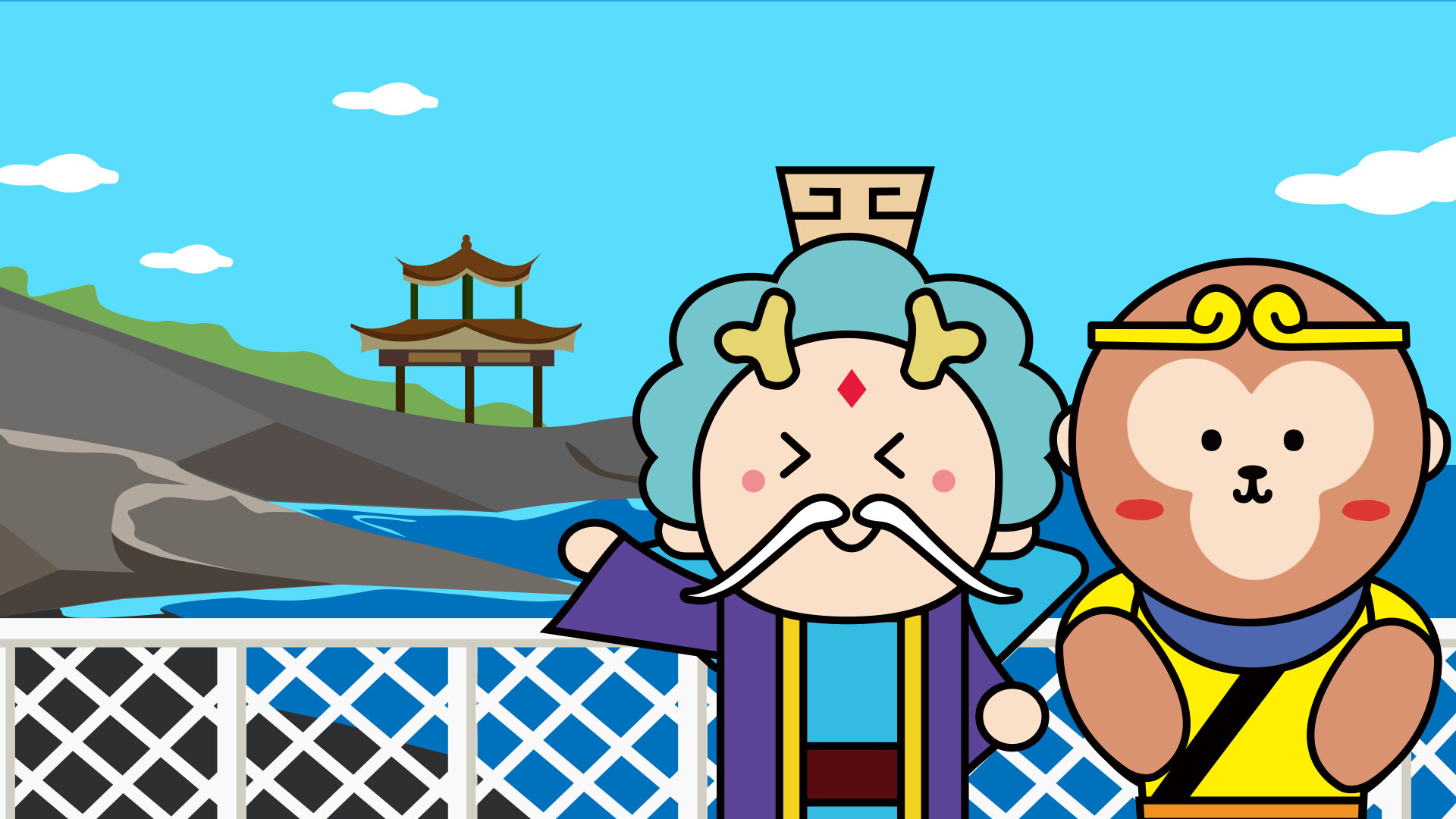
By reinterpreting these familiar myths, the design strengthened the distinctive mythological identity associated with the Lianyungang region.
This cultural positioning helps the coastal tourism destination stand apart from competing scenic areas while supporting the wider communication of Lianyun District’s tourism culture.
The combination of coastal scenery and mythological storytelling created a unique foundation for building a memorable destination brand.
Design Strategy
Family-Based IP Character System
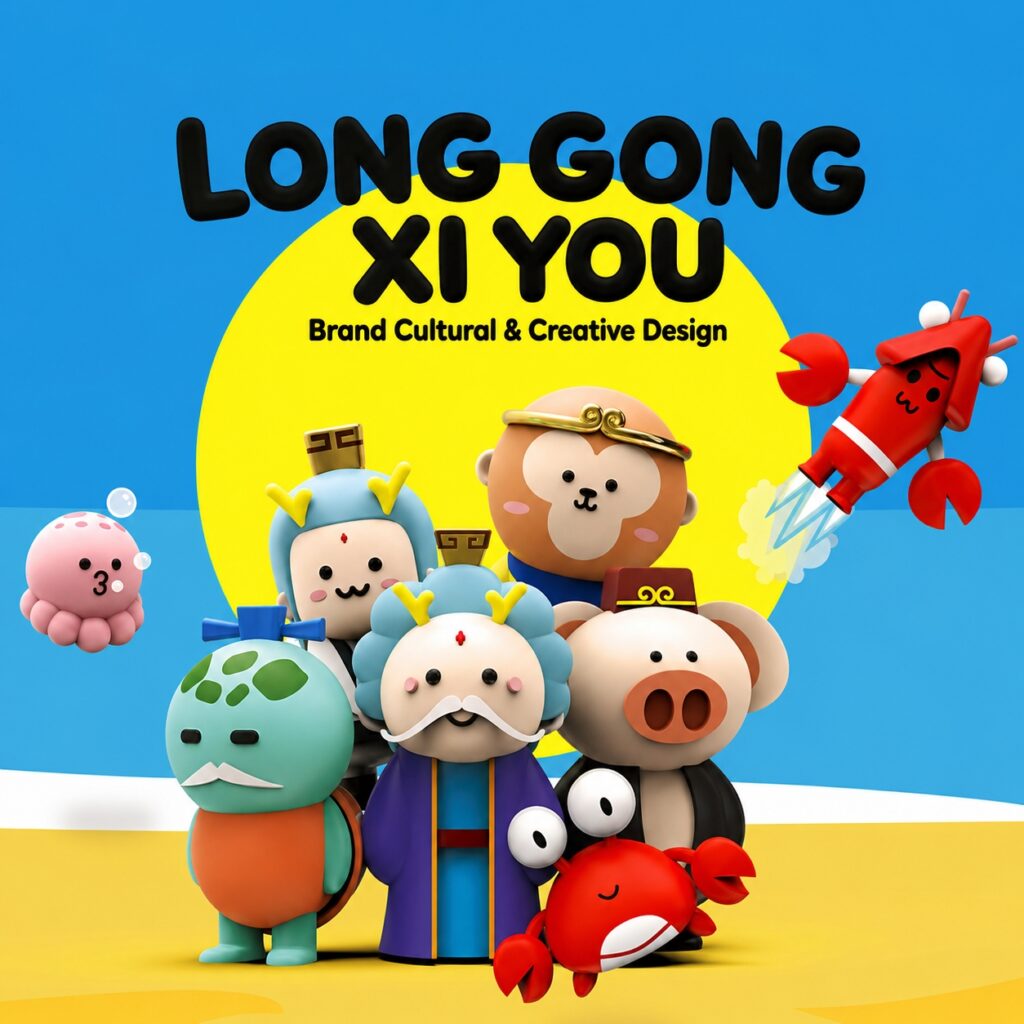
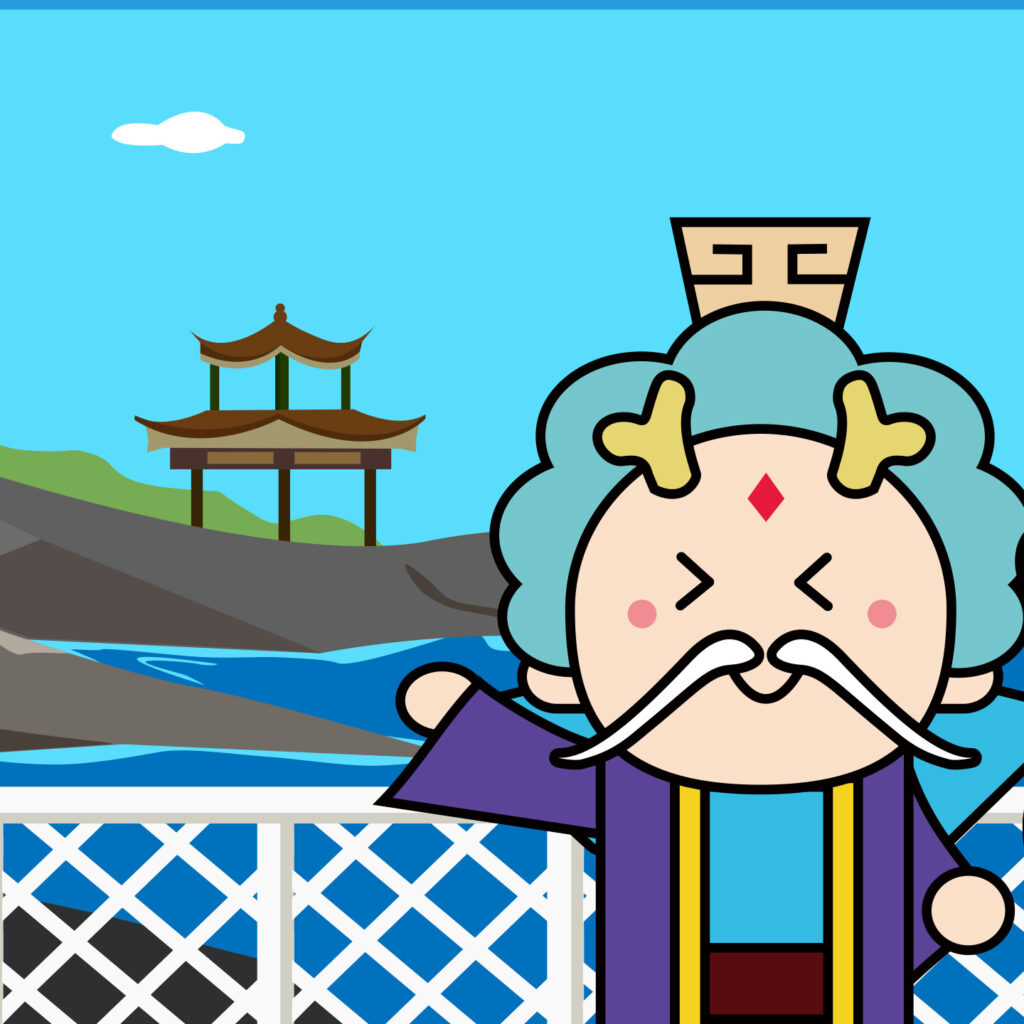
The design team drew inspiration from the traditional characters of Journey to the West and redesigned the story’s main figures with a more contemporary visual language.
The characters were presented in a cute, simplified style, making them more vivid, approachable, and appealing to tourists of different ages.
Instead of developing a single mascot, the project created a complete family-based IP system.
This approach enriched the character relationships and provided greater flexibility for future storytelling, product development, promotional campaigns, events, and tourism applications.
Cultural Creative Merchandise
The IP system was combined with the traditional Chinese culture and tourism resources of the Lianyungang Dragon Palace scenic area.
Based on the redesigned characters, the project developed the “Dragon Palace Fun Journey” cultural product collection.
The collection included postcards, food packaging, posters, notebooks, and other tourism-related products.
These products transformed cultural stories and scenic-area symbols into practical and collectible items that visitors could purchase, use, and share.
💡 Solution
1. Reimagining Journey to the West Culture
The project introduced new interpretations of Journey to the West culture by combining the traditional story with a family-based IP concept.
Modern minimalist design was incorporated to make the characters and visual system more suitable for contemporary tourism communication.
This approach helped establish a distinctive coastal cultural attraction with a playful identity unlike other scenic destinations in China.
Environmental considerations were also integrated into product development.
The designs focused on reducing material consumption, improving material utilization, and using biodegradable materials where possible, reflecting current trends in sustainable and environmentally responsible design.
2. Extending Scenic-Area Culture Through Character Products
Journey to the West character toys and related merchandise allow visitors to encounter the scenic area’s cultural elements during everyday use.
Through purchasing, collecting, displaying, and sharing these products, consumers naturally participate in the continued communication of the destination’s stories and cultural identity.
The character merchandise therefore functions as more than a conventional souvenir.
It becomes a long-term cultural medium that extends the visitor experience beyond the scenic area.
Through the complete IP and product system, the project helped the client work toward establishing the leading Dragon Palace and Journey to the West cultural tourism brand.
Like What You See?
 Let's Talk About Your Project