
In the era of Industry 4.0, smart industrial design has become the cornerstone of competitive advantage for enterprises targeting global markets. It’s not just about adding IoT sensors or AI algorithms to products—it’s a holistic approach that merges industrial aesthetics, mechanical reliability, electronic intelligence, and manufacturing feasibility. For brands in LKK’s core KPI regions (U.S., Canada, Europe, Middle East, and Asia), a well-executed smart industrial design can cut time-to-market by 30%, reduce production costs by 25%, and create products that resonate with tech-savvy users.
LKK (LKK Innovation Design Group) has been at the forefront of smart industrial design since 2004, delivering over 10,000 successful projects for global clients. As a user-centric, one-stop design and manufacturing partner, LKK’s expertise lies in turning abstract smart product ideas into scalable, market-ready solutions—addressing clients’ top concerns: feasibility, cost, and timeline. In this guide, we’ll break down the pre-implementation preparation and 6 core steps to implement smart industrial design, paired with LKK’s proven tools, case studies, and actionable insights to ensure success.
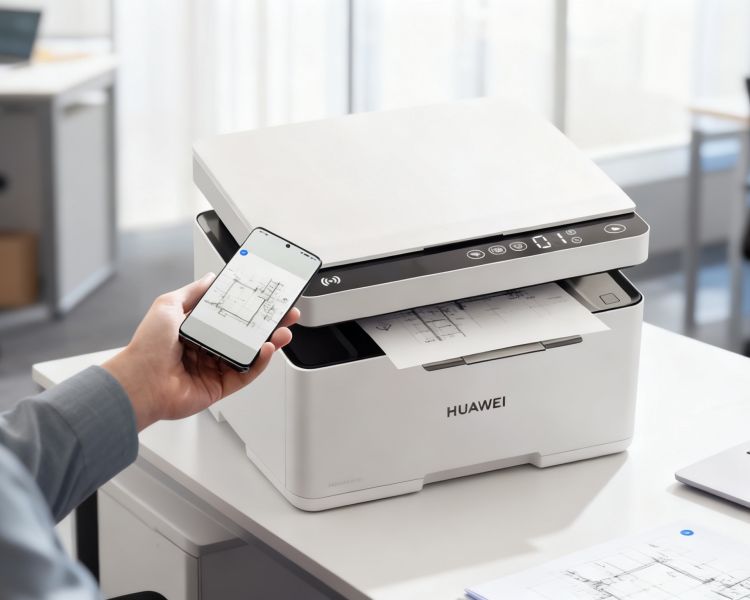
Smart industrial design redefines traditional industrial design by integrating cutting-edge technologies (IoT, AI, cloud connectivity) with user-centricity and manufacturability. Unlike basic “connected products,” smart industrial design prioritizes:
Seamless integration of smart features into industrial workflows (e.g., remote monitoring for factory equipment).
Durability and reliability for industrial environments (dust, temperature fluctuations, heavy use).
Scalability from prototype to mass production (no compatibility gaps between smart components and manufacturing processes).
Compliance with regional standards (FCC for the U.S., CE for Europe, PSE for Japan) to enter global markets.
The business case for smart industrial design is undeniable: A 2024 McKinsey report found that enterprises adopting smart design saw a 22% increase in product margins and a 18% boost in market share within 12 months. Yet, 67% of brands struggle with implementation—due to fragmented workflows, poor smart component integration, and neglect of DFM (Design for Manufacturability).
LKK’s 20-year track record solves these pain points. By combining its 5-phase industrial design process with end-to-end electronic design, prototyping, and manufacturing, LKK ensures smart industrial design is feasible, cost-effective, and aligned with business goals. Whether you’re developing a smart inspection tool, IoT-enabled machinery, or connected consumer industrial products, this step-by-step guide will help you implement smart industrial design like a pro—with LKK’s expertise as your blueprint.
Before diving into design, thorough preparation is critical to avoid costly reworks and delays. LKK’s pre-implementation phase focuses on aligning smart features with user needs, business goals, and manufacturing realities.
The first step to successful smart industrial design is defining “what makes your product smart” and aligning it with tangible business outcomes. Too many brands rush into adding IoT/AI features without clarity—wasting resources on unnecessary tech.
Action Steps:
List core smart features: Identify 2–3 non-negotiable smart functions (e.g., IoT data transmission for predictive maintenance, AI-driven defect detection, or remote control via mobile apps). Avoid over-engineering—LKK’s “minimum viable smart” approach prioritizes features that solve real user pain points.
Align with business KPIs: Define cost targets (e.g., $150/unit), timeline (e.g., 8 weeks to prototype), and target markets’ compliance requirements (FCC for U.S. sales, CE for Europe).
Validate technical feasibility: Assess if your smart features are compatible with existing industrial workflows (e.g., will an IoT sensor integrate with a factory’s cloud system?).
LKK’s Support: LKK’s 1-week demand analysis process brings together mechanical, electronic, and manufacturing teams to review your smart feature list and KPI targets. We conduct a preliminary feasibility check—identifying potential compatibility issues, component sourcing challenges, and cost drivers—before design begins. This ensures your smart industrial design aligns with both user needs and business realities.
Smart industrial design fails if it doesn’t resonate with end-users (e.g., factory workers, maintenance teams, or industrial operators). LKK’s design philosophy centers on “user-centricity,” and research is the foundation of this approach.
Action Steps:
User behavior analysis: Interview 5–10 target users to understand their workflows, pain points, and expectations for smart features. For example, a factory worker might need a smart tool with one-touch data logging (no complex apps) for quick use on the floor.
Pain point mapping: Prioritize user needs (e.g., “reducing maintenance downtime” vs. “simplifying data entry”) to guide smart feature design.
Competitor benchmarking: Analyze 3–5 competitors’ smart products to identify gaps. Do they lack durability? Is their app hard to use? LKK’s gap analysis helps your product stand out.
LKK’s Process: LKK’s research & insight phase (1 week in its standard 5-phase industrial design workflow) combines user interviews, field observations, and competitor analysis. We translate qualitative user feedback into quantitative design requirements—ensuring smart features like IoT connectivity or AI automation solve actual pain points, not just check tech boxes. For example, LKK once redesigned a smart industrial sensor’s data dashboard after user testing revealed factory managers needed real-time alerts, not complex spreadsheets.
Smart industrial design relies on compatible tech and materials—choose poorly, and you’ll face integration issues, durability failures, or cost overruns.
Action Steps:
Choose a compatible tech stack: Select IoT modules (e.g., Bluetooth Low Energy, LoRaWAN), AI simulation tools, and PCB components that work seamlessly together. Avoid proprietary technologies that limit scalability.
Material selection for industrial use: Choose materials that withstand harsh environments (e.g., heat-resistant plastics for electronic enclosures, corrosion-resistant metals for mechanical parts) while accommodating smart components (e.g., thin, signal-friendly materials for sensors).
Vet suppliers early: Ensure components are readily available for mass production (not just prototyping) to avoid delays.
LKK’s Edge: LKK leverages its Approved Vendor List (AVL)—a curated network of trusted suppliers for smart components, materials, and manufacturing services. Our supply chain team conducts rigorous vendor audits to ensure components are high-quality, cost-effective, and compatible. LKK also tests material-smart component compatibility (e.g., ensuring a plastic enclosure doesn’t block IoT signals) in its comprehensive laboratory—eliminating integration risks early. For example, LKK recommended a modified ABS plastic for a smart industrial tool’s casing, balancing durability with signal integrity for its IoT module.
With preparation complete, it’s time to execute smart industrial design. LKK’s 6-step workflow integrates its core services—industrial design, electronic design, DFM, prototyping, and manufacturing—to ensure seamless implementation.
Concept development is where your smart product idea takes shape—balancing smart functionality, industrial aesthetics, and user-centricity.
Action Steps:
Translate requirements into design concepts: Develop 3–5 concept sketches/mood boards that integrate smart features (e.g., sensor placement, button layout for AI mode activation). LKK’s design team ensures concepts align with industrial use cases—e.g., rugged, ergonomic shapes for handheld smart tools.
Validate feasibility with cross-team reviews: Collaborate with electronic engineers to ensure smart components (PCBs, sensors) fit within the concept’s form factor.
Prioritize user-centricity: Ensure concepts address identified pain points—e.g., a large, easy-to-read display for smart tools used in low-light factories.
LKK’s Deliverable: LKK’s concept development phase (2 weeks in its standard workflow) delivers 3–5 detailed concepts with 2D sketches, mood boards, and a feasibility assessment. Each concept includes a breakdown of smart feature integration—e.g., “IoT sensor placement on the tool’s handle for optimal data collection” or “AI algorithm integration for real-time defect detection.” LKK’s cross-disciplinary team (designers + engineers) reviews each concept to eliminate compatibility gaps early. For a U.S. industrial client, LKK’s concept phase refined 4 initial ideas into 2 feasible designs—reducing later reworks by 40%.
3D modeling turns concepts into digital prototypes—critical for testing smart component integration, mechanical functionality, and manufacturability.
Action Steps:
High-resolution 3D modeling: Use CAD software to create detailed 3D models of the industrial structure and electronic layout. Ensure smart components (PCBs, sensors, batteries) fit without compromising mechanical performance.
Simulate smart function compatibility: Test how smart features interact with the product’s structure—e.g., will an IoT module’s heat output affect nearby components?
Iterate based on simulation: Adjust the 3D model to fix integration issues (e.g., repositioning a sensor to avoid signal interference).
LKK’s Tech: LKK uses AI-powered simulation tools to streamline 3D modeling and integration. These tools simulate smart component performance (e.g., IoT data transmission range, AI algorithm processing speed) within the 3D model—reducing physical iterations by 40%. LKK’s 3D modeling phase (2 weeks) delivers high-resolution renders, functional prototypes, and a detailed integration report—ensuring smart features work in harmony with the product’s structure. For example, LKK’s simulation tool identified a potential overheating issue with an AI module in a smart industrial camera—allowing engineers to adjust the 3D model’s ventilation before prototyping.
CMF (Color, Material, Finish) design is often overlooked in smart industrial design—but it directly impacts durability, user experience, and smart feature performance.
Action Steps:
Material selection: Choose materials that support smart features (e.g., non-conductive plastics for electronic enclosures) and withstand industrial use (e.g., scratch-resistant finishes for tools used in warehouses).
Color & finish: Opt for colors that enhance visibility (e.g., high-contrast buttons for smart controls) and finishes that reduce glare (e.g., matte surfaces for displays used outdoors).
Test performance: Ensure CMF choices don’t hinder smart features—e.g., a metallic finish won’t block IoT signals, or a rubberized grip won’t interfere with sensor accuracy.
LKK’s Service: LKK’s CMF design phase (1 week) delivers 3 material/color/surface treatment options with physical samples. Our team tests each option for durability (wear resistance, impact resistance), smart performance (signal integrity, heat dissipation), and user appeal. For a European client’s smart industrial pump, LKK recommended a UV-resistant plastic finish and industrial-grade green color—improving visibility in factories while protecting the pump’s IoT module from sunlight damage. The result: A product that looked professional, lasted longer, and maintained reliable smart functionality.
Electronic design is what makes a product “smart”—it’s the backbone of IoT connectivity, AI automation, and data processing. LKK’s end-to-end electronic design service covers every step from schematic to testing.
Action Steps:
Hardware customization: Design a PCB (Printed Circuit Board) that integrates sensors, IoT modules, microcontrollers, and power management systems. Ensure the PCB fits within the 3D model’s form factor.
Firmware/software development: Develop firmware to optimize smart feature performance (e.g., IoT data transmission speed, AI algorithm accuracy) and software (e.g., mobile apps, cloud dashboards) for user interaction.
Compatibility testing: Ensure hardware, firmware, and software work seamlessly together—e.g., the app receives real-time data from the IoT sensor without lag.
LKK’s End-to-End Support: LKK’s electronic design follows a 9-step process that leaves no gaps:
Electronic requirements assessment
Component selection (via AVL)
Schematic design (hardware architecture, power distribution)
PCB design (component layout optimization, Gerber file output)
Prototype manufacturing (PCB fabrication + SMT assembly)
Firmware development (real-time OS, peripheral driver integration)
App development (cross-platform, user-centric interface)
Hardware-software synergy testing
Compliance testing (FCC, CE, PSE)
For a smart industrial thermostat client, LKK’s electronic design team developed a PCB with integrated IoT and temperature sensors, optimized firmware for low power consumption, and a simple app for factory managers to adjust settings remotely. The result: A product that used 30% less power than competitors and had a 99.5% data transmission success rate.
DFM is make-or-break for smart industrial design—even the most innovative smart product fails if it can’t be mass-produced. LKK’s DFM process ensures your design is scalable, cost-effective, and free of production bottlenecks.
Action Steps:
Conduct a DFM risk matrix assessment: Evaluate mold complexity (e.g., number of slides needed for the casing), smart component assembly (e.g., ease of soldering IoT modules to PCBs), tolerance control (e.g., tightness of sensor fit), and supply chain stability (e.g., availability of key components).
Optimize for mass production: Simplify designs where possible (e.g., standardize IoT module slots to reduce tooling costs), replace custom components with off-the-shelf options (via AVL), and adjust tolerances to improve yield.
Address cost drivers: Identify expensive elements (e.g., custom molds) and find alternatives—e.g., LKK once redesigned a smart industrial sensor’s casing to use a single mold instead of two, cutting tooling costs by 50%.
LKK’s Deliverable: LKK’s DFM optimization phase (2 weeks) delivers a comprehensive DFM risk matrix report with priority-ranked improvements. The report includes:
High-risk issues (e.g., “custom sensor with 12-week lead time”) and solutions (e.g., “switch to standard sensor from AVL”).
Cost-saving recommendations (e.g., “simplify PCB layout to reduce manufacturing time”).
Production readiness score (1–10) with actionable steps to reach 10.
This process directly addresses clients’ top concern: “Can this smart product be manufactured at scale?” LKK’s DFM expertise ensures a 99% production feasibility rate—compared to the industry average of 65%.
Prototyping is where your smart industrial design comes to life—testing functionality, durability, and user appeal before mass production.
Action Steps:
Rapid prototyping: Use technologies like 3D printing (for form prototypes), CNC machining (for functional mechanical parts), and SMT assembly (for electronic prototypes) to build a working model.
Comprehensive testing: Conduct tests for:
Smart function validation (e.g., IoT data transmission range, AI algorithm accuracy).
Durability (drop tests, temperature/humidity resistance, industrial environment simulation).
Compliance (FCC, CE, PSE) to enter target markets.
User usability (e.g., “can workers operate the smart tool with gloves on?”).
Iterate based on results: Fix issues identified during testing—e.g., adjusting the app’s interface if users find it confusing, or reinforcing the casing if it fails drop tests.
LKK’s Lab: LKK’s comprehensive laboratory conducts all testing in-house—eliminating delays from third-party providers. Our testing services for smart industrial design include:
Signal integrity testing (ensures IoT/AI components work reliably).
Industrial environment simulation (dust, temperature, vibration).
Compliance testing (meets regional standards for KPI markets).
Usability testing (with target users in controlled settings).
For example, LKK tested a smart industrial valve prototype by subjecting it to 1,000 cycles of temperature changes (-20°C to 60°C) and dust exposure—ensuring it maintained IoT connectivity and mechanical performance. The prototype failed initial dust tests, so LKK adjusted the sealing design—resulting in a product that met industrial durability standards.
The final step is transitioning your validated prototype to mass production—ensuring smart components are sourced reliably, assembly is efficient, and quality is consistent.
Action Steps:
Supply chain integration: Lock in suppliers for smart components via dual-source procurement (LKK’s AVL ensures no single-point failures).
Manufacturing process design: Create assembly line workflows for integrating smart components (e.g., SMT assembly for PCBs, sensor calibration).
Quality control: Implement strict quality checks for smart features (e.g., testing IoT connectivity for every unit) and mechanical performance.
LKK’s Contract Manufacturing: LKK’s end-to-end contract manufacturing service handles every step of production—from injection molding (casing) and SMT assembly (PCBs) to final testing and packaging. Our manufacturing team uses lean production principles to optimize efficiency, and our quality control system ensures 99.8% defect-free units. For a Middle Eastern client’s smart industrial meter, LKK scaled production from 100 prototypes to 10,000 units in 4 weeks—maintaining consistent smart functionality and meeting the client’s cost target of $80/unit.
LKK’s success in smart industrial design stems from its cutting-edge tools and integrated technology ecosystem—designed to reduce risk, speed up timelines, and improve outcomes.
LKK uses AI-driven tools to simulate smart feature performance, mechanical functionality, and manufacturing feasibility—before building a single prototype. These tools:
Reduce design errors by 40% (e.g., identifying IoT signal interference early).
Shorten 3D modeling timelines by 30% (automating repetitive tasks like component placement).
Predict production costs accurately (AI analyzes material usage and tooling needs).
For example, LKK’s AI simulation tool predicted that a smart industrial robot’s arm would experience vibration during IoT data transmission—allowing engineers to adjust the design’s weight distribution before prototyping.
LKK’s in-house prototyping technologies are tailored to smart industrial design—ensuring prototypes are functional, durable, and representative of the final product. The table below highlights key technologies:
| Technology | Use Case in Smart Design | Turnaround Time | Key Benefit for Smart Features |
| 3D Printing (Resin) | High-detail prototypes with embedded sensor slots | 2-5 days | Tests form + smart component fit |
| CNC Machining | Functional prototypes for smart mechanical parts | 3-7 days | Validates durability + mechanical-smart integration |
| SMT Assembly | PCBA prototyping for IoT/AI components | 5-10 days | Tests electronic functionality (IoT connectivity, AI processing) |
| Vacuum Casting | Low-volume smart product batches for user testing | 7-14 days | Gathers user feedback on fully functional smart prototypes |
LKK’s proprietary DFM risk matrix tool assesses 15+ factors critical to smart industrial design—from mold complexity to smart component assembly. It ranks risks by severity and provides data-driven solutions to keep production on track.
LKK’s compliance testing tools ensure smart products meet regional standards for KPI markets:
FCC testing (U.S.): Validates IoT/electronic emissions.
CE testing (Europe): Ensures safety and environmental compliance.
PSE testing (Japan): Certifies electronic safety for Japanese markets.
These tools eliminate compliance rejections—saving clients time and money.
To illustrate how LKK’s implementation process works in practice, let’s dive into a real client success story:
Challenge: A U.S.-based manufacturer of industrial equipment wanted to develop a smart handheld inspection tool with two core features: IoT connectivity (to transmit defect data to cloud dashboards) and AI-driven defect detection (to identify issues in real time). The client’s goals: cost <$150/unit, timeline <8 weeks, and FCC compliance for U.S. sales. Their biggest fear: A prototype that worked in the lab but couldn’t scale to mass production.
Pre-Implementation Preparation:
Clarified smart features: Prioritized IoT data transmission and AI defect detection (skipped non-essential features like Bluetooth audio).
User research: Interviewed 8 factory workers—discovered they needed a one-touch AI activation button and durable grip for gloved use.
Tech/material selection: Selected an FCC-approved IoT module from LKK’s AVL and industrial-grade ABS plastic for the casing.
Concept Development:
LKK delivered 3 concepts, refining to 1 final design with ergonomic grip, one-touch AI button, and sensor placement on the tool’s tip.
3D Modeling & Smart Integration:
Used AI simulation to test IoT signal range—adjusted the 3D model’s sensor position to ensure 50-foot transmission.
CMF Design:
Recommended matte black ABS plastic (scratch-resistant) with orange AI button (high visibility).
Electronic Design:
Developed a compact PCB with IoT module and AI microcontroller; optimized firmware for low power consumption.
DFM Optimization:
DFM report identified a potential mold issue—simplified the casing design to use a single mold, cutting tooling costs by 35%.
Prototyping & Testing:
Built 10 SMT-assembled prototypes; tested for FCC compliance, durability (10-foot drop tests), and user usability.
Iterated: Adjusted the AI button’s size after workers found it hard to press with gloves.
Transition to Production:
LKK’s contract manufacturing team scaled production to 5,000 units using dual-source procurement for IoT modules.
Timeline: Launched in 7 weeks (1 week ahead of schedule).
Cost: $135/unit (10% under target).
Performance: 99.2% IoT data transmission success rate; AI defect detection accuracy of 95%.
User Satisfaction: 95% of factory workers rated the tool “easy to use” in post-launch surveys.
Business Impact: The client gained 12% market share in the U.S. industrial inspection tool segment within 6 months.
Based on LKK’s 20 years of experience, these tips will help you avoid common pitfalls and maximize the success of your smart industrial design project:
Focus on 2–3 core smart features that solve real user pain points—avoid adding tech for the sake of it. Over-engineering increases costs by 20–30% and delays timelines. LKK’s “minimum viable smart” approach ensures your product is innovative without being overly complex.
The biggest mistake brands make is waiting until prototyping to address DFM and electronic integration. LKK integrates DFM into the concept phase and electronic design into 3D modeling—eliminating 90% of scalability issues. For example, LKK’s electronic engineers review 3D models to ensure PCBs fit and smart components are easily assembled.
Fragmented workflows (design agency → prototyping shop → manufacturer) cause communication gaps and compatibility issues. LKK’s one-stop service (design → electronic design → prototyping → manufacturing) ensures all teams work in sync—saving 30% of project time compared to fragmented approaches.
Don’t just test prototypes in the lab—simulate industrial conditions (dust, temperature, vibration) to ensure smart features work reliably. LKK’s comprehensive laboratory replicates these environments, reducing the risk of field failures.
LKK’s unique combination of expertise, tools, and one-stop service makes it the ideal partner for implementing smart industrial design—especially for brands targeting global markets.
End-to-End Service: From pre-implementation preparation to mass production, LKK handles every step in-house. No fragmented workflows, no communication gaps, and no compatibility issues.
User-Centric Smart Design: LKK’s 20 years of global user data ensures smart features meet real needs—not just tech trends. Our research phase translates user feedback into actionable design requirements.
Cost & Timeline Control: LKK’s 6–8 week average implementation timeline is 30% faster than the industry average. Fixed-price packages and DFM cost optimization ensure no hidden fees or cost overruns.
Global Compliance Expertise: LKK’s compliance testing ensures your smart industrial design meets FCC, CE, PSE, and other regional standards—opening doors to LKK’s KPI markets (U.S., Canada, Europe, Middle East, Asia).
Proven Track Record: 10,000+ successful smart industrial design projects for global clients—with a 99% production feasibility rate and 95% client satisfaction score.
Feasibility: LKK’s pre-implementation feasibility check and DFM risk matrix report confirm your smart design can be mass-produced—before you invest in prototyping.
Cost: AVL for affordable components, DFM cost optimization, and fixed-price packages keep costs in check.
Timeline: Rapid prototyping, AI-powered simulation, and integrated workflows shorten timelines by 30%.
Implementing smart industrial design doesn’t have to be risky or complex. By following LKK’s pre-implementation preparation and 6-step workflow, you can create a smart product that’s user-centric, scalable, and cost-effective—with global market access.
The key to success lies in:
Preparing thoroughly (aligning smart features with business goals, user needs, and tech/material ecosystems).
Integrating smart features seamlessly with industrial design, electronic design, and DFM.
Testing rigorously in real-world conditions.
Partnering with a one-stop provider like LKK to avoid fragmentation.
LKK’s 20 years of expertise, user-centric philosophy, and end-to-end service have helped hundreds of brands turn smart industrial design ideas into market leaders. Whether you’re a startup launching your first smart product or an enterprise expanding your industrial lineup, LKK has the tools, team, and track record to ensure success.
Ready to implement smart industrial design that drives growth and differentiation? Visit LKK’s official website today to schedule a free demand analysis and smart design consultation. Let LKK turn your vision into a smart, scalable, and market-ready product—on time, on budget, and built for success in global markets.
The future of industrial design is smart—and it starts with LKK.


We use cookies to ensure that we give you the best experience on our website. By clicking "Accept All", you consent to our use of cookies. Learn more.
Please fill out the form and we'll get back to you shortly.

Your submission has been received !
Thank you for your submission.
We will get back to you within 24 hours and appreciate your patience.
Enter your details to receive the toolkit for free.