3D printing has moved far beyond simple mockups; it is now a core enabler of modern 3D printing industrial design workflows. By combining additive manufacturing with user‑centered industrial design and engineering, startups and innovation teams can validate ideas faster, reduce risk, and build a smoother bridge to mass production.
Instead of waiting weeks for machined or tooled parts, product teams can iterate overnight on forms, mechanisms, and even functional assemblies, then carry those learnings directly into DFM and tooling decisions. Integrated partners like LKK Design leverage 3D printing across multiple phases of development, from early concept models to engineering prototypes and pilot runs.
In an integrated industrial design process, 3D printing plays several critical roles.
Form and ergonomics validation Early in a project, designers use 3D printed mockups to check size, grip, reach, and visibility. Physical models reveal issues that 2D sketches and on‑screen renderings cannot, especially for handheld devices, wearables, and equipment interfaces.
Mechanism and assembly exploration Complex hinges, sliding parts, snap‑fits, and enclosures can be printed as working assemblies or multi‑part kits. This allows engineers and designers to evaluate how parts interact, where clearances are tight, and how assembly should happen on a real line.
Visual and stakeholder communication High‑quality 3D printed models, sometimes finished with paint or CMF samples, help non‑technical stakeholders understand the product long before tooling. This clarity speeds up decision‑making by founders, executives, and investors.
Because 3D printing is so flexible, industrial designers at LKK can experiment with bold forms and intricate structures while still keeping manufacturability in mind for later stages.
A full development program that leverages 3D printing and industrial design typically uses additive manufacturing at multiple touchpoints.
Concept phase Designers 3D print low‑resolution models to quickly compare alternative forms, handle sizes, and interface layouts. This supports rapid user testing and internal reviews, helping teams converge on a winning concept faster.
Detailed design and engineering As CAD matures, higher‑fidelity 3D prints are produced that reflect precise dimensions, wall thicknesses, and joint details. Engineers combine these parts with early PCBAs or dummy components to test internal layout, cable routing, and mechanical constraints.
Engineering and design verification (EVT/DVT) In EVT and DVT stages, 3D printing is often used alongside CNC and soft tooling to prototype parts that would be expensive to tool prematurely. Teams can run functional, drop, and environmental tests on mixed prototypes while refining critical details before committing to steel.
By strategically choosing which parts to 3D print and which to machine or mold, integrated teams balance speed, cost, and realism throughout the NPI process.
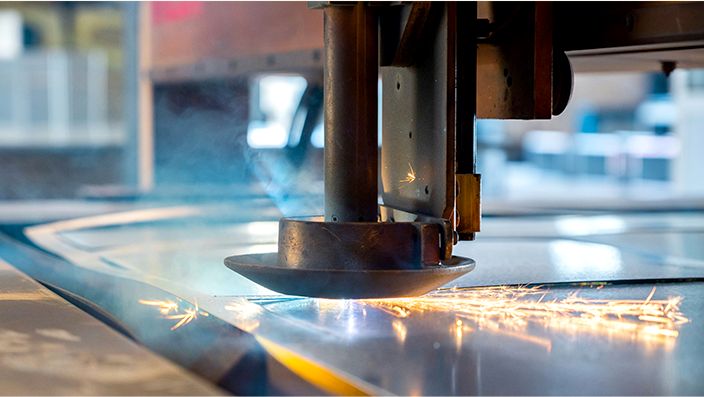
One common misconception is that 3D printing is only for early prototypes and cannot influence manufacturing decisions. In reality, 3D printing provides valuable data that feeds directly into DFM, tooling design, and process selection for contract manufacturing.
Examples include:
Testing alternative part splits and assembly strategies before cutting tools
Exploring lightweight lattice structures and internal channels that later inform casting or multi‑part designs
Evaluating cooling, airflow, or fluid paths within complex housings
Integrated companies like LKK Design use insights from 3D printed experiments to inform mass‑production architectures, not just one‑off prototypes. This reduces the likelihood of discovering major issues after tooling, when changes are slow and expensive.
The impact of 3D printing in industrial design is reflected in many of LKK’s award‑winning projects. From smart home projectors and control panels to medical devices such as diagnostic equipment and mobile imaging robots, additive manufacturing has helped iterate quickly while maintaining high design quality.
LKK’s recognition with international awards such as Red Dot, iF, IDEA, Golden Pin, and Red Star demonstrates its ability to use advanced tools like 3D printing in the service of real, manufacturable products. Combined with its role as a national‑level industrial design center and innovation consultant in large initiatives, this track record gives startups and enterprises confidence that 3D printing will be used strategically, not just as a buzzword.
Choosing a partner that understands both industrial design and 3D printing technology offers several advantages.
Better translation from 3D printed prototypes to molded parts, avoiding geometry that will be impossible or costly to tool.
Faster decision cycles because designers, engineers, and manufacturing experts review physical parts together.
More informed trade‑offs between bold design features and manufacturability.
LKK Design positions itself as a 3D printing product design firm for fast hardware launch, combining industrial design, engineering, and rapid prototyping with a path to mass production. With more than 20 years of product development experience and thousands of products launched, the team understands how to leverage 3D printing not only to impress in demos, but to ship robust products into the market.
To dive deeper into how 3D printing and industrial design can accelerate your project, you can explore the dedicated 3D printing product design firm article together with the main Industrial Design Services page. From there, visitors can easily navigate


We use cookies to ensure that we give you the best experience on our website. By clicking "Accept All", you consent to our use of cookies. Learn more.
Please fill out the form and we'll get back to you shortly.

Your submission has been received !
Thank you for your submission.
We will get back to you within 24 hours and appreciate your patience.
Enter your details to receive the toolkit for free.