The prototype works. You've spent months perfecting your design. Investors are impressed. Early testers love it. Now it's time to scale.
Then reality hits. The factory says your design can't be manufactured at scale. Cost estimates are triple what you expected. Component lead times stretch beyond your launch window. And you discover that a working prototype and a mass-producible product are two entirely different things.
This is the "Valley of Death" in hardware development—the gap between prototype and production where countless promising products fail. Bridging this gap requires mastering the contract manufacturing hardware development process.
At LKK Design Group, we've guided over 10,000 products across this journey sinc
e 2004. With 5,000+ supply chain partners and 100+ expert engineers, we've developed a methodology that consistently delivers 95%+ on-time delivery and defect rates below 500 PPM. This guide shares that methodology.
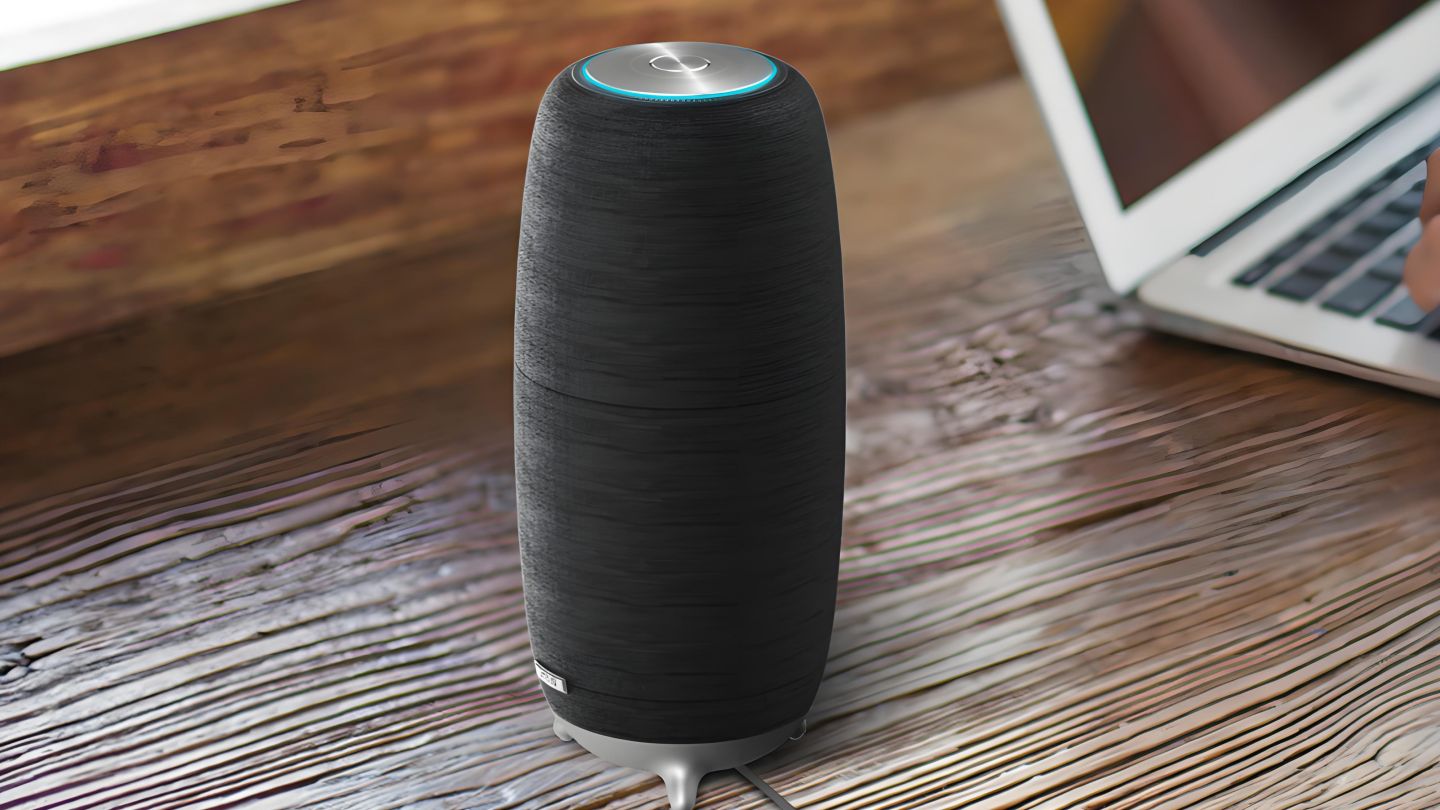
A prototype proves that your idea can work—under ideal conditions, with careful hand assembly. Mass production is fundamentally different. It requires repeatability, scalability, cost efficiency, and consistent quality.
Products designed without manufacturing input rarely succeed at scale. The geometry that worked for 3D printing may be impossible to injection mold. The component that was available for prototyping may have 26-week lead times for production.
Research shows that 70-80% of manufacturing costs are locked in during the design phase. Every decision made before manufacturing input determines your ultimate cost structure.
Design for Manufacturing (DFM) is the practice of designing products specifically for efficient, cost-effective production. It requires answering manufacturing questions during design:
How will this part be molded or machined?
What tolerances are truly necessary?
How will components be assembled?
What could go wrong in production?
Table: DFM Considerations by Manufacturing Process
| Manufacturing Process | Critical DFM Factors | Cost Impact |
| Injection Molding | Draft angles (1-3°), uniform wall thickness, proper gate placement | 15-25% reduction |
| Die Casting | Parting line design, minimizing undercuts, consistent wall thickness | 10-20% reduction |
| Sheet Metal | Consistent bend radii, material nesting, grain direction | 10-15% reduction |
| CNC Machining | Feature accessibility, minimize setups, standard tool sizes | 5-15% reduction |
| PCB Assembly | Component placement, thermal management, test point access | 10-20% reduction |
Step 1: Preliminary Review (Concept Phase)
High-level assessment of manufacturing approach and potential cost drivers.
Step 2: Detailed DFM Analysis (Design Development)
Comprehensive review of 3D models with prioritized recommendations using DFM risk matrix.
Step 3: Supplier Input (Pre-Tooling)
Selected suppliers review designs for their specific processes and cost optimization.
LKK's methodology integrates DFM from concept through production, ensuring manufacturability is never an afterthought.
A medical device client came to LKK with a complex enclosure designed for 3D printing—thin walls, sharp internal corners, no draft angles. Our DFM analysis recommended adding draft angles, radiusing internal corners, and consolidating five parts into two multi-function components.
Result: Tooling cost reduced by 35%, cycle time cut by 40%, per-unit cost lowered by 22%.
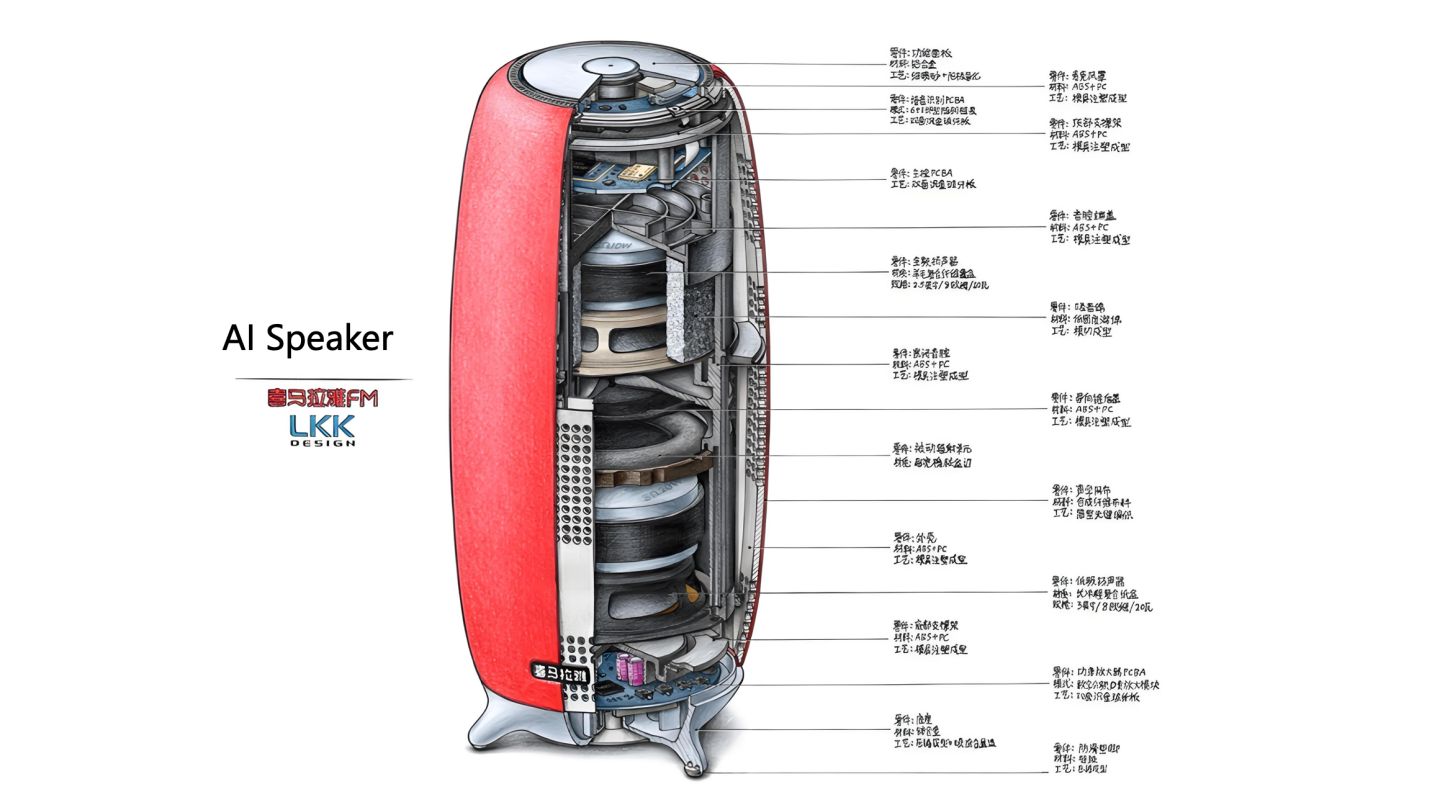
Prototyping for production shifts from "does it work?" to "can we make it at scale?" Production-ready prototypes validate assembly sequences, cycle time estimates, quality inspection points, and tooling design assumptions.
| Prototype Type | Purpose | When Used |
| Concept Prototype | Validate form, fit, basic function | Early concept phase |
| Engineering Prototype | Test technical performance | During detailed design |
| Pre-Production Prototype | Validate manufacturing processes | Before tooling |
| Pilot Run Units | Verify production readiness | Before full ramp |
3D Printing: Ideal for form, fit, and ergonomic validation. Fast turnaround (days). Limitations: Not production-representative for mechanical testing.
CNC Machining: Functional testing with production-representative materials. Higher accuracy. Good for mechanical validation before tooling.
Bridge Tooling: Low-volume production tools (hundreds to thousands of parts). Validates manufacturing processes before hard tooling. Enables market testing.
LKK's rapid prototyping capabilities deliver functional prototypes in 6-8 weeks, enabling multiple design iterations before tooling.
Tooling is typically the largest upfront investment. A single injection mold can cost $10,000 to $100,000+. For products with multiple parts, total tooling investment often exceeds $250,000.
This investment is justified by scale economics. Once tooling is complete, per-part costs drop dramatically—from hundreds of dollars per prototype to pennies per production unit.
Step 1: Tool Design Review
Toolmakers review product design for manufacturability, providing input on gate location, ejection method, and cooling channels.
Step 2: Mold Flow Analysis
Simulation of material flow predicts weld lines, air traps, and cooling behavior before steel is cut.
Step 3: Tool Fabrication
CNC machining of mold components, heat treatment, polishing, and surface texturing.
Step 4: Tool Tryout
Initial test shots validate tool performance. Dimensional inspection and adjustments as needed.
First Article Inspection (FAI) validates that tooling produces parts to specification through dimensional verification, material certification, cosmetic inspection, and functional testing.
LKK's approach includes rigorous tooling qualification with our 5,000+ supply chain partners, ensuring every tool meets quality standards.
| Pitfall | Consequence | Prevention |
| Insufficient cooling | Long cycle times, higher costs | Mold flow analysis |
| Poor gate placement | Cosmetic defects, flow issues | Collaborative design review |
| Inadequate ejection | Part damage, delays | Proper draft angles |
| Rushed tooling approval | Quality issues | Complete FAI before production |
Modern hardware products are assemblies of dozens to thousands of components, each with its own supplier, lead time, minimum order quantity, and quality requirements.
Supplier Identification: Finding capable suppliers, evaluating location, capacity, and specialization.
Supplier Auditing: On-site assessment of facilities, quality systems, and financial stability.
Approved Vendor Lists (AVL): Documenting qualified suppliers for each component type with regular performance reviews.
LKK's network of 5,000+ supply chain partners provides extensive sourcing options across industries and geographies.
Relying on a single supplier creates unacceptable risk. Dual sourcing—qualifying two suppliers for critical components—provides redundancy. If one fails, the other can fill the gap.
Material availability affects both cost and timeline. Early procurement planning—ordering long-lead components before production begins—prevents delays during ramp.
Pilot production is a low-volume run (typically 50-500 units) that validates the entire manufacturing system before full-scale production:
Assembly procedures and cycle times
Quality inspection points and methods
Training effectiveness
Supply chain performance
SOPs are detailed instructions for every production step:
Assembly Instructions: Step-by-step procedures with visual references, torque specifications, and verification points.
Workstation Layout: Material placement for efficient workflow, ergonomic design to reduce fatigue.
LKK's approach includes ergonomic analysis that reduces repetitive strain injury risk by up to 30%.
In-Process Quality Checks: Verification at critical assembly steps, immediate feedback when issues arise.
Statistical Process Control (SPC): Monitoring key parameters over time, detecting trends before they cause defects.
End-of-Line Testing: Functional verification, burn-in testing, final inspection.
Target: Defect rates below 500 PPM—a standard achieved by LKK across thousands of production runs.
Many products require certification: CE for Europe, FCC for US electronics, UL for safety, FDA for medical devices. Pilot production provides units for pre-compliance testing.
Gradual Volume Increases: Starting at 25-50% of target volume, monitoring quality metrics at each level.
Supplier Capacity Confirmation: Ensuring suppliers can meet increased demand, verifying material availability.
Workforce Training: Expanding trained operators while maintaining quality.
Yield Tracking: First-pass yield, final yield, defect Pareto analysis.
Cycle Time Optimization: Identifying bottlenecks, reducing operation times, balancing production lines.
Cost Reduction: Material cost opportunities, process improvements, volume pricing negotiations.
95%+ on-time delivery across thousands of projects
Defect rates below 500 PPM at production scale
End-to-end accountability from prototype through production
Challenge: Fast-growing startup needed to transition from prototype to commercial production quickly with limited resources.
Process: LKK provided end-to-end development including DFM, tooling, supply chain coordination, and pilot production.
Result: Successful market entry, rapid adoption, investor confidence validated.
Challenge: AI robotics startup with innovative concept but no manufacturing experience.
Process: LKK provided full-cycle support from mechanical design through production—DFM, tooling, supply chain, and ramp.
Result: Successful market entry, platform established for future products.
Challenge: Working with multiple vendors creates coordination issues and finger-pointing.
Solution: An integrated partner with end-to-end accountability eliminates these problems.
Challenge: Variation between production runs erodes customer trust.
Solution: Robust quality systems with SPC and regular supplier audits.
Challenge: Unexpected costs destroy business models.
Solution: Transparent costing, DFM optimization, continuous improvement.
Challenge: Delays cascade through the entire program.
Solution: Critical path management, buffer planning, experienced partners.
| Capability | Questions to Ask | LKK Strength |
| Manufacturing Processes | Do they support your required processes? | 12+ core processes |
| Industry Experience | Have they worked in your industry? | 20+ industries served |
| Engineering Integration | Can they provide design support? | 800+ designers, 100+ engineers |
| Volume Flexibility | Can they handle pilot and full production? | Scalable from prototypes to millions |
| Indicator | What to Look For | LKK Track Record |
| ISO Certification | ISO 9001, ISO 13485 | Fully certified |
| Defect Metrics | <1000 PPM target | <500 PPM achieved |
| Testing Capabilities | In-house testing | Comprehensive testing |
| Attribute | Why It Matters | LKK Advantage |
| Breadth | More options per component | 5,000+ partners |
| Depth | Multiple suppliers per category | Dual sourcing standard |
| Relationships | Leverage for priority | Long-term partnerships |
| Criterion | What to Look For | LKK Strength |
| Manufacturing Processes | Broad capabilities | 12+ core processes |
| Quality Systems | ISO, <500 PPM | Proven track record |
| Supply Chain | Extensive network | 5,000+ partners |
| Engineering | In-house expertise | 800+ designers, 100+ engineers |
| Track Record | Successful products | 10,000+ products, 1,000+ leaders |
| End-to-End Capability | Single accountability | Full-cycle since 2004 |
Since 2004, LKK has grown from a single designer to a 1,000+ member creative group, working across 20+ industries—from consumer electronics to medical devices.
No handoffs: Same team from concept through production
No finger-pointing: Single accountability
Continuous learning: Manufacturing insights inform design
Our extensive network provides real-time manufacturing intelligence, flexibility, competitive pricing, and risk mitigation through supplier redundancy.
10,000+ products successfully launched
1,000+ industry leaders served
95%+ on-time delivery
Defect rates below 500 PPM
Zero IP breaches since 2004
The journey from prototype to production requires mastering six phases: DFM, prototyping, tooling, supply chain, pilot production, and mass production ramp. Each phase builds on the previous. Mistakes compound.
The companies that succeed don't treat manufacturing as an afterthought. They integrate it into development from day one. They partner with experienced providers who bring production reality into every decision.
Ready to transform your prototype into a mass-produced success? Partner with LKK's 1,000-member team and access 21 years of hardware development expertise.
What is the difference between prototyping and production-ready design?
A prototype proves concept feasibility. Production-ready design optimizes for repeatability, cost, and quality at scale.
How long does the process take?
Typical programs range from 6-18 months depending on complexity. Simple products: 4-6 months. Complex electromechanical: 12-18 months.
How much does tooling cost?
$10,000-$100,000+ per mold. Products with multiple parts may require $100,000-$500,000 total investment.
What is DFM and why is it important?
Design for Manufacturing optimizes designs for efficient production. It's critical because 70-80% of costs are locked in during design.
How do you protect IP?
LKK maintains zero IP breaches since 2004 through NDAs, secured development zones, and data encryption. All designs are 100% client-owned.
What quality standards should I expect?
ISO 9001 certification, defect metrics below 1000 PPM (ideally <500 PPM), documented quality systems.
Can you handle both low and high volume?
Yes. Low-volume (soft tooling, CNC), mid-volume (production tooling), and high-volume (optimized tooling, automated assembly).
How do you manage supply chain risks?
Through early supplier engagement, dual sourcing, Approved Vendor Lists, and continuous market monitoring.


We use cookies to ensure that we give you the best experience on our website. By clicking "Accept All", you consent to our use of cookies. Learn more.
Please fill out the form and we'll get back to you shortly.
Your submission has been received !
Thank you for your submission.
We will get back to you within 24 hours and appreciate your patience.
Enter your details to receive the toolkit for free.