

 Home /
 Product Design Vs Product Development for Hardware | Guide


Product Design Vs Product Development for Hardware: What is the Difference?
It takes a lot more than a good idea to build a physical product. An effective device should not only appear appealing but also be reliable, functional, satisfy the technical demands, and be viable to produce in large quantities. It is here that the concept of product design vs product development comes into play.
- The two terms are used interchangeably, but they refer to varying stages of the hardware product lifecycle. Product design is concerned with what the product is and how the user will experience the product. Product development goes a step further and involves the engineering, testing, refining, and preparing the product to be manufactured.
- In the case of hardware companies, aligning these activities can minimize unwarranted redesigns, manage costs, and develop a more seamless transition between concept and manufacturing.
What is Hardware Product Design?
At the stage of hardware product design, an idea is transformed into a structured product concept. It integrates user requirements, industrial design, technical requirements, aesthetics, ergonomics, and functional planning. Product ideation, market research, competitor analysis, and user studies may be the initial steps in the industrial design process. These insights are then translated into ideas that can be judged both aesthetically and practically by the designers. A good hardware product design process usually takes into account:
• Purpose of the product and the intended users.
• Product concept design
• Form, size and ergonomics.
• Surface finishes and materials.
• User interaction
• Product design specifications
• Functional requirements
• Technical feasibility
• Initial hardware architecture
• Manufacturing considerations
User-centered product design also comes in handy here. Even with great specifications, a product can fail to hit the nail on the head when it is uncomfortable, confusing, fragile, or hard to use. The product strategy approach of LKK puts market and user insight ahead of technical implementation, which includes market analysis, user research, competitive mapping, product vision, requirements definition, and product architecture planning.
What is Hardware Product Development?
The development of hardware products transforms the specific product into working, testable, and production-ready hardware. This phase unites several engineering fields. Depending on the product, that can include mechanical engineering, electrical engineering, electronics engineering, firmware development, PCB development, embedded systems development, and manufacturing engineering. The hardware product development process usually involves:
• Engineering specifications
• Hardware architecture
• PCB design
• Electronic component selection
• Mechanical design
• Prototype development
• Firmware integration
• Hardware prototyping
• Testing and validation of products.
• Design verification
• Design iteration
• Manufacturing development
• Production preparation
In contrast to the early product design, development is far more concerned with whether the product can actually work in the real operating conditions.
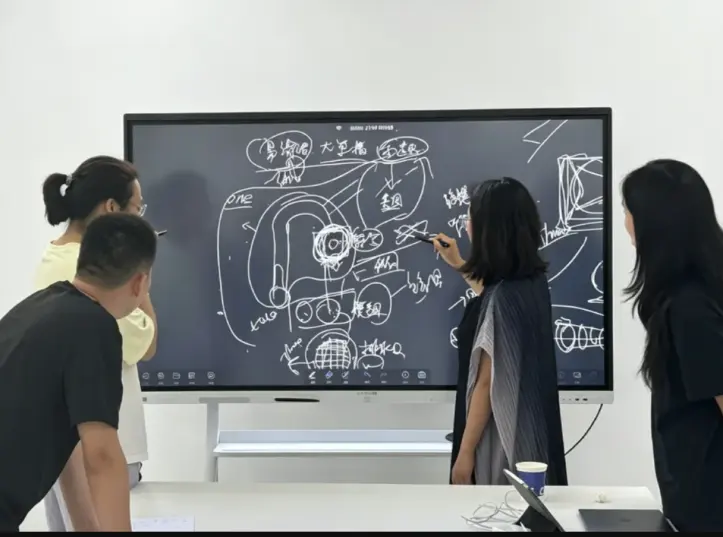
Product Design and Development Collaborate
- A simple example helps to understand the Product Design Vs Product Development for Hardware. Suppose a business organization desires to develop a small smart sensor. In product design, the team can specify target user, physical size, enclosure look, interaction style, positioning of sensors, connectivity, and anticipated battery life.
- In development, engineers have to choose appropriate components, design the PCB, develop the firmware, handle power consumption, design the enclosure around actual components, build prototypes, test, and prepare the design to be manufactured. In actual projects, though, these phases overlap. Engineering is influenced by design choices, and engineering constraints can transform the original design.
Hardware Development Process
A formal hardware development cycle typically follows a series of more and more stringent steps.
1. Concept and Requirements
The project starts with the definition of the product requirements. Where possible, these ought to be measurable. To illustrate, rather than stating that a device must have a long battery life, a specification might state that it must last 30 days on a specified usage profile. Requirements may cover:
• Operating voltage
• Current consumption
• Battery capacity
• Processing performance
• Wireless range
• Operating temperature
• Mechanical dimensions
• IP protection requirements
• Material requirements
• Expected service life
The later design validation and testing is much easier when there are clear requirements.
2. Architecture and Engineering
The second phase lays the technical groundwork. In the case of electronics products, this can consist of PCB design, power architecture, communication interfaces, sensors, processors, memory, connectors, and firmware requirements. The mechanical teams can be involved in structural layout, thermal paths, materials, fasteners, and enclosure design.
The product architecture planning at LKK integrates industrial design, mechanical and structural design, electronic architecture, module mapping, tooling strategy, and technology selection as opposed to viewing them as independent activities.
3. Prototype Development
Product prototyping is a physical or functional depiction of the product at an early stage. A prototype can be constructed by 3D printing, CNC machining, PCB fabrication, silicone molding, or other fast techniques. Different prototypes respond to various questions.
For example:
• Appearance prototype: Is the product right in appearance?
• Ergonomic prototype: Is it comfortable?
• Functional prototype: Does the concept work?
• Engineering prototype: Does the technical architecture perform?
• Manufacturing prototype: Is it possible to produce consistent parts in the intended production process?
LKK also reports low-volume silicone prototyping, which is used in consumer electronics housings, soft-touch buttons, and transparent component validation, where pilot quantities are 50 to 200 parts.
Design Verification Vs Design Validation
- These are two terms that are related but are not to be confused. Design verification questions are whether the product was designed based on the requirements of the product. When it is stated in the requirement that a device should be able to work in the range of 0 C to 50 C, testing should be used to ascertain whether it can operate within that range or not.
- Design validation poses the question of whether the end product meets its purpose and user requirements. The two are important since technical compliance does not ensure a good user experience.
Conclusion
Knowing Product Design Vs Product Development For Hardware makes teams understand the contribution of each discipline and why none of them can succeed alone. The most effective outcomes are achieved when product strategy, design, engineering, prototyping, DFM, verification, and production are linked in a single purposeful direction. When you are developing a hardware idea into a commercial product, LKK can assist in bridging the gap between product strategy and design, engineering, prototyping, manufacturing, and production planning.
Contact Us



- 20+ Design Industries Serviced
- 200+ Product Categories
- 1,000+ Industry Leaders Served
- 10,000+ Products Successfully Launched

Founder and Chairman of LKK Design Group
Ready to get started? Connect with us today!
 Talk to Our Team