

 Home /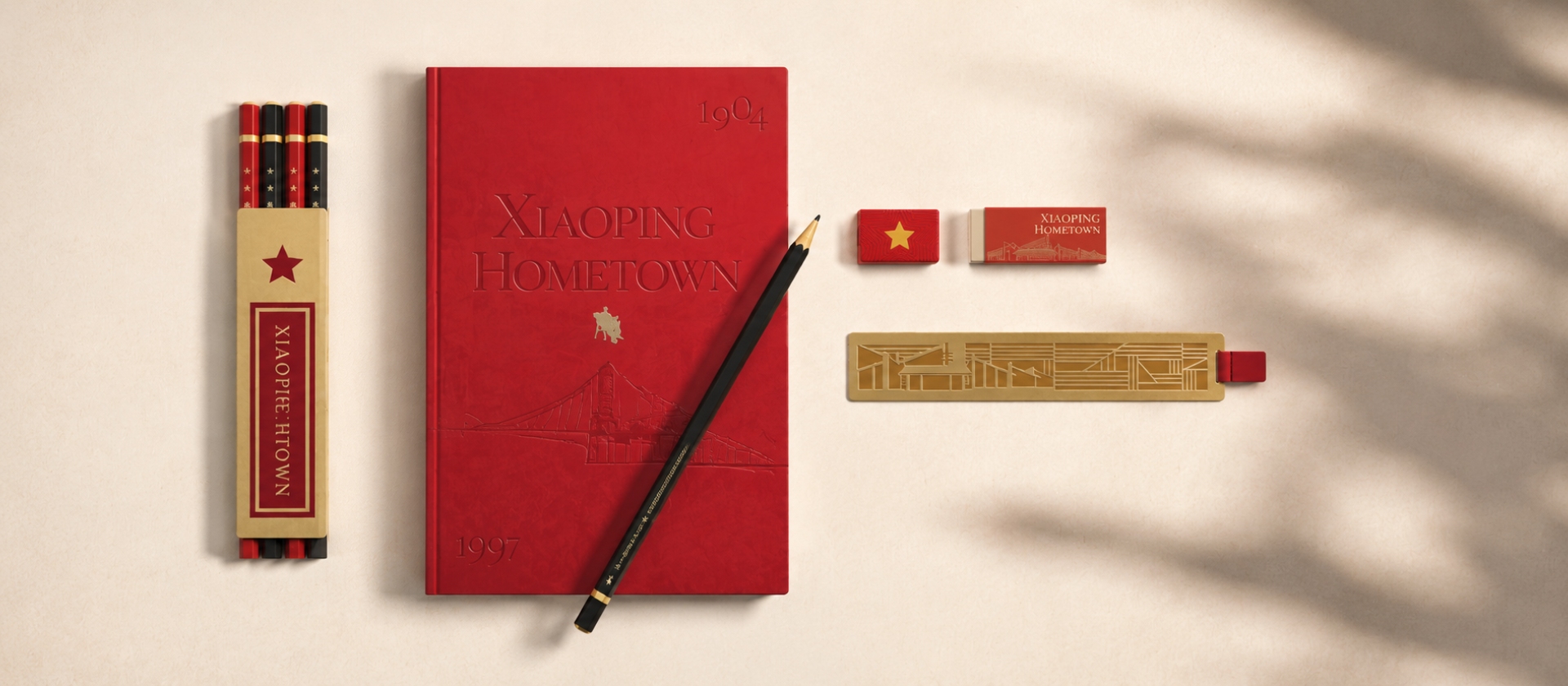
Sichuan Xiaoping’s Former Residence Red Cultural Creative Design
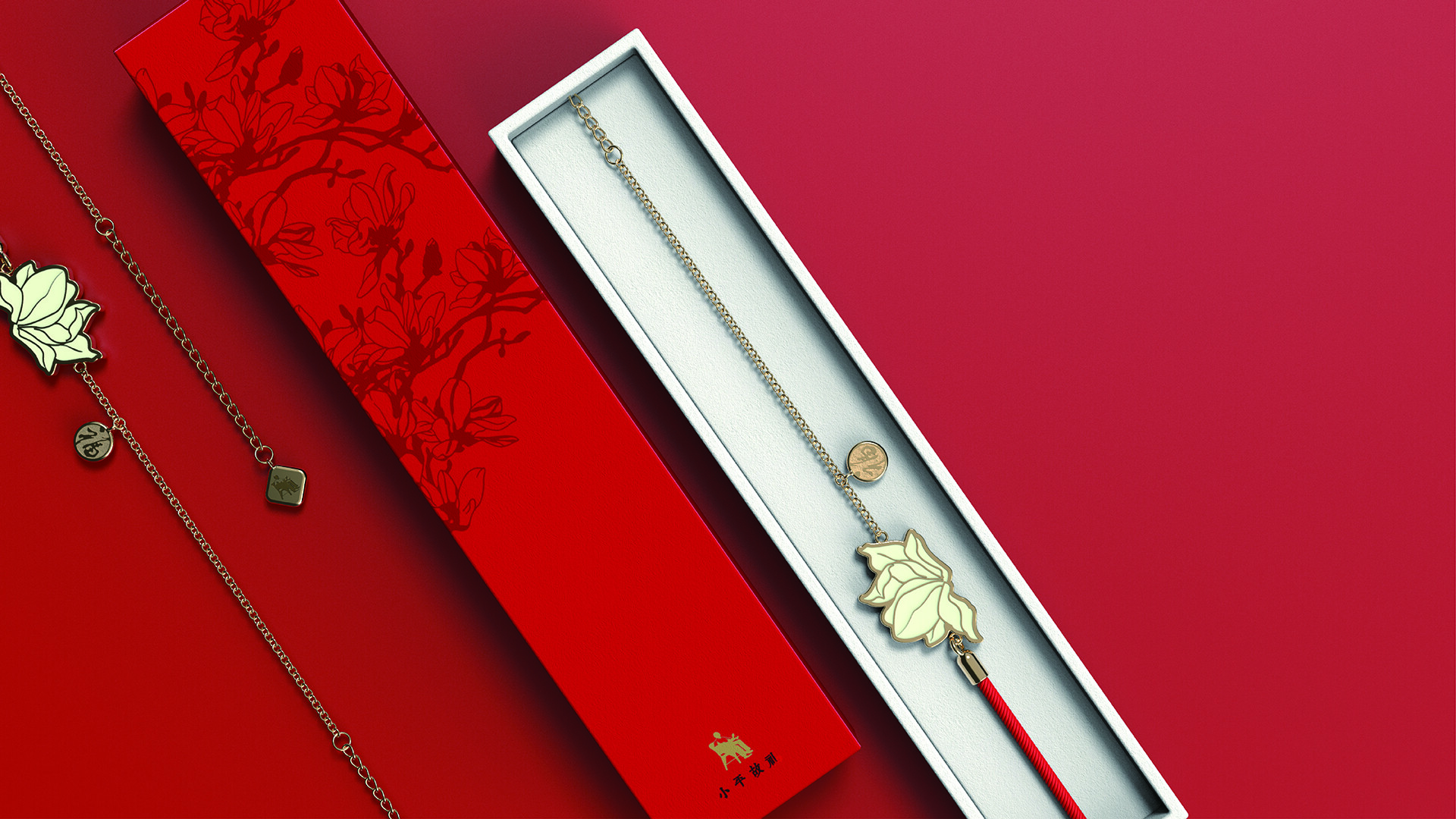
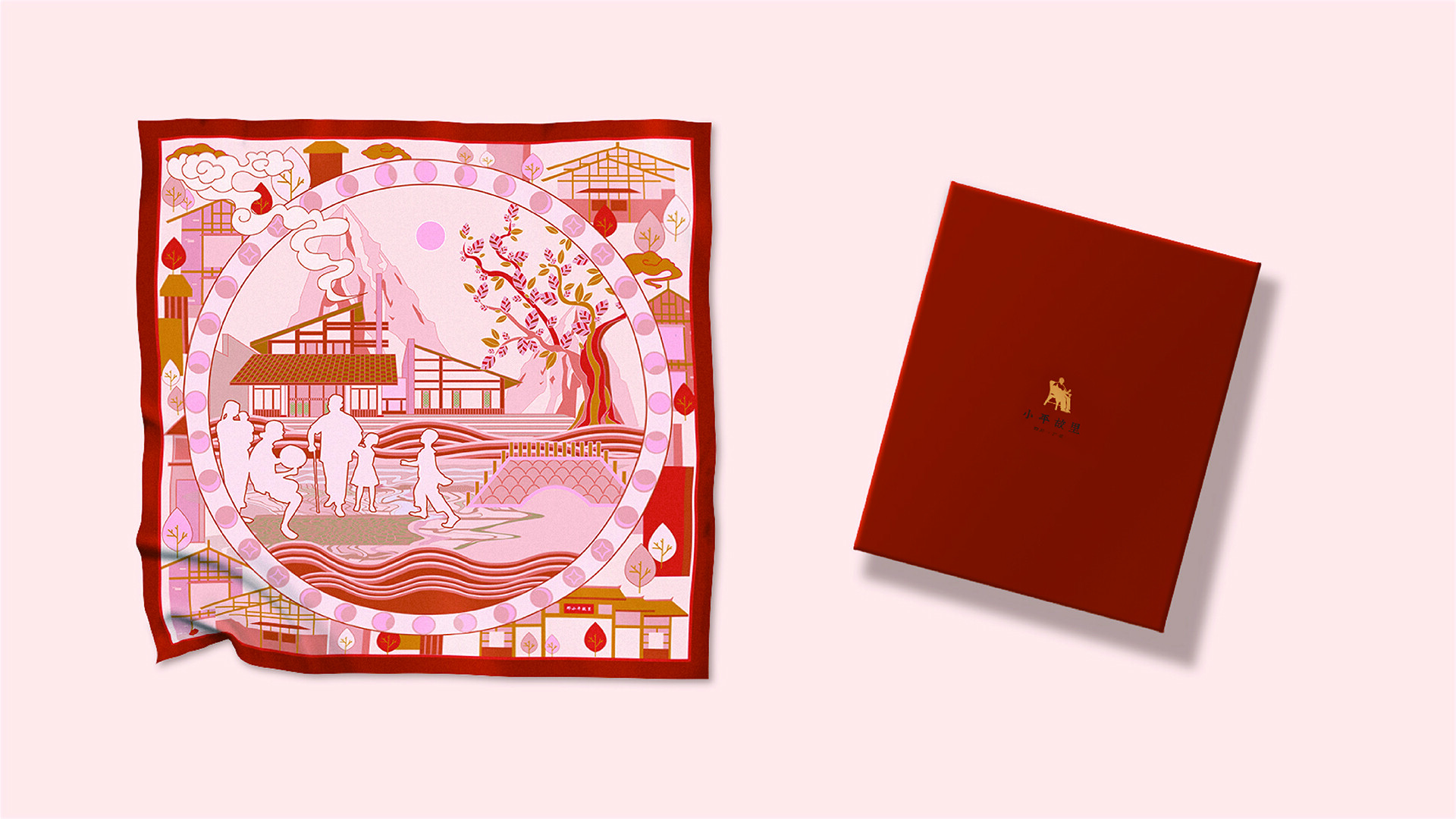
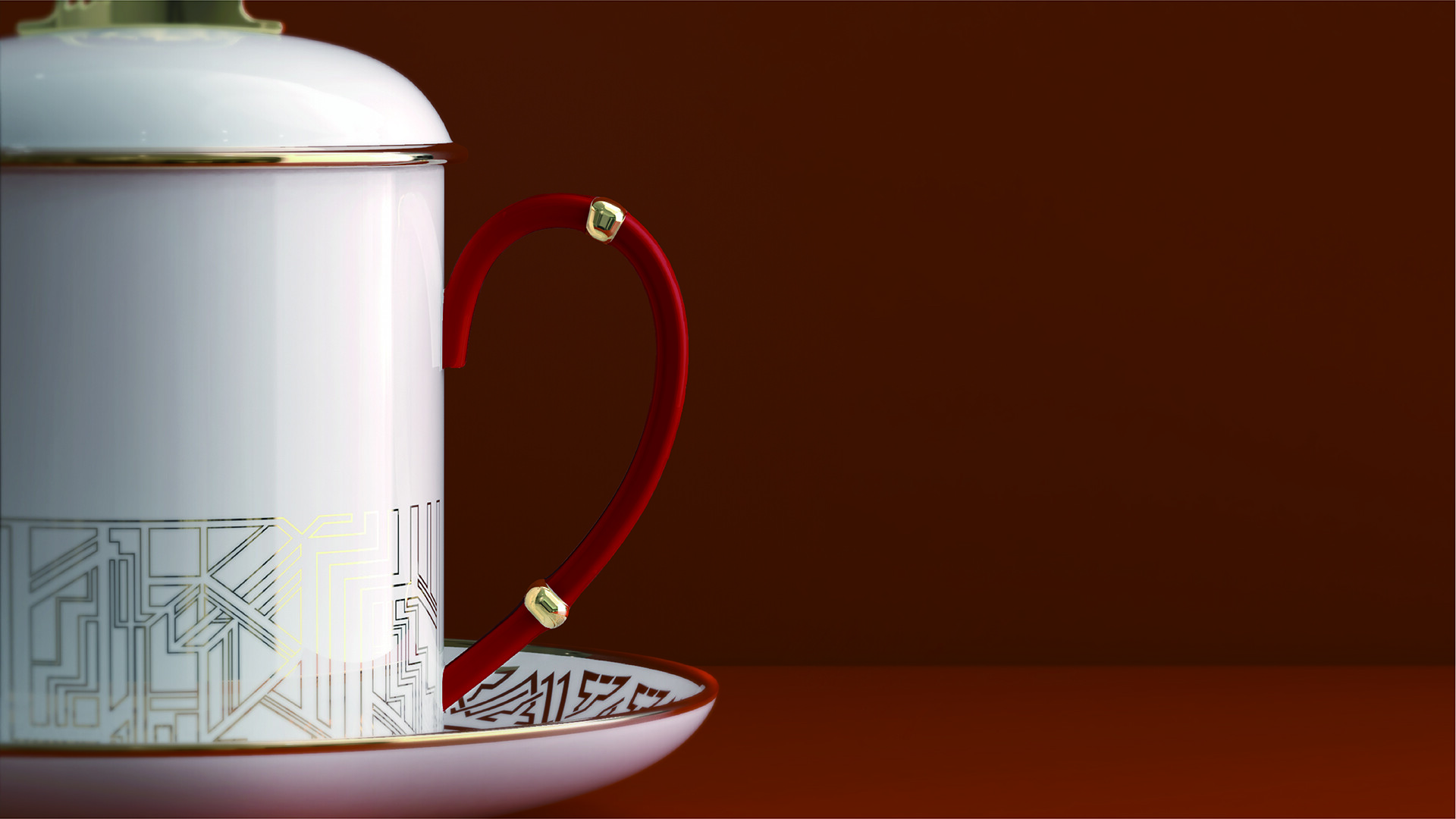
Enhancing the Overall Visitor Experience Through Cultural Products



Innovation Insights
Market Insight
Xiaoping’s Former Residence is one of the most recognized destinations among China’s red tourism attractions.
Organized patriotic education groups represent a major share of current visitors, while the overall audience structure is relatively balanced.
The destination also benefits from strong public awareness and broad cultural influence.
Innovation Opportunity
Xiaoping’s Former Residence already performs well among red tourism destinations.
However, compared with the average standards of national 5A-level scenic areas, there is still room to improve the overall visitor experience.
The project therefore focused on continuously optimizing key visitor touchpoints and using cultural creative products to enhance both the educational value and tourism quality of the destination.
Design Strategy

Development Logic
The project aimed to create a more complete regional tourism route, encourage visitors to stay longer, and provide a more distinctive cultural experience.
The scenic area and its surrounding environment feature many restored historical buildings, helping recreate the appearance and atmosphere of Xiaoping’s hometown during his lifetime.
A number of representative objects and commemorative elements also preserve the visual character and historical memory of that era.
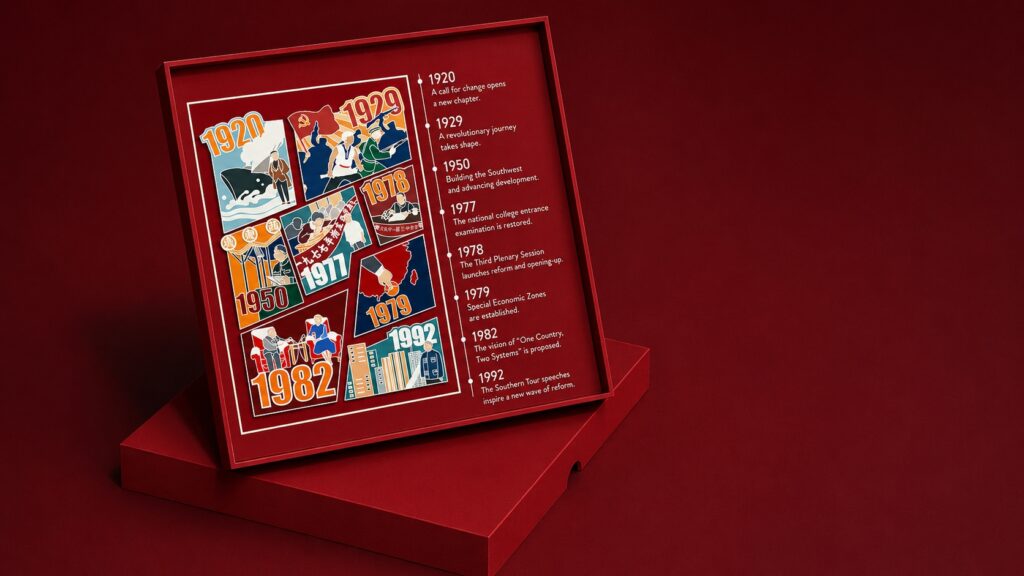
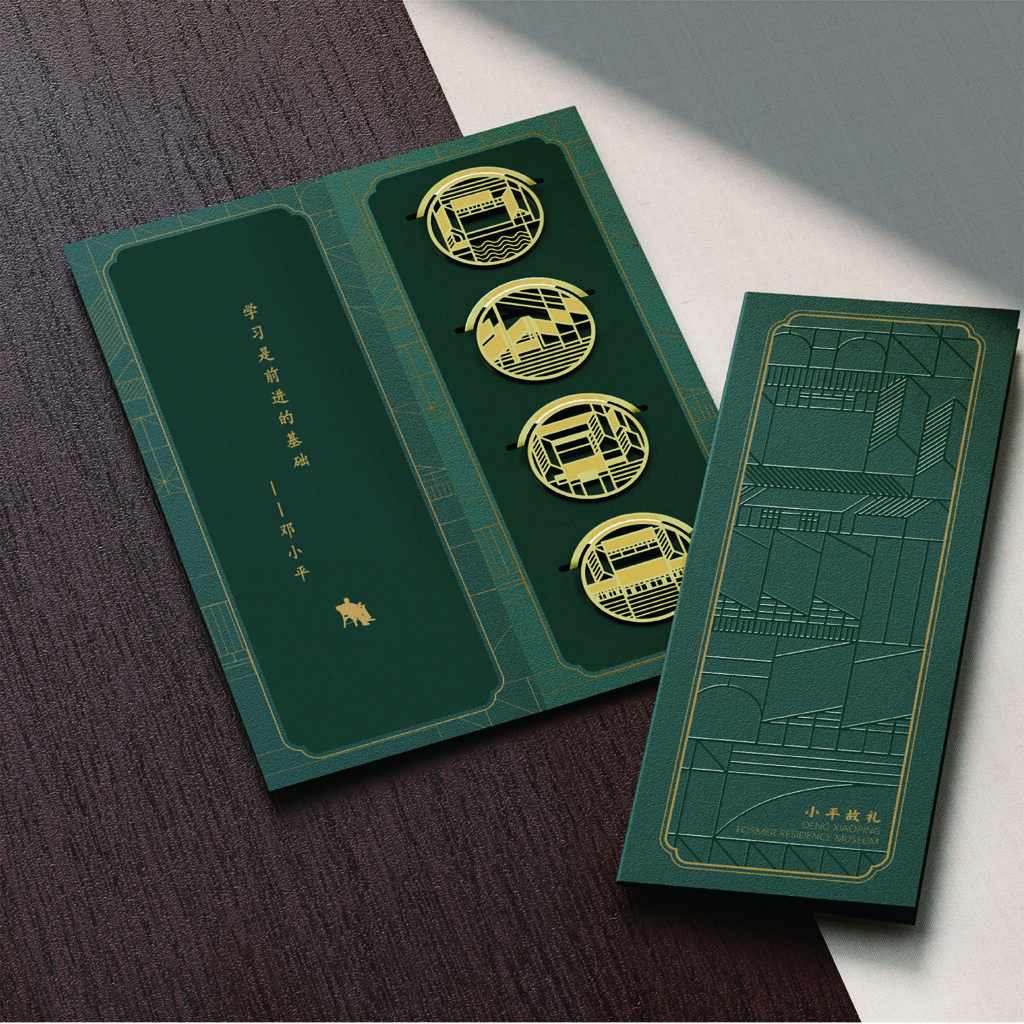
Based on these resources, the main design elements were drawn from important events in Xiaoping’s life, memorable quotations, and replicas of objects he used in daily life.
These elements were organized in a chronological and museum-inspired format to create a clearer and more meaningful cultural narrative.
Project Goal
The goal of the project was to develop a distinctive and systematic collection of cultural creative products specifically designed for the red tourism destination.
Rather than creating conventional souvenirs, the project aimed to transform important historical stories, representative objects, memorable quotations, and cultural symbols into meaningful products that visitors could understand, use, collect, and share.
Through these products, the project sought to enrich every stage of the visitor journey, from initial exploration and historical learning to emotional reflection and souvenir purchasing.
The collection was also intended to make historical content more approachable and engaging for different visitor groups, including local residents, students, families, study-tour participants, and commemorative visitors.
💡 Solution
1. Identifying Three Core Visitor Groups
The project team conducted data research on potential visitors to Xiaoping’s Former Residence and developed detailed user journey maps.
The findings identified three main visitor groups:
Local residents seeking leisure experiences, students and groups participating in red culture study tours, and visitors traveling to commemorate and pay tribute.
Understanding the different motivations and behaviors of these audiences provided a foundation for product planning, content development, and retail positioning.
2. Translating Xiaoping’s Life and Spirit into Products
The final product concepts drew inspiration from objects once used by Xiaoping, buildings where he lived for significant periods, and memorable statements he made.
The collection also focused on important events and moments from the three major rises and setbacks of his life and career.
Through these cultural references, the products communicate both the greatness and simplicity of Xiaoping’s character, as well as his practical, truth-seeking spirit.
Materials, production techniques, product categories, and symbolic meanings were organized into different levels.
This approach divided the collection into premium, mid-range, and mass-market product lines.
The resulting system created a complete cultural creative product collection for Xiaoping’s Former Residence while meeting different consumer needs and price expectations.
3. Serving Different Visitors and Encouraging Cultural Sharing
The product collection was designed to meet the needs of different audiences, preferences, purchasing purposes, and usage scenarios.
Through cultural creative products, stories from Xiaoping’s life can be communicated naturally without relying entirely on formal explanation.
Visitors can discover the historical meaning of each item, develop their own understanding, and share the stories with others.
In this way, the products encourage personal reflection, emotional connection, and spontaneous cultural communication among visitors.

Like What You See?
 Let's Talk About Your Project