

 Home /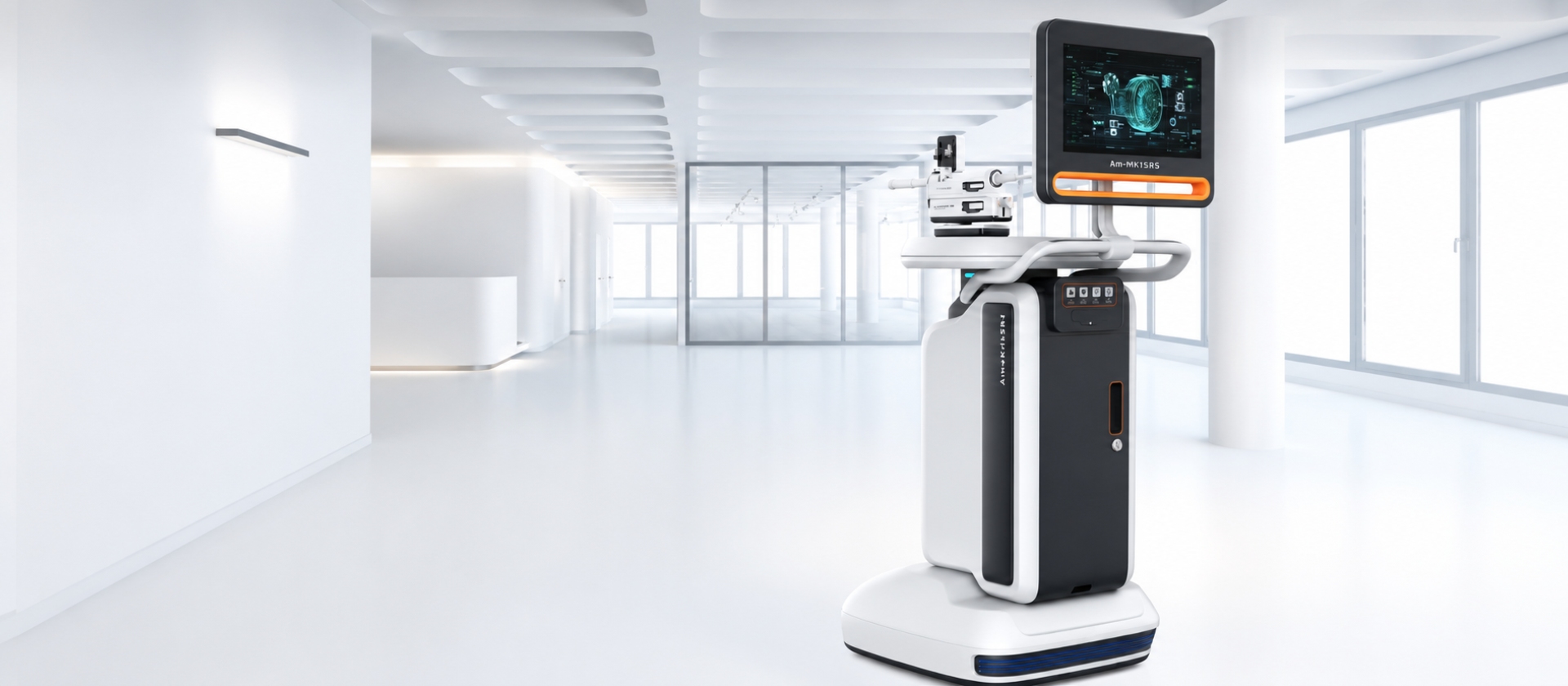
Minimally Invasive Prostate Surgery Robot
Future-Oriented Medical Technology with a Human-Centered Operating Experience



Innovation Insights
Project Background
In recent years, the incidence of prostate cancer in China has shown a clear and continuous upward trend.
Prostate cancer is becoming one of the major malignant urinary system tumors affecting men’s health in the country.
This product was developed as China’s first independently researched and designed minimally invasive robotic system for prostate procedures.
It aims to improve the accuracy, efficiency, and safety of prostate tissue sampling while providing doctors with a more intuitive and user-friendly operating experience.
Innovation Value
As the first domestically developed system of its kind, the product represents an important innovation in China’s medical robotics industry.
Its independent technology and design provide a strong foundation for future expansion into international markets.
The system can be used in large hospitals for the diagnosis of prostate cancer and other malignant urinary system conditions.
It also incorporates 5G communication technology, allowing physicians to perform remote control, tissue sampling, and diagnostic procedures under suitable clinical conditions.
This capability creates new possibilities for remote medical collaboration and the sharing of specialist resources across different regions.
Design Strategy
User Insight
Traditional prostate tissue sampling procedures often involve numerous operating steps and complicated clinical workflows.
Existing methods may have difficulty achieving precise point-to-point targeting, resulting in longer procedure times for doctors and extended postoperative recovery periods for patients.
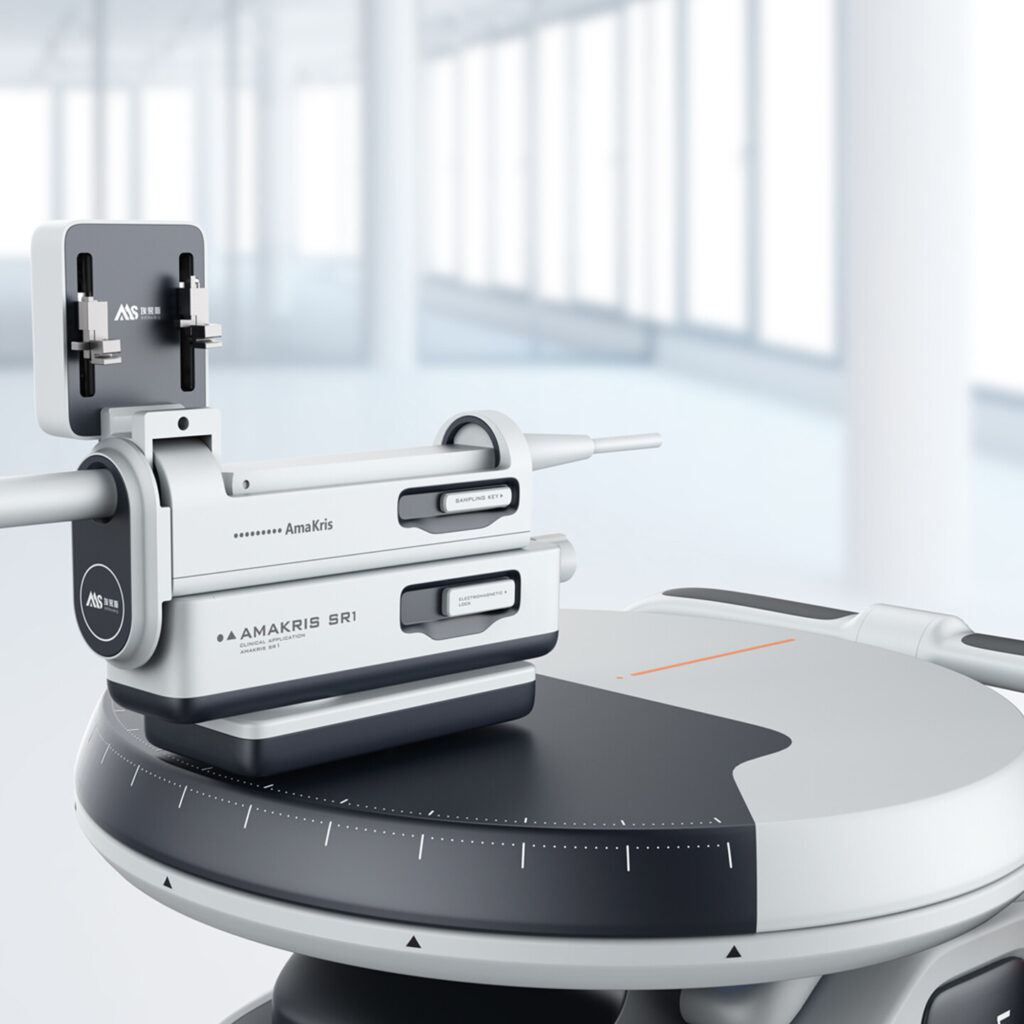
The robotic system simplifies the sampling process and improves the accuracy of needle positioning.
Approximately 20 prostate tissue samples can be collected during a single procedure, providing more comprehensive clinical data and improving diagnostic accuracy.
Product Strategy
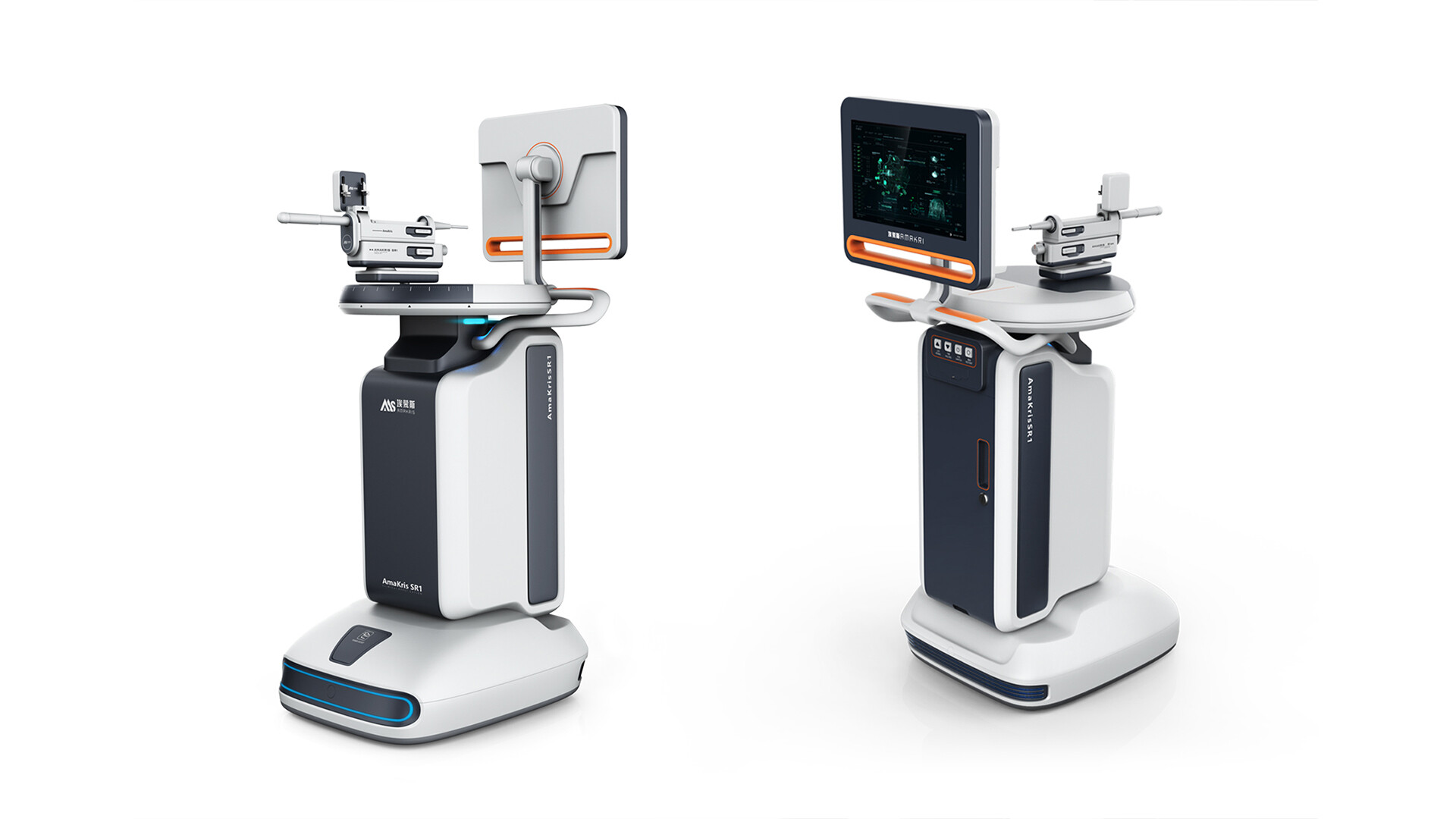
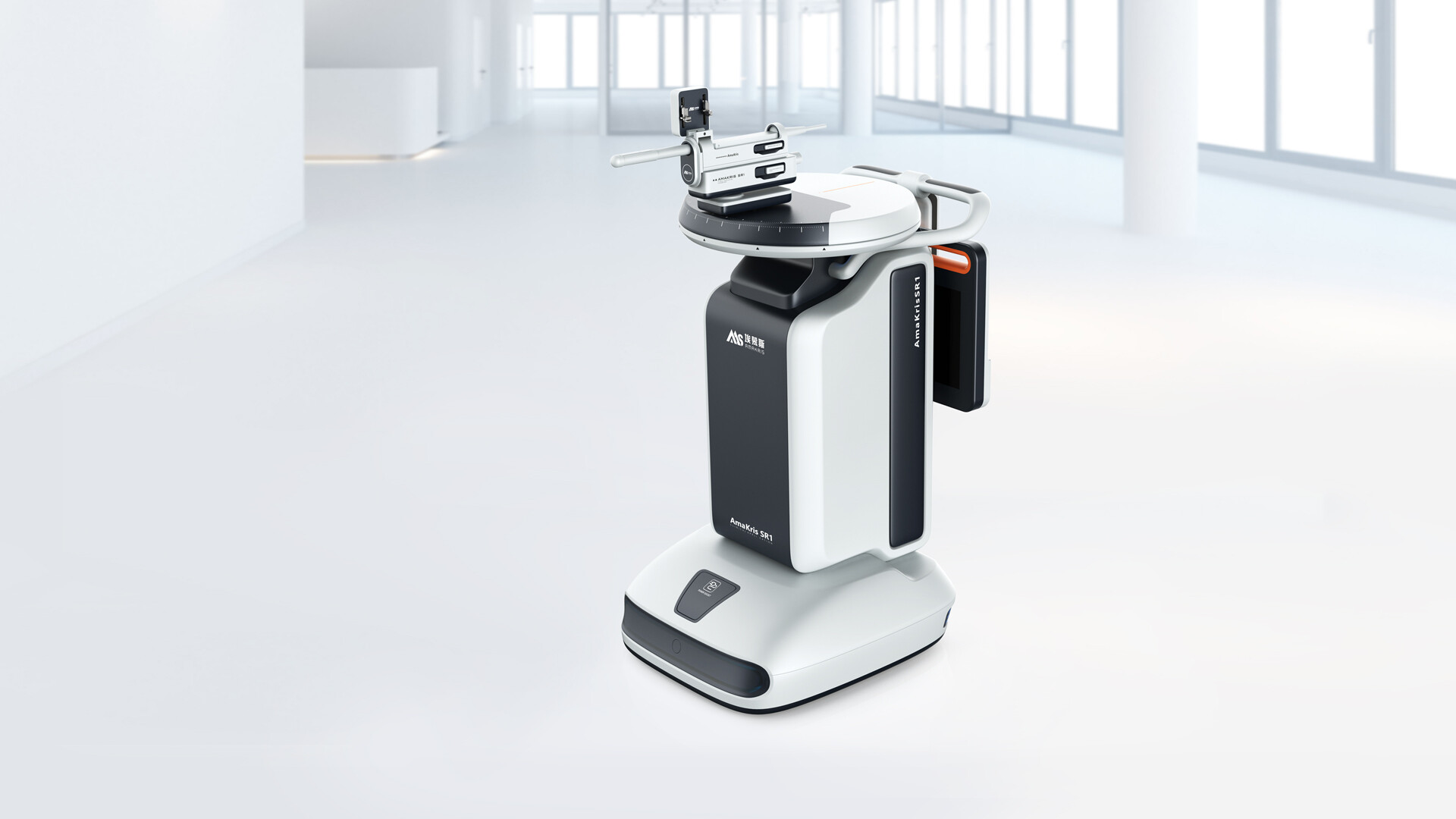
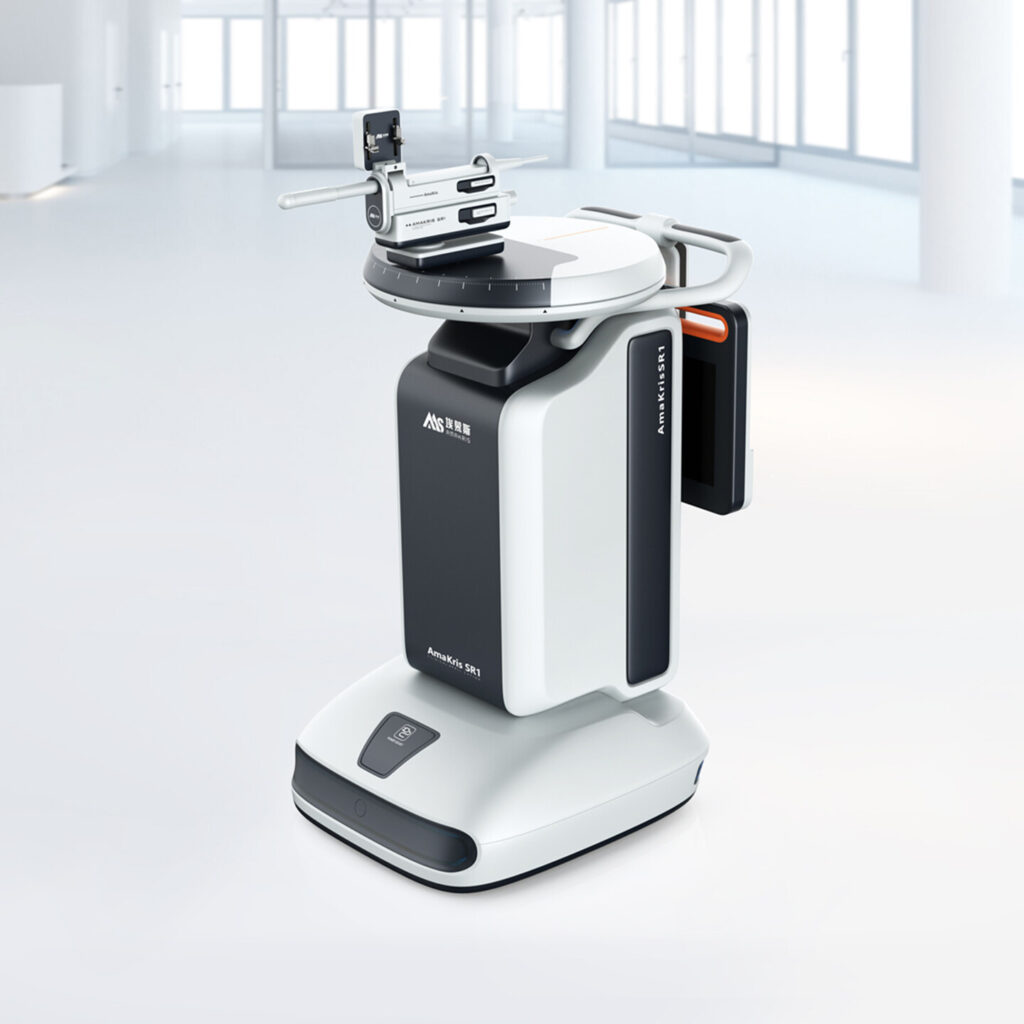
The product is visually divided into upper, middle, and lower sections.
A consistent geometric design language connects the three sections, giving the system an integrated and recognizable overall appearance.
The primary color scheme combines dark navy blue with white, creating a professional and reliable medical identity.
Integrated lighting effects enhance the product’s technological character and communicate its future-oriented positioning.
The final design balances medical professionalism, operational clarity, visual quality, and brand recognition.
Structural Design
The product adopts a modular assembly structure that simplifies transportation, on-site installation, maintenance, and future component replacement.
This modular approach helps reduce resource consumption and control manufacturing, logistics, and service costs.
The internal motion mechanisms were also optimized to support accurate and stable robotic operation.
Close coordination between exterior design and structural engineering ensured that every designed surface could be accurately reproduced in the manufactured product.
This process improved the reliability of the final implementation and maintained consistency between the original design concept and the completed medical system.
Experience Optimization
The design team carried out multiple enclosure segmentation and assembly tests to identify the most suitable panel configuration.
The final enclosure structure provides easier access to internal mechanical and electronic components.
This makes initial assembly more efficient and significantly reduces the difficulty of inspection, repair, and component replacement during later maintenance.
The optimized structure also supports product safety, operational stability, and long-term hospital use.
💡 Solution
1. Simplified Sampling and Improved Diagnostic Accuracy
The robotic system simplifies the prostate sampling procedure while improving targeting precision.
More than 20 tissue samples can be collected during a single procedure, providing doctors with more complete diagnostic information.
As China’s first independently designed minimally invasive prostate robotic system, the product reduces the size of the surgical wound during sampling.
The minimally invasive procedure helps lower the risk of postoperative inflammation and shortens the patient’s recovery period.
By reducing unnecessary steps and improving needle-positioning accuracy, the system also helps shorten procedure times and reduce the workload placed on medical professionals.
2. MRI Planning and Real-Time Ultrasound Guidance
The product was developed primarily for tissue sampling in suspected prostate tumor areas.
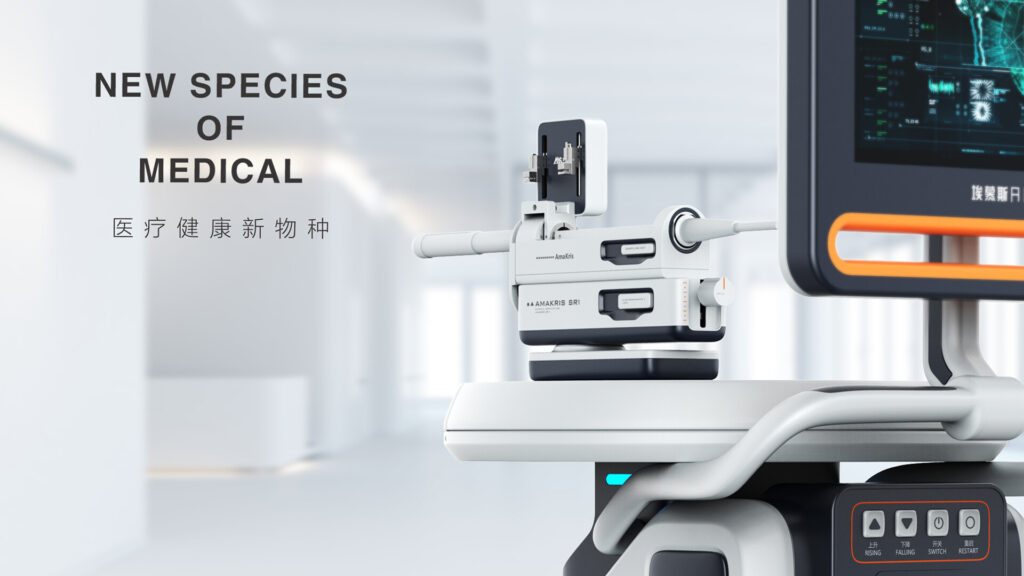
It is equipped with an ultrasound probe and a visual display system that allows doctors to observe the procedure and monitor the prostate in real time.
Before the procedure, magnetic resonance imaging is used to identify and mark suspicious areas where cancerous tissue may be present.
During the procedure, real-time ultrasound imaging tracks the exact position of the prostate.
The physician can then adjust the insertion position and direction of the biopsy needle according to the imaging information.
Approximately 20 tissue samples can be collected during one procedure with limited trauma to the patient.
The combination of preoperative MRI planning, real-time ultrasound monitoring, robotic positioning, and accurate needle control greatly improves the identification of suspected cancer locations and supports more reliable prostate cancer diagnosis.

Like What You See?
 Let's Talk About Your Project