

 Home /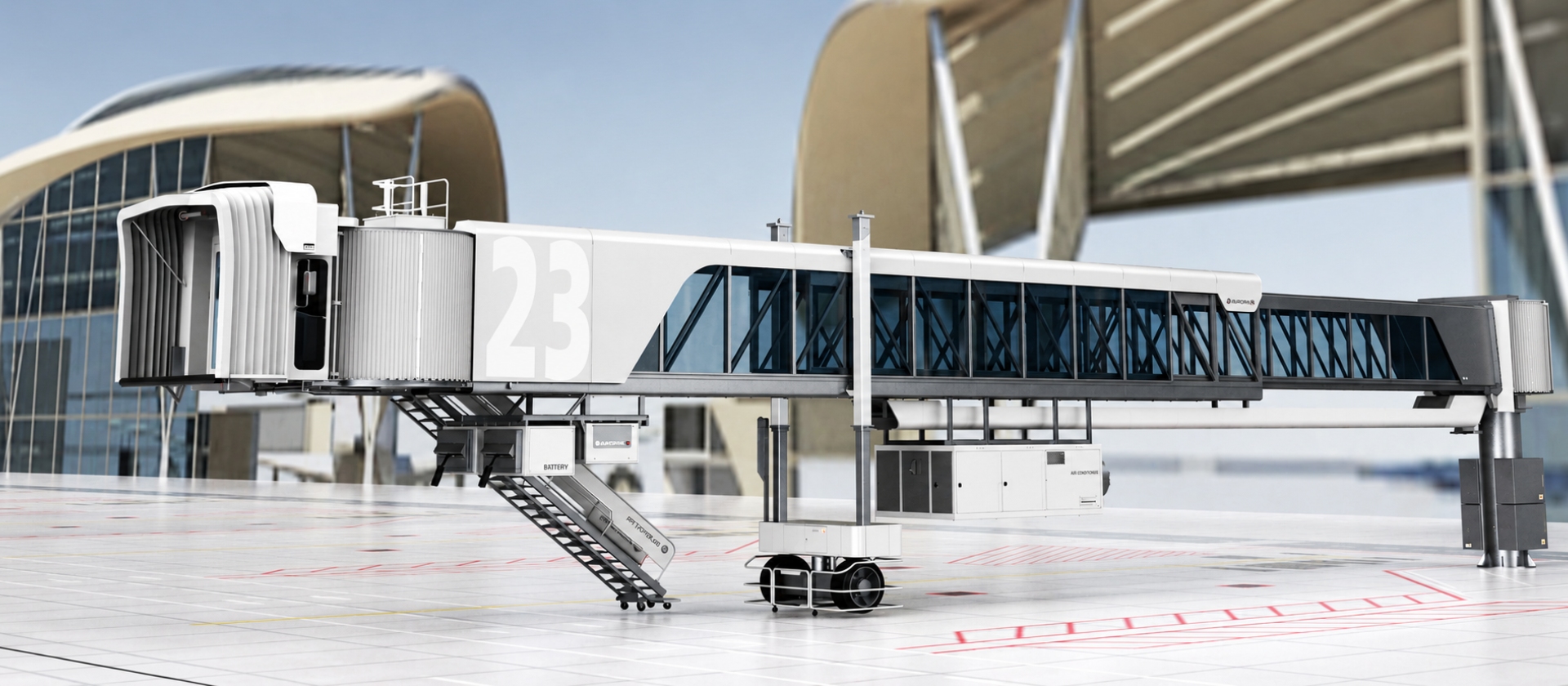
Guangtai Aircraft Passenger Boarding Bridge
Establishing a Distinctive Product Identity to Lead the Product Line and Industry



Innovation Insights
Project Background
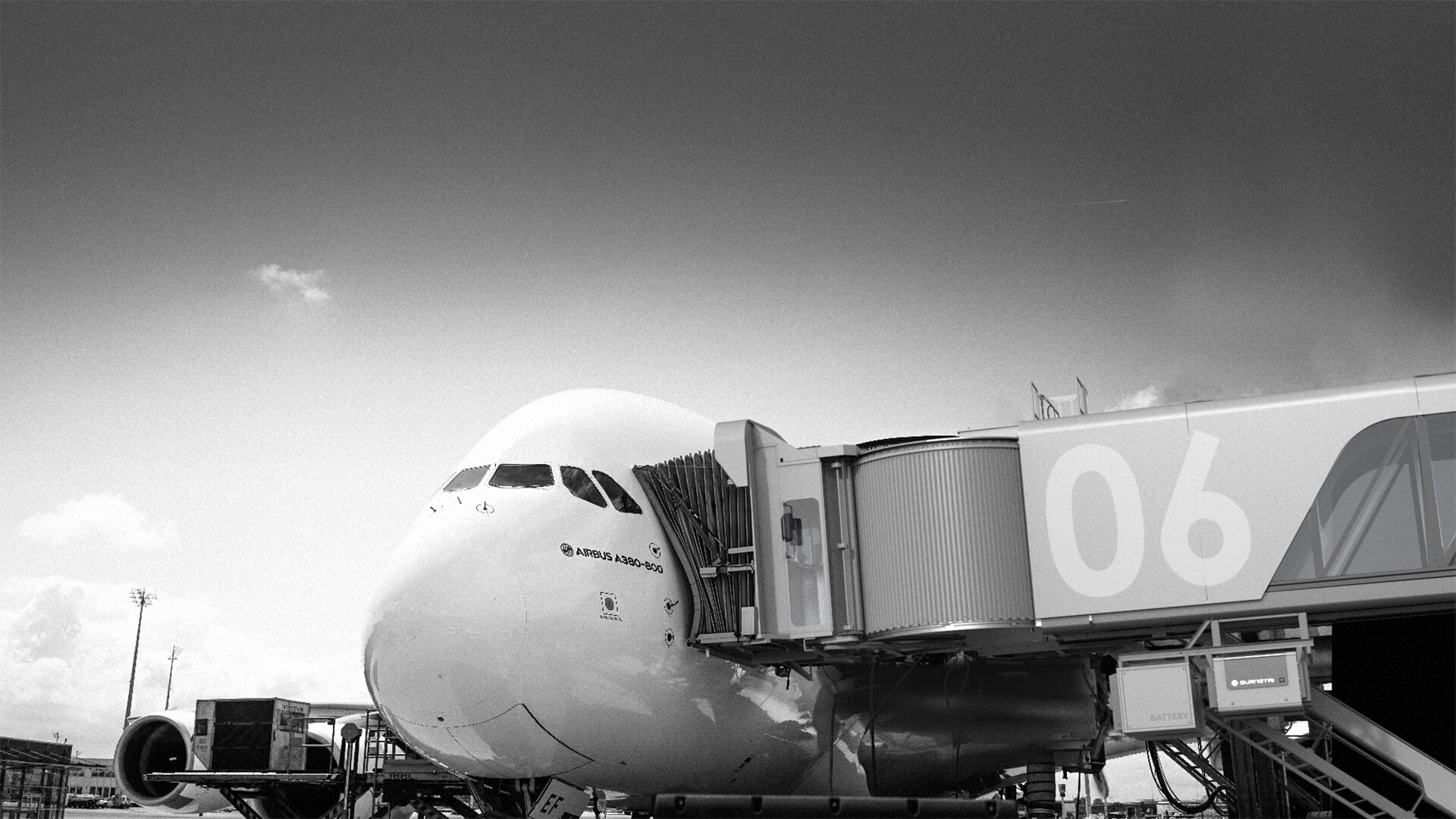
As one of the leading airport equipment companies in Asia and the global market, Guangtai planned to launch a new aircraft passenger boarding bridge.
The project aimed to move beyond the traditional design approach, in which boarding bridges are shaped primarily by structural and functional requirements.
By introducing stronger visual characteristics and a more distinctive design language, Guangtai sought to create a product that could better represent the company’s brand identity and future development direction.
User Requirements
The new boarding bridge needed to align more closely with the architectural aesthetics and experience requirements of next-generation airports.
Guangtai expected the product to establish a recognizable visual character of its own rather than following the conventional appearance of existing boarding bridges.
The design also needed to provide a foundation for the company’s future product family, strengthen brand recognition, and establish a new direction for the wider airport equipment industry.
Design Strategy
Design Concept
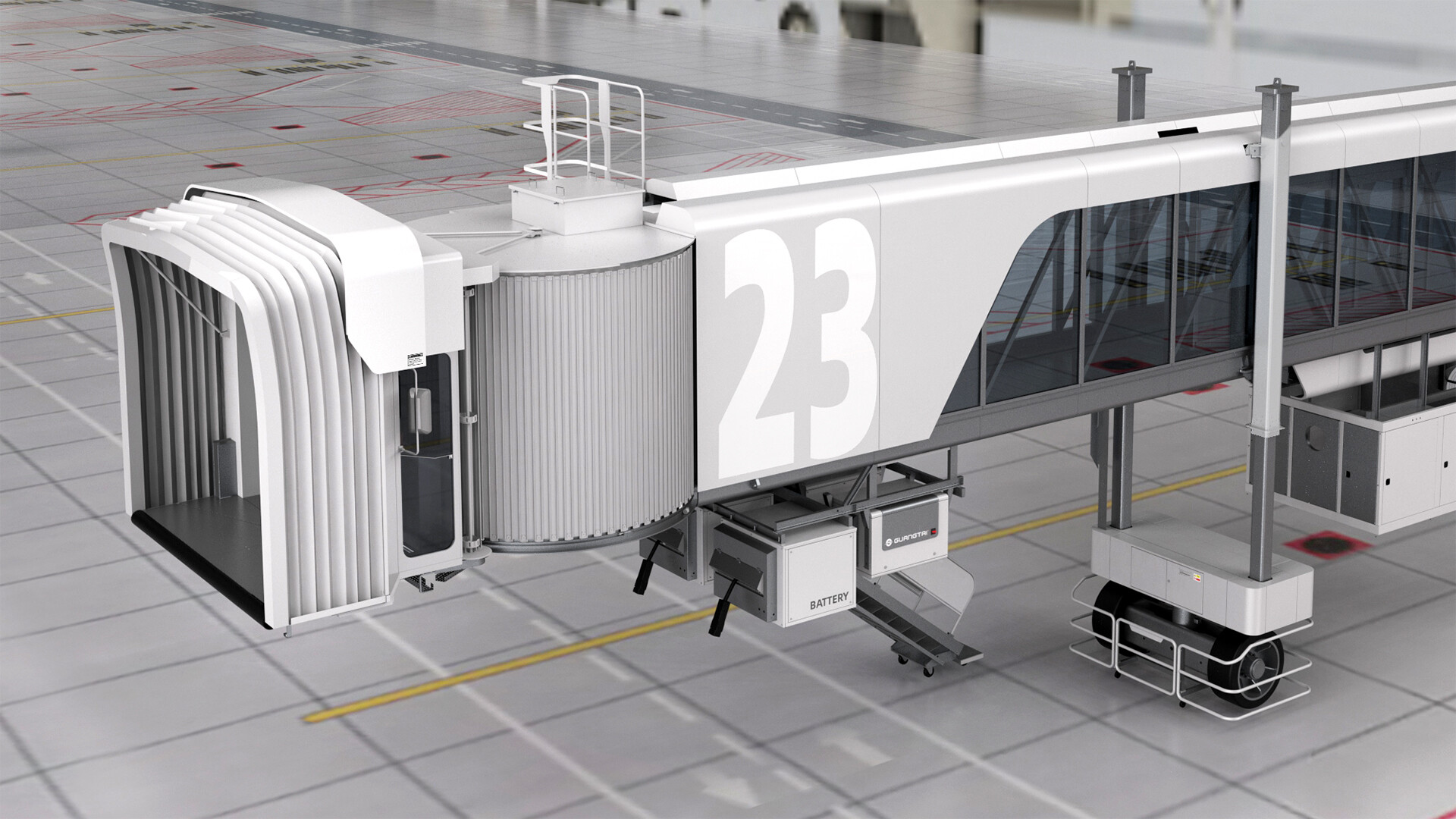
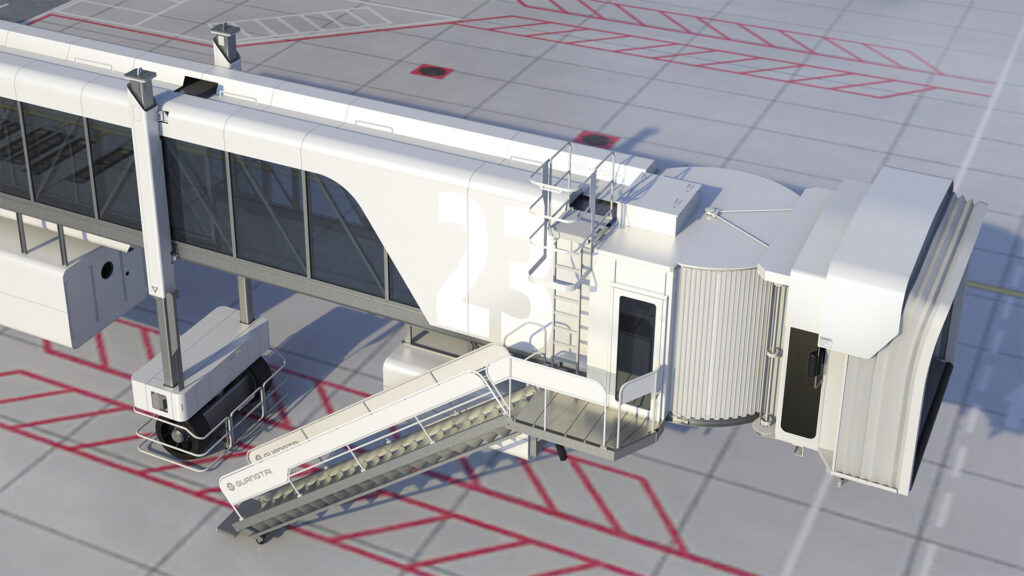
The exterior adopts a highly transparent design solution while maintaining controllable production costs and strong manufacturing feasibility.
Large transparent surfaces reduce the enclosed feeling traditionally associated with passenger boarding bridges.
This approach creates a closer visual connection between passengers, aircraft, airport facilities, and the surrounding environment.
The transparent design also helps produce a brighter, more open, and more comfortable boarding experience.
Experience Optimization
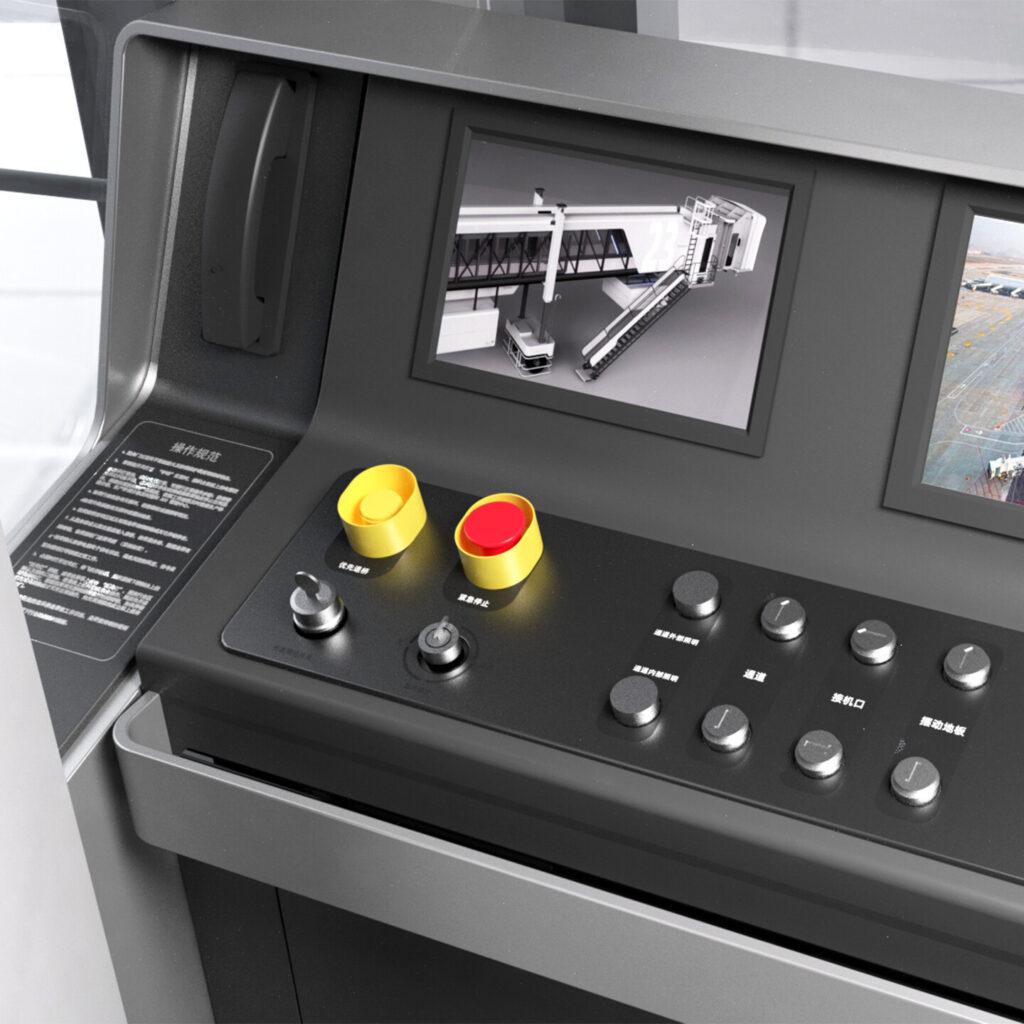
The product received a unified upgrade across multiple visual and experiential touchpoints.
The exterior form, interior environment, lighting system, and information interface were coordinated to create a more consistent and recognizable passenger experience.
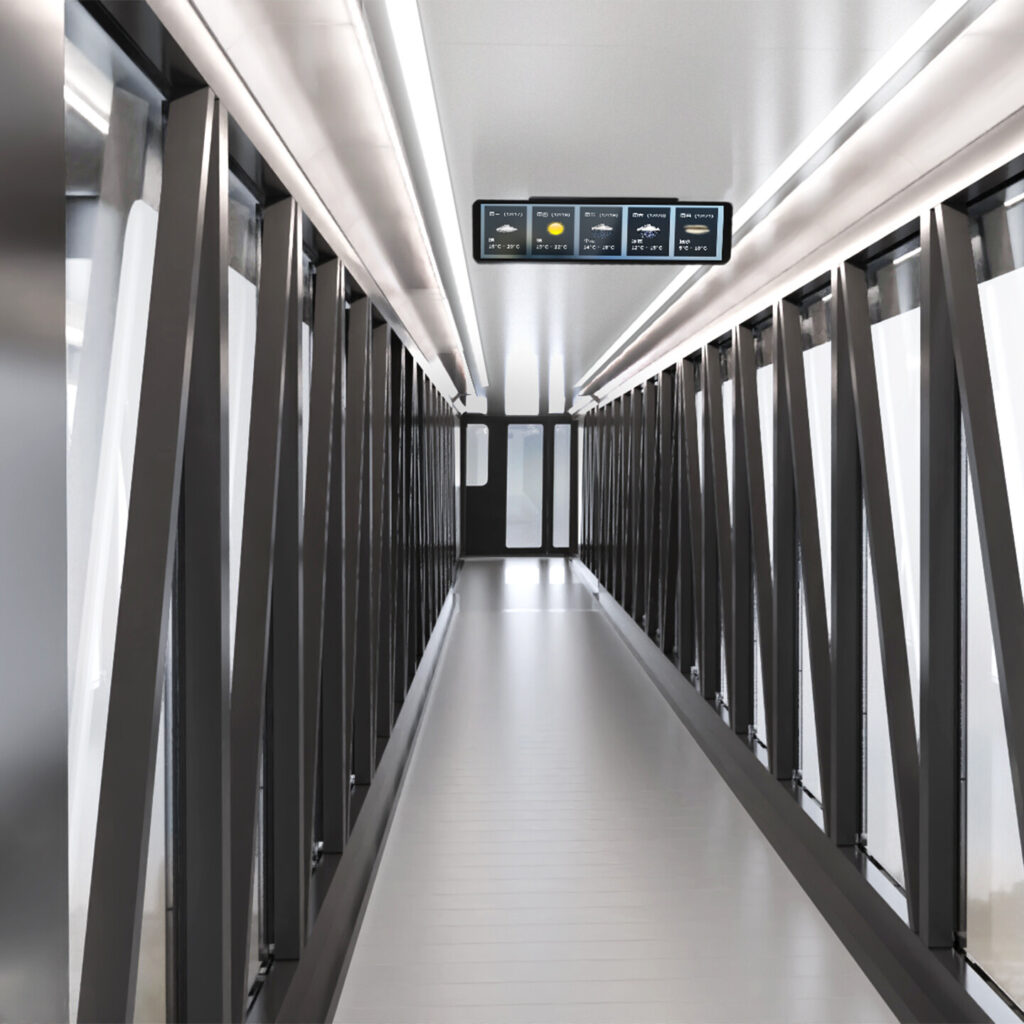
Inside the boarding bridge, a main-light-free lighting system was introduced to create softer and more evenly distributed illumination.
Real-time information displays provide passengers with relevant flight and boarding information while improving the product’s sense of technology and interactive value.
💡 Solution
1. Transparent Exterior and Unified Visual Design
Under the requirements of controlled cost and high manufacturing feasibility, the exterior uses a highly transparent structural solution.
This design strengthens the relationship between passengers and the surrounding airport environment while reducing the visual weight of the boarding bridge.
Multiple areas were also upgraded through a consistent visual language, improving the overall product identity and creating a more coordinated experience throughout the boarding process.
The final appearance balances engineering practicality, production feasibility, visual quality, and passenger comfort.
2. Technology-Oriented Interior Experience
The interior adopts a main-light-free lighting design that avoids the visual interference of traditional central lighting fixtures.
Integrated lighting creates a cleaner and more comfortable space while supporting the modern atmosphere of next-generation airports.
Real-time information displays provide clear updates and strengthen the interaction between passengers and the boarding environment.
Together, the lighting and information systems improve the bridge’s technological character, usability, and overall passenger experience.

Like What You See?
 Let's Talk About Your Project