There is a pivotal moment in the life of every new product—the instant a concept, once confined to sketches and screens, becomes a tangible object you can hold, test, and experience. This moment is made possible by the prototype. But forget the image of a crude, glue-and-cardboard model. A modern product prototype is a sophisticated, functional embodiment of your idea, serving as the critical bridge between abstract vision and market-ready reality. Powered by advanced technologies and integrated into a structured development process, today's prototype is less of a simple model and more of a multifaceted strategic tool for validation, communication, and de-risking the entire journey to production.
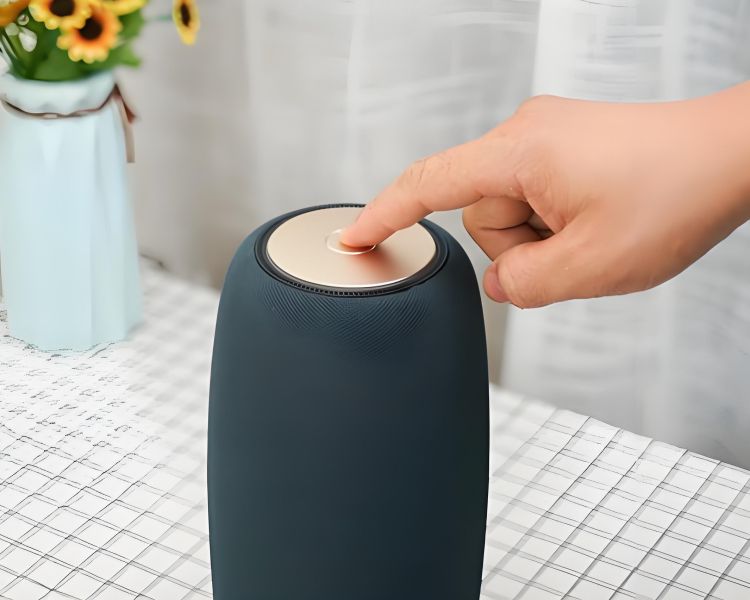
Understanding why you build a prototype is as important as knowing how. In modern product development, a prototype serves several interconnected strategic purposes that move far beyond mere visualization.
Does it feel right in the hand? Is the user interface intuitive? Does the assembly align perfectly? Physical interaction is irreplaceable. A prototype allows designers and engineers to evaluate ergonomics, aesthetic proportions, material feel, and overall usability in real-world scenarios, leading to refinements that CAD models alone cannot reveal.
Will the mechanism work 10,000 times without fail? Does the electronic system overheat? Is the structure strong enough? Functional prototypes, or "works-like" models, are built to test the core engineering principles. This stage uncovers flaws in mechanics, electronics, software integration, and durability before the massive investment in production tooling is made.
A prototype is a universal language. It aligns cross-functional teams (engineering, marketing, executive leadership) around a single, physical truth. More importantly, it becomes a powerful tool for communicating with potential investors, partners, and early customers, transforming a difficult-to-describe idea into a compelling, demonstrable asset.
Perhaps the most financially critical purpose. A prototype, especially a high-fidelity one, is used to test Design for Manufacture (DFM) principles. Can the part be ejected from a mold? Are tolerances too tight for high-volume assembly? Identifying and solving these issues on a prototype can prevent catastrophic cost overruns and delays during mass production. This directly addresses the core concern of businesses, like those partnering with firms such as LKK Design, who seek confidence that a concept is not only innovative but also manufacturable at a reasonable cost and timeline.
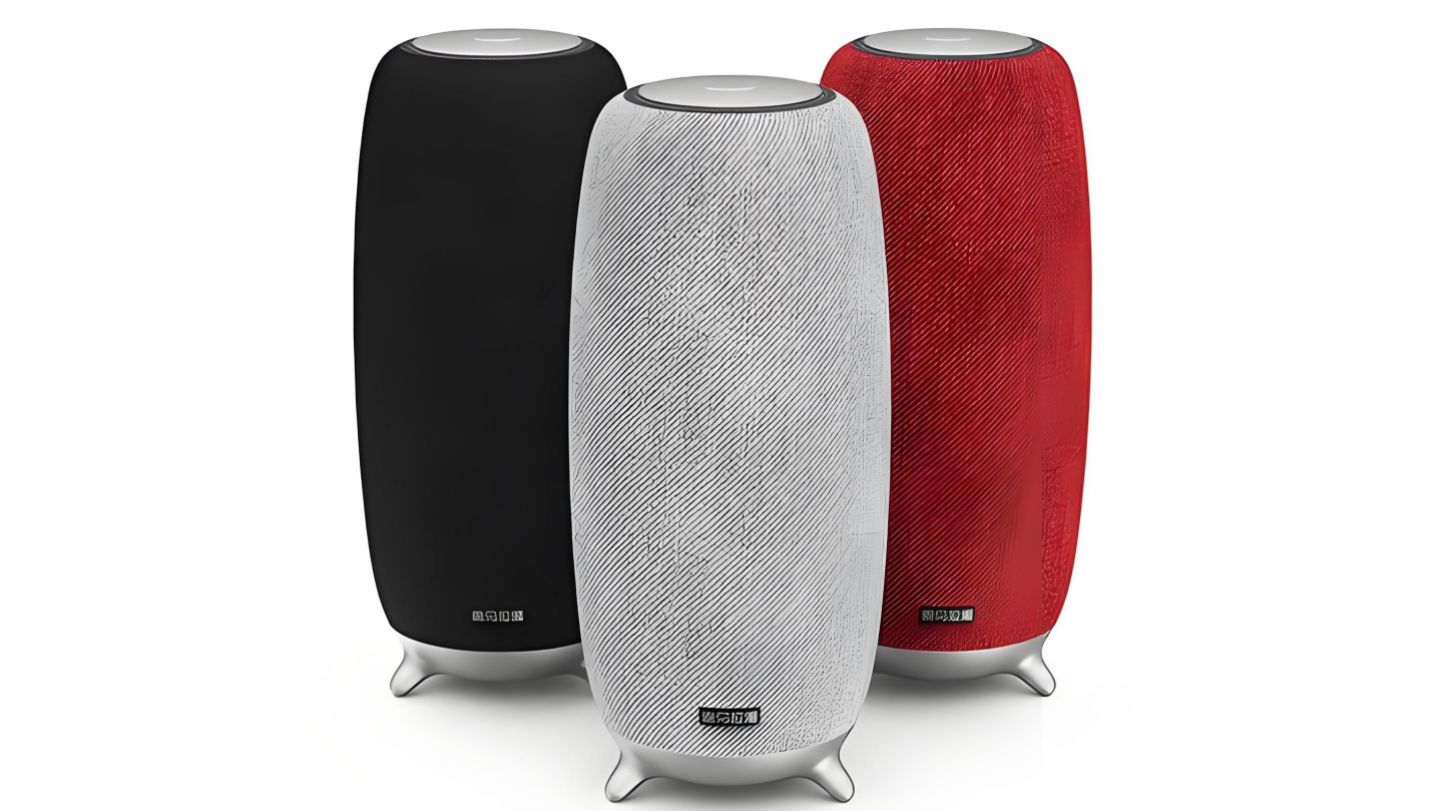
Prototypes are created with varying levels of completeness, known as "fidelity." Choosing the right level depends on the questions you need to answer at that specific stage of development.
These are quick, inexpensive, and low-tech. Made from foam, cardboard, clay, or simple 3D prints, their goal is to explore basic form, size, and user interaction. They answer "big picture" questions about the product's fundamental concept and user experience.
This category often splits into two streams. A "looks-like" prototype focuses on aesthetics, using higher-quality 3D prints or machined parts to approximate the final material and finish. A "works-like" prototype prioritizes function, often using off-the-shelf components and breadboard electronics housed in a rough enclosure to prove the core technology.
These are the closest possible representation of the final product. They use production-intent materials and processes (e.g., CNC-machined aluminum, injection-molded-like urethane castings, custom-fabricated PCBs) and house fully functional electronics and software. They are used for final design validation, certification testing, and investor/demo presentations.
Table: Modern Prototype Fidelity Comparison
| Fidelity Level | Primary Goal | Typical Methods | Cost & Speed |
| Low-Fidelity | Validate core concept, ergonomics, and user flow. | Hand-sculpted foam/clay, cardboard mockups, rapid 3D prints (FDM). | Low cost, Very Fast (Hours to days) |
| Mid-Fidelity | Test specific aesthetics or mechanical/electronic function. | High-resolution 3D prints (SLA), "works-like" breadboard models, simplified CNC parts. | Moderate cost, Fast (Days to weeks) |
| High-Fidelity | Final validation of form, function, and manufacturability (DFM). | CNC machining, urethane casting, soft tooling, custom PCB assemblies. | High cost, Slower (Weeks to months) |
The evolution of prototyping is driven by accessibility and capability. Here are the core technologies that define modern prototyping.
The backbone of rapid prototyping, allowing for complex geometries impossible with traditional methods.
Stereolithography (SLA): Uses a laser to cure liquid resin. Excellent for high-detail, smooth-surface "looks-like" prototypes with fine features.
Fused Deposition Modeling (FDM): Extrudes thermoplastic filament. Ideal for durable, functional parts and large-scale conceptual models. It's versatile and widely accessible.
Selective Laser Sintering (SLS): Uses a laser to fuse nylon powder. Creates strong, functional parts with complex internal structures without the need for support materials.
Where 3D printing adds material, CNC machining removes it from a solid block. It is the go-to method for high-fidelity prototypes that require the exact properties of the final material—be it aluminum, steel, or engineering-grade plastics like POM or nylon. It offers superior strength, thermal stability, and precision for testing functional, load-bearing components.
This is a bridge between prototyping and low-volume production. A master model (often CNC machined or 3D printed) is used to create a silicone mold. Liquid urethane resin is then cast into the mold, producing parts that can closely mimic the look, feel, and properties of various production plastics (from flexible TPE to rigid ABS). It's perfect for producing 50-500 units for market testing.
Modern products are often "smart." Prototyping their electronic soul involves:
Breadboarding & Development Kits: For initial circuit design and firmware development using off-the-shelf modules (Arduino, Raspberry Pi).
Custom PCB Fabrication: Once the circuit is validated, custom Printed Circuit Board Assemblies (PCBAs) are designed and fabricated. Modern, quick-turn PCB services allow functional electronic prototypes to be integrated into the mechanical housing within weeks.
A holistic approach, like that of LKK Design, integrates these tools across industrial, mechanical, and electronic design teams. This ensures the aesthetic model, the mechanical assembly, and the electronic brain are developed in tandem, resulting in a cohesive and functional modern product prototype.
Professional prototyping is not a one-off event; it's a disciplined, iterative cycle embedded within the larger product development framework.
This loop is repeated at increasing levels of fidelity. Insights from testing each prototype directly inform the refinements in the next design iteration. This systematic approach minimizes risk by finding and solving problems when they are least expensive to fix.
Concept Validation (Low-Fi): Following initial research and ideation, rough prototypes test core user interactions and appeal. This aligns with the Concept Development phase in a structured process, where multiple directions are explored physically.
Engineering Development (Mid-Fi): As the design matures, prototypes focus on subsystem function—mechanisms, electronics, software integration. This involves extensive testing and iteration, mirroring the 3D Modeling & Detailed Design stages where engineering precision takes priority.
Pre-Production Validation (High-Fi): The final design is prototyped using near-production methods. This prototype undergoes rigorous DFM analysis, compliance testing, and user acceptance trials. This stage is the culmination of the process, equivalent to the DFM Optimization and Prototyping phase, where the goal is to finalize all specifications for manufacturing.
This phased, iterative approach is central to de-risking development. It transforms prototyping from a cost center into a value engine, systematically answering critical business questions about feasibility, user acceptance, and cost structure.
In today's competitive landscape, skipping robust prototyping is a high-stakes gamble. Here’s why it’s essential:
Saves Significant Time and Money: Catching a fundamental design flaw during prototyping might cost thousands. Discovering the same flaw in mass production can cost millions and delay launch by a year or more.
Secures Investment and Builds Confidence: A functional, high-fidelity prototype is the single most effective tool for convincing investors of a product's viability and a team's execution capability. It transforms speculation into demonstrable proof.
Ensures User Acceptance and Market Fit: Putting a prototype in the hands of real users provides invaluable feedback that can steer the product toward greater market success, preventing the launch of a product that nobody wants or can use effectively.
Paves the Way for Smoother Manufacturing: By rigorously testing for DFM, a prototype ensures that the transition to mass production with a contract manufacturer (like the services offered by LKK) is as seamless as possible, avoiding costly tooling changes and production line stoppages.
A modern product prototype is far more than a scaled model. It is a critical communication tool, a risk-mitigation engine, and a validation platform. It is the physical heartbeat of the innovation process. The choice of fidelity, method, and process directly impacts a product's path to market, influencing its cost, timeline, and ultimate success.
Navigating this landscape requires more than just access to a 3D printer; it demands strategic insight into which prototype to build, when to build it, and how to translate the results into actionable design improvements. This is where partnership with an experienced, integrated design and engineering firm proves its worth. LKK Design exemplifies this approach, employing prototyping not as a standalone service but as an integral, iterative pillar of its user-centric development process—from initial research to DFM and manufacturing support—ensuring that the bridge from idea to reality is not only crossed but is traversed with confidence, clarity, and commercial purpose.


We use cookies to ensure that we give you the best experience on our website. By clicking "Accept All", you consent to our use of cookies. Learn more.
Please fill out the form and we'll get back to you shortly.

Your submission has been received !
Thank you for your submission.
We will get back to you within 24 hours and appreciate your patience.
Enter your details to receive the toolkit for free.