
A product prototype is a physical or functional model of your idea that you use to test design, performance, and user experience before investing in mass production. For hardware founders and innovation teams, a prototype turns slides and sketches into something real that investors, customers, and factory partners can evaluate and improve.
Instead of going straight from a concept to tooling, the prototype stage lets you validate assumptions, uncover design flaws, and refine your solution while changes are still relatively inexpensive. Partnering with an integrated firm like LKK Design, which provides end‑to‑end services from concept validation to mass production, can dramatically simplify this journey and reduce risk.
If you are asking “how do I get a product prototype?”, the first step is to clarify what you are actually building and why. This means defining your target users, the main problem you solve, and the key functions the product must deliver, along with constraints like size, environment, and regulatory context.
LKK Design recommends capturing this in a simple product requirements document (PRD) that records performance targets, core features, and success metrics. Clear specs help designers and engineers make better decisions later and prevent costly rework when you move into CAD, 3D printing, or engineering verification.
Once you understand what the product must do, you move into early concept design. At this stage, you translate your idea into sketches or rough 2D layouts showing overall shape, key components, and how users will interact with the product in real situations.
Industrial design teams—like those at LKK—use user research, brainstorming, and sketching to explore multiple directions before converging on 1–2 promising concepts that balance usability, aesthetics, and feasibility. Reviewing these concepts with stakeholders or investors is often the first time your idea feels tangible, even before you have a physical prototype.
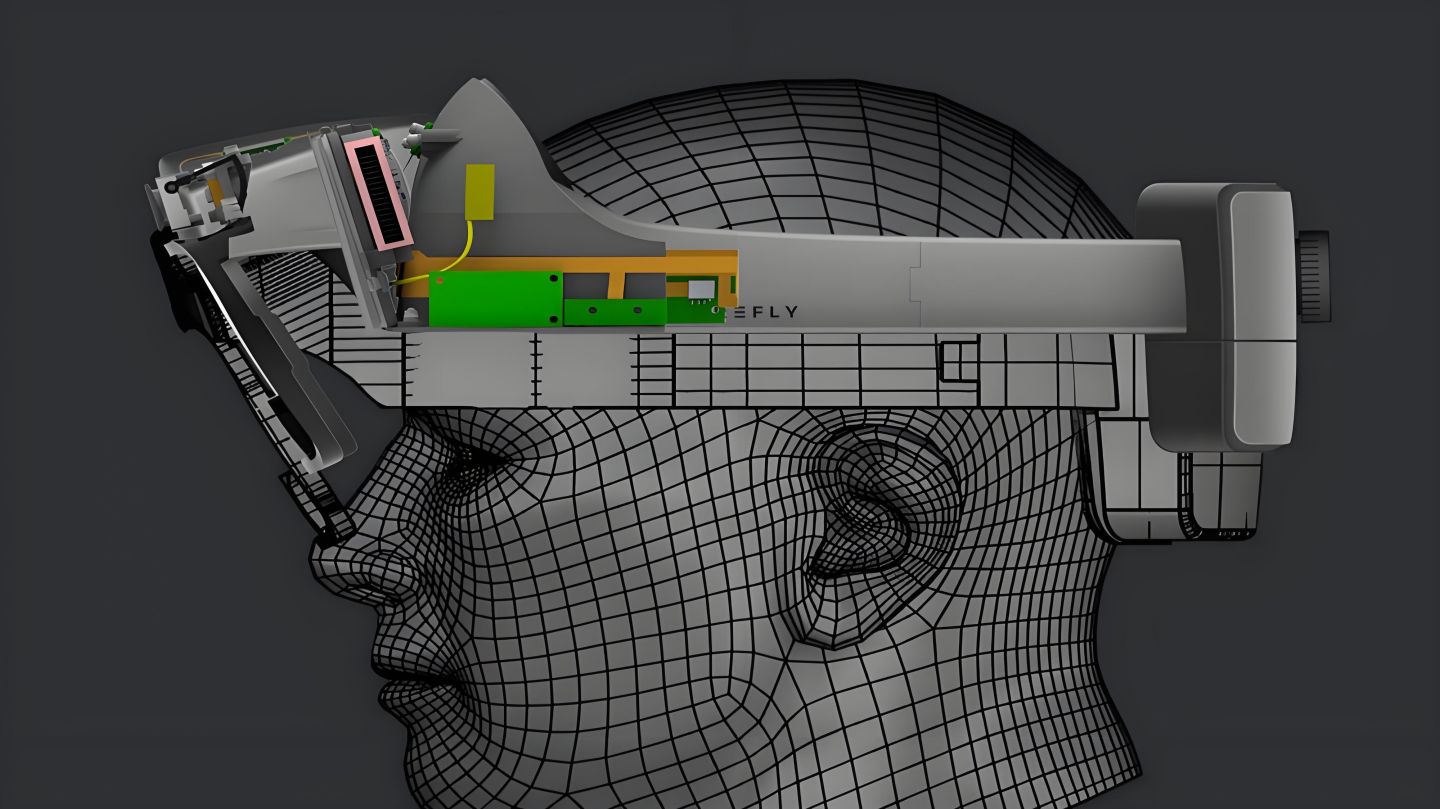
To answer “how do I get a product prototype made?”, you need a 3D model. Designers and engineers use CAD tools such as SolidWorks, Fusion 360, or similar software to turn sketches and requirements into precise geometry, assemblies, and internal structures.
Key tasks in this stage include defining dimensions, interfaces, and assembly points; adding ribs, bosses, and fillets; and planning how components like PCBs, batteries, and sensors will fit inside the enclosure. LKK’s global team of mechanical and electronics engineers integrates DFM thinking directly into the CAD so that your future prototype is already aligned with manufacturing realities.
Before fabricating anything, decide what kind of prototype you need right now, based on your goals and budget.
Concept prototype Focus: form, size, and basic user interaction. Use when: you want to show investors or internal stakeholders a realistic model without full functionality.
Engineering prototype (EVT) Focus: core functionality, structural integrity, PCBA layout, and thermal behavior. Use when: you need to prove that the engineering works and identify design issues.
Design verification prototype (DVT) Focus: near‑final function, user experience, and reliability under real conditions. Use when: you plan for certification tests, user pilots, or beta programs.
Production verification prototype (PVT) Focus: validating your manufacturing line, yields, and inspection processes with small pilot runs. Use when: you are nearly ready for volume production and want to de‑risk ramp‑up.
LKK’s methodology explicitly includes EVT–DVT–PVT stages to compress timelines and reduce the risk of expensive failures once you move into mass production.
Today you have several options for actually building the prototype once the CAD is ready. The right choice depends on your goals, budget, and timeline.
3D printing (rapid prototyping) Ideal for quick, low‑volume prototypes to test form, fit, and basic function. Layer‑by‑layer printing lets you move from CAD to physical parts in hours or days with minimal setup.
CNC machining Useful when you need higher strength, better surface quality, or precise tolerances, often in metal or engineering plastics. CNC parts are common in later engineering prototypes or in components that will stay metal in mass production.
Soft tooling / low‑volume molding When you need dozens or hundreds of parts that closely match injection‑molded performance and finish, soft tools or rapid molds can bridge the gap between prototyping and full tooling.
LKK operates in‑house rapid prototyping labs with 3D printing, CNC, and quick‑turn PCBA capabilities, allowing teams to combine methods as needed—for example, a 3D‑printed enclosure with CNC‑machined structural parts and assembled electronics.
Once fabrication starts, you quickly move into testing and iteration. After printing or machining, parts are cleaned, assembled, and evaluated for geometry, ergonomics, functional performance, and potential interference between components.
Each prototype round should be followed by structured testing against your earlier requirements: does it meet performance targets, survive expected stresses, and deliver a good user experience? LKK integrates Engineering Verification Test (EVT) and Design Verification Test (DVT) into prototyping, with detailed reports and issue tracking, to systematically refine the design until it’s ready for production.
A prototype that works is not automatically manufacturable at scale. Design for Manufacturability (DFM) and Design for Assembly (DFA) ensure that your product can be produced consistently at target cost and quality.
In this phase, engineers optimize draft angles, wall thicknesses, ribs, and gate locations for molded parts; choose processes for metal parts; and simplify assembly to minimize steps and reduce labor. LKK’s manufacturing engineering team works alongside design and engineering to embed DFM and DFA early, so you don’t discover manufacturability issues after paying for tooling.
If your question is “how do I get a product prototype that’s ready for manufacturing?”, the answer involves pilot builds (PVT) and small‑batch production. In these runs, you use near‑final tooling and processes to test yields, line balancing, inspection procedures, and packaging.
These PVT prototypes are typically used for final certification, early customer programs, and internal validation that the factory can hit your volume and quality targets. LKK’s end‑to‑end approach covers Concept → EVT/DVT Prototyping → PVT Pilot Production → Mass Manufacturing, a process it has used to launch more than 3,000 products across over 30 industries since 2004.
You can try to coordinate freelancers, local shops, and distant factories yourself—but working with a single, integrated partner can significantly reduce risk and complexity. LKK Design is one of the most awarded innovation design groups in China, with around 592 global design awards including Red Dot, iF, and IDEA by 2025.
The company provides full‑cycle solutions that cover industrial design, mechanical and electronics engineering, 3D printing and prototyping, EVT/DVT/PVT, and contract manufacturing, supported by 5,000+ vetted supply‑chain partners worldwide. Parallel development in in‑house pilot lines allows LKK to deliver functional prototypes in roughly six weeks and cut time‑to‑market by around 30% for many hardware programs.
LKK has also been a long‑term partner to more than 1,000 industry leaders, including Fortune Global 500 companies and top Chinese brands in fields like healthcare, smart home, energy, and mobility. This breadth means your prototype benefits from best practices proven across regulated markets and complex engineering challenges, not just one‑off projects.
You can explore LKK’s services and case studies on the official site: https://www.lkkerscm.com.
To summarize the practical path if you choose an integrated partner like LKK:
Share your idea and requirements You bring your idea, sketches, and basic requirements; the team helps refine them into a structured brief and PRD.
Go from concept to CAD Industrial designers and engineers convert the brief into concept designs and then detailed 3D models ready for prototyping.
Build rapid prototypes LKK fabricates 3D printed and machined prototypes, then supports EVT and DVT testing to validate performance and user experience.
Optimize for manufacturing Manufacturing engineering teams run DFM/DFA, plan tooling, and prepare documentation and supply chains.
Run pilots and scale PVT pilot runs validate the production line, followed by ramp‑up to mass manufacturing with ongoing support.


We use cookies to ensure that we give you the best experience on our website. By clicking "Accept All", you consent to our use of cookies. Learn more.
Please fill out the form and we'll get back to you shortly.
Your submission has been received !
Thank you for your submission.
We will get back to you within 24 hours and appreciate your patience.
Enter your details to receive the toolkit for free.