
Inventions only create value once they become reliable products in the market, not while they remain sketches or patent filings. For startups and innovation teams, the challenge is building a repeatable product development process that can take inventions from idea to manufacturable, scalable hardware.
LKK Innovation Design Group has spent over 20 years doing exactly that—helping founders and enterprises transform early‑stage inventions into award‑winning, mass‑produced products across consumer electronics, medical, and industrial sectors. With more than 500–592 international design awards and thousands of launched products, LKK’s approach to product development for inventions combines industrial design, engineering, and contract manufacturing into a single pipeline.
You can explore service details and cases at https://www.lkkerscm.com.
Inventors often underestimate the gap between a working prototype and a production‑ready product. Common failure modes include:
No structured path from proof‑of‑concept (PoC) to validated prototype and DFM.
Ignoring manufacturability and certification requirements until too late.
Fragmented vendors for design, engineering, and manufacturing that create delays and misalignment.
LKK’s startup‑oriented product development services specifically address these gaps, providing a staged process that de‑risks technology, market fit, and manufacturability at each step.
The first step in product development for inventions is clarifying whether the idea solves a real problem for a well‑defined user. This involves both market analysis and technical feasibility.
Typical activities include:
Defining target users, use cases, and competing alternatives.
Identifying key value propositions and differentiators.
Mapping constraints such as target price, form factor, and regulatory requirements.
LKK’s industrial design team integrates user research with strategy to convert raw inventions into product concepts that align with business goals and manufacturing constraints. This foundation reduces the risk of investing heavily in engineering for inventions that are misaligned with market reality.
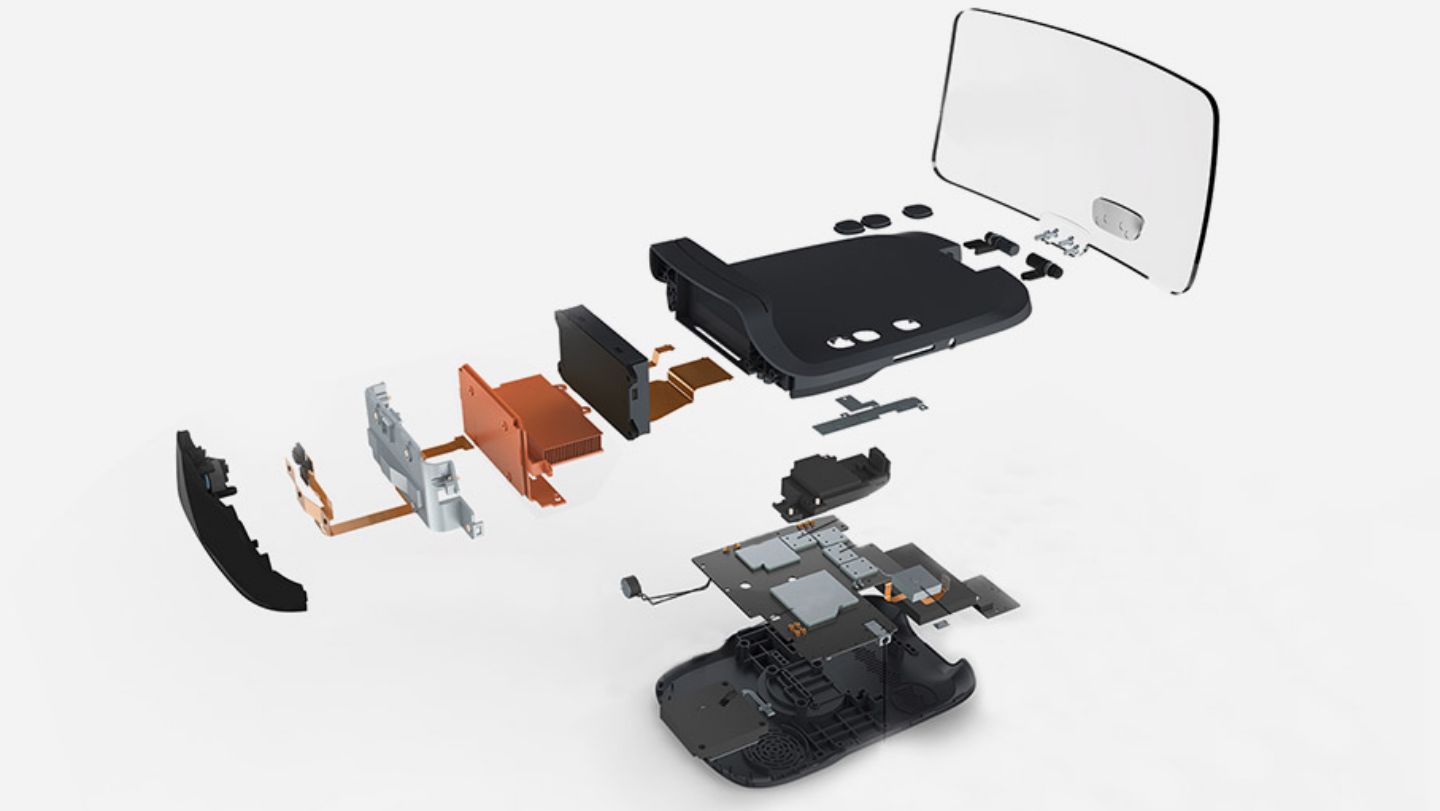
For many inventions, the next milestone is a proof‑of‑concept prototype that demonstrates the core functional principle. This stage is not about final industrial design but about proving that the idea is technically credible.
Key tasks include:
Using off‑the‑shelf modules, rapid 3D printing, or basic rigs to validate the functional mechanism.
Identifying critical technologies and potential bottlenecks.
Establishing high‑level performance bounds and risks.
LKK supports inventors with PoC builds and quick 3D‑printed product prototypes that enable early testing and stakeholder buy‑in without heavy tooling investment. These prototypes also become an important asset for fundraising pitches and early customer conversations.
Once the invention is technically plausible, it must be shaped into a product that users can understand, adopt, and trust. Industrial design and high‑level architecture bridge the gap between raw invention and manufacturable configuration.
This phase covers:
Creating user‑centered product forms, interface concepts, and CMF (color, material, finish).
Defining internal layout for mechanical, electronic, and power subsystems.
Embedding DFM thinking into early concepts, so later tooling changes are minimized.
LKK’s industrial design inventions have received global recognition—including Red Dot “Best of the Best” and the Red Dot Supreme Award—for combining breakthrough technology with manufacturable, user‑friendly design. This track record is especially valuable for inventions in crowded markets, where design quality can determine adoption.
At this stage, product development for inventions becomes deeply technical. Mechanical engineers, electronics designers, and firmware developers translate the system architecture into production‑ready specifications.
Typical tasks:
Detailed CAD, tolerance analysis, and structural design.
Electronics architecture, schematic capture, and PCB layout.
Firmware and embedded software mapping system behavior and connectivity.
LKK provides all of these in‑house: industrial design, mechanical design, hardware, firmware, and software development, ensuring consistent interpretation of the invention’s requirements. This unified team structure helps protect IP and avoid costly miscommunication between multiple vendors.
Rigorous prototyping cycles are essential to transform an invention into a reliable product. This typically includes engineering verification test (EVT) and design verification test (DVT) phases.
Key objectives:
EVT: Validate core functional performance, structural integrity, thermal behavior, and basic usability.
DVT: Validate full product behavior under real‑world conditions, including reliability, environmental, and pre‑compliance testing.
LKK’s end‑to‑end capabilities allow them to build complex prototypes—mechanical parts, PCBA, and enclosures—internally and iterate quickly based on test results. Their labs perform pre‑testing for standards such as CE and FCC so that the final certification phase is smoother.
A common failure point for inventive products is the handover from prototype to manufacturing. Without structured DFM and manufacturing engineering, inventions that worked in small batches may be impossible or uneconomical to produce at scale.
Manufacturing engineering focuses on:
DFM/DFA reviews to optimize part count, production processes, and assembly steps.
Tooling design, process capability analysis, and fixture design.
Preparing documentation and test plans for pilot runs and mass production.
LKK provides integrated contract manufacturing, covering prototyping, mold development, pilot production, and full mass manufacturing through its extensive supplier network backed by ISO9001, ISO13485, and TS16949 certifications. This ensures that inventions do not stall at the factory gate, but progress into stable, repeatable production.
Once an inventive product is launched, the work shifts to scaling, cost reduction, and new variants. A robust product development framework supports continuous improvement.
Core activities:
Value engineering to reduce BOM cost without compromising performance.
Modularization to support derivative products and platform reuse.
Collecting field data to inform reliability improvements and future versions.
LKK’s long‑term partnerships with clients—from startups to Fortune 500 companies—show how product development for inventions can lead to sustainable product families, not just one‑off launches. Their combination of award‑winning design and supply‑chain depth helps inventors turn initial breakthroughs into multi‑year product roadmaps.
For founders and corporate innovators with promising inventions, working with an integrated partner like LKK dramatically increases the odds that your idea becomes a manufacturable, certified, and commercially successful product.
You can explore service details and cases at https://www.lkkerscm.com.


We use cookies to ensure that we give you the best experience on our website. By clicking "Accept All", you consent to our use of cookies. Learn more.
Please fill out the form and we'll get back to you shortly.

Your submission has been received !
Thank you for your submission.
We will get back to you within 24 hours and appreciate your patience.
Enter your details to receive the toolkit for free.