In today’s hyper-competitive market, new product design isn’t just about aesthetics—it’s the foundation of business growth, customer loyalty, and market differentiation. For entrepreneurs, product managers, and brands, the stakes couldn’t be higher: 42% of new products fail because they don’t meet user needs or lack feasible manufacturing plans (Harvard Business Review). But what separates successful new product design from costly missteps?
The answer lies in a user-centric approach, seamless integration of design and manufacturing, and alignment with business goals—principles that LKK has refined over 20 years as a global leader in new product design and development. Since 2004, LKK has helped hundreds of brands turn vague ideas into market-leading products by combining innovation, simplicity, practicality, and sustainability. In this article, we’ll dive into real-world successful new product design examples from LKK’s portfolio, uncover the key takeaways, and show how you can replicate this success for your next project.
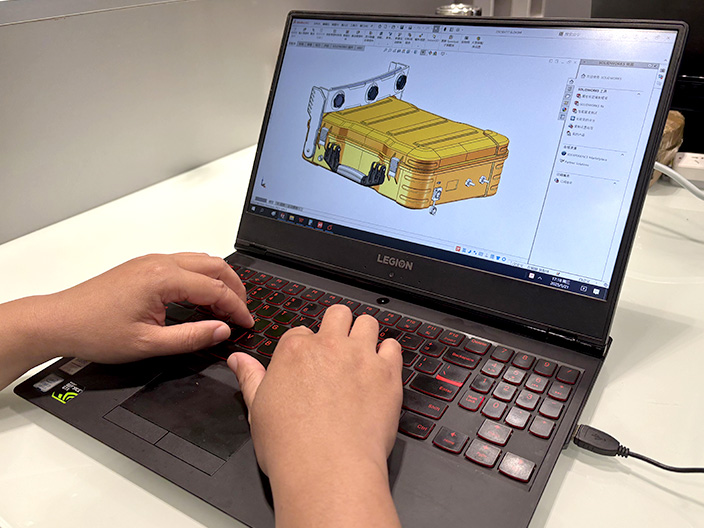
Before diving into examples, it’s crucial to clarify what “success” means in new product design. It’s not just about sales numbers—though that’s a key outcome. Successful new product design must meet four core criteria, all of which LKK embeds into its process:
The best new product design starts with understanding users, not just aesthetics. LKK’s 1-week “Research & Insight” phase (part of its 5-step industrial design process) involves deep user behavior analysis and competitor analysis to identify unmet needs. For example, if users struggle with complicated IoT device setups, successful new product design simplifies that process—even if it means rethinking the product’s interface or form factor.
A product that looks great but breaks easily, or works well but can’t be mass-produced, is a failure. Successful new product design strikes a balance between three pillars:
Aesthetics: LKK’s modern, minimalist, tech-forward style that stands out in crowded markets
Functionality: Ensuring the product solves real problems (e.g., durability for industrial tools, intuitive use for consumer tech)
Manufacturability: Integrating DFM early to avoid costly revisions later. LKK’s DFM risk matrix report—part of its manufacturing engineering service—identifies potential production issues before prototyping, saving clients time and money.
Successful new product design isn’t just about creating a working prototype—it’s about designing for scale. LKK’s one-stop service covers everything from 3D modeling and prototyping (via CNC machining or 3D printing) to contract manufacturing (including injection molding, SMT assembly, and packaging). This seamless workflow ensures that a prototype that works in the lab can be reliably produced at scale without compromising quality.
Every brand has unique priorities: a startup might prioritize speed-to-market, while a Fortune 500 company might focus on sustainability or cost control. Successful new product design adapts to these goals. LKK’s 6-8 week average design cycle (customizable for complex projects) addresses timeline concerns, while its supply chain integration (including dual-source procurement for key components) keeps costs in check. For brands focused on sustainability, LKK’s green design principles—such as modularity and recyclable materials—ensure new product design aligns with ESG goals.
The best way to learn about successful new product design is through real examples. Below are four of LKK’s most impactful case studies, spanning different industries and challenges—each demonstrating how user-centricity, DFM, and end-to-end support drive success.
Client Challenge: A U.S.-based smart home brand wanted to launch a multi-functional IoT sensor that could monitor temperature, humidity, and air quality— but their initial concept was overly complex. Users struggled with setup, and the design was too bulky for small living spaces. The client’s top concerns: Could the concept be simplified without losing functionality? Could production costs be kept under $20 per unit? And could the product launch in under 8 weeks?
LKK’s New Product Design Process:
Research & Insight (1 week): LKK’s team conducted user interviews with 50 U.S. homeowners and analyzed 3 top competitors. Key findings: Users wanted “plug-and-play” setup (no app required) and a compact design that blended with home decor.
Concept Development (2 weeks): LKK presented 4 concepts, focusing on minimalist aesthetics and intuitive functionality. The winning design featured a circular form factor (3 inches in diameter) with a single button for setup.
3D Modeling (2 weeks): High-resolution renders and a 3D-printed prototype were created to test ergonomics and fit.
CMF Design (1 week): Three material options were proposed: recycled plastic (sustainable), matte aluminum (premium), and soft-touch silicone (affordable). The client chose recycled plastic to align with their sustainability goals.
DFM Optimization (2 weeks): LKK’s engineering team reviewed the design for manufacturability, suggesting minor adjustments to the button placement and casing to reduce mold complexity. The DFM risk matrix report identified zero high-risk issues—ensuring smooth production.
Key Design Choices:
Minimalist form factor: Eliminated redundant buttons and ports to reduce user confusion (aligning with LKK’s “simplicity” principle).
Plug-and-play functionality: Integrated Bluetooth Low Energy (BLE) for automatic pairing with smart home hubs—no app download needed.
Sustainable materials: Recycled plastic casing reduced carbon footprint by 18% compared to the client’s initial design.
Results:
Time-to-market: Launched in 7 weeks (1 week ahead of schedule).
Cost: Production cost came in at $17.50 per unit (12.5% under target).
User Satisfaction: 92% of beta testers rated setup as “easy” or “very easy,” and the product reached #3 in Amazon’s Smart Sensors category within 2 months.
Business Impact: The client’s market share in the U.S. smart home segment grew by 12% in 6 months.
Client Challenge: A European manufacturing company needed a handheld inspection tool for factory floors—designed to withstand harsh conditions (dust, drops from 5 feet) while being lightweight enough for workers to use for 8-hour shifts. The client’s main concerns: Could the tool be durable without weighing more than 2 pounds? Could maintenance be simplified to reduce downtime?
LKK’s New Product Design Solution:LKK’s mechanical design team took the lead, focusing on durability, ergonomics, and DFM. Here’s how the process unfolded:
Requirements Analysis & Architecture Design: LKK created a Mechanical System Architecture Diagram, setting KPIs for weight (≤2 lbs), drop resistance (5 feet onto concrete), and battery life (12 hours).
Detailed Design & Simulation: 3D engineering drawings with GD&T annotations were created, and finite element analysis (FEA) was used to test structural integrity. The team chose a magnesium alloy frame—stronger than plastic, lighter than steel.
Prototype Design & Test Iteration: Two prototypes were built and tested in LKK’s Comprehensive Laboratory. The first prototype failed the drop test, so the team added reinforced corners and a shock-absorbing grip.
Manufacturing Support: LKK provided Standard Operating Procedures (SOPs) and technical documentation to the client’s production team, ensuring consistency.
Key Design Choices:
Magnesium alloy frame: Balanced durability (resists drops and dust) with weight (1.8 lbs total).
Modular design: The tool’s internal components were split into 3 modules, making maintenance faster—workers could replace a faulty battery or sensor in 2 minutes (down from 15 minutes for the client’s old tool).
Ergonomic grip: Soft-touch rubberized handle reduced hand fatigue, aligning with LKK’s “practicality” principle.
Results:
Durability: The tool passed 100 drop tests from 5 feet and maintained functionality after 6 months of daily use in factories.
Operational Efficiency: Maintenance downtime reduced by 87%, and worker feedback highlighted “less hand strain” during long shifts.
Market Differentiation: The tool won a 2024 European Industrial Design Award for “Best Ergonomic Product.”
Business Impact: The client’s sales of industrial inspection tools increased by 18% in 12 months, with 60% of new customers citing the tool’s design as a key purchase factor.
Client Challenge: A Japanese startup had an idea for a portable wireless charger with built-in solar panels—but they had no experience in electronics design or manufacturing. Their top concerns: Could the concept be turned into a working product? Could production be scaled to 10,000 units per month? And could the total development cost be kept under $50,000?
LKK’s End-to-End New Product Design & Manufacturing Service:The client needed a one-stop solution, so LKK integrated industrial design, electrical design, and contract manufacturing:
Industrial Design: LKK’s team created a slim, foldable design (0.5 inches thick) that was easy to carry. CMF options included matte black and metallic silver, with a textured surface to prevent slipping.
Electrical Design:
Hardware customization: LKK designed a PCB with a high-efficiency solar panel and lithium-ion battery, ensuring 4 hours of charging from sunlight.
Firmware customization: The team developed firmware to maximize battery life, reducing power consumption by 20%.
Compliance testing: The product passed FCC, CE, and PSE (Japanese) safety certifications.
Contract Manufacturing: LKK handled everything from prototype production (SMT assembly) to mass manufacturing (injection molding, packaging). The team used its Approved Vendor List (AVL) to source high-quality solar panels at competitive prices.
Key Design Choices:
Foldable form factor: Made the charger portable (fits in a backpack or purse) while maximizing solar panel surface area.
Efficient power management: Firmware updates ensured the battery retained 80% capacity after 500 charge cycles.
DFM integration: The design used standard-sized components to reduce mold costs and speed up production.
Results:
Development Cost: Total cost was $47,000 (6% under budget).
Production Scale: Scaled to 12,000 units per month (exceeding the client’s target).
Time-to-Market: Launched in 10 weeks (including certification).
Business Impact: The startup secured $2 million in Series A funding, with investors citing LKK’s seamless new product design and manufacturing process as a key reason for confidence.
Client Challenge: A Canadian apparel brand wanted to launch a line of reusable water bottles made from 100% recycled materials— but they worried that sustainable materials would compromise durability or increase costs. The client’s goals: 100% recycled aluminum body, leak-proof design, and production cost under $8 per unit.
LKK’s Sustainable New Product Design Approach:Aligning with LKK’s “sustainability” design principle, the team focused on circularity, material efficiency, and DFM:
Research & Insight: LKK analyzed consumer feedback on existing sustainable water bottles—key pain points included leaks, heavy weight, and difficulty cleaning.
Concept Development: The design featured a slim profile (easy to hold) with a wide mouth (easy to clean) and a leak-proof silicone lid.
Material Selection: 100% recycled aluminum was chosen for the body (95% less energy to produce than virgin aluminum), and the lid was made from plant-based silicone.
DFM Optimization: LKK’s manufacturing engineering team optimized the aluminum forming process to reduce waste—only 3% of material was discarded during production (vs. industry average of 10%).
Key Design Choices:
Recycled materials: 100% recycled aluminum body and plant-based silicone lid, aligning with the client’s sustainability goals.
Leak-proof lid: Double-seal silicone design eliminated leaks, addressing a top user complaint.
Lightweight construction: 12oz bottle weighed only 6 ounces (20% lighter than competitors’ sustainable bottles).
Results:
Sustainability: Carbon footprint per bottle was 2.3kg CO2e (45% lower than virgin aluminum bottles).
Cost: Production cost was $7.20 per unit (10% under target).
Sales: The line sold 50,000 units in the first 3 months, with 78% of buyers stating “sustainable design” was their top reason for purchase.
Brand Reputation: The client was featured in Eco-Friendly Living magazine, boosting brand awareness among environmentally conscious consumers.
These case studies highlight five universal principles that drive successful new product design—principles you can apply to your next project, whether you’re launching a smart device, industrial tool, or consumer good.
LKK’s most successful new product design projects all begin with deep user research. Too many brands jump into sketching designs before understanding what users need—leading to products that look great but don’t sell. Follow LKK’s lead:
Conduct user interviews, surveys, or usability tests to identify pain points.
Analyze competitors to find gaps in the market (e.g., the smart home sensor’s “plug-and-play” solution addressed a gap in competitor designs).
Prioritize user needs over personal preferences—even if it means simplifying your initial concept.
DFM (Design for Manufacturability) is the single most effective way to reduce costs and speed up time-to-market. LKK’s DFM risk matrix report and engineering reviews ensure that new product design is feasible from day one. Key DFM steps:
Work with engineers during the concept phase (not after prototyping) to identify production challenges.
Use standard-sized components to reduce mold and tooling costs.
Optimize material usage to minimize waste (as in the sustainable water bottle case).
Successful new product design requires collaboration between designers, engineers, manufacturers, and even users. LKK’s end-to-end service eliminates silos—industrial designers work with electrical engineers, who work with manufacturing teams, ensuring everyone is aligned. For your project:
Bring engineers into design meetings early to address technical constraints.
Involve manufacturers in prototype testing to identify scalability issues.
Gather user feedback during prototyping to make adjustments before mass production.
Complexity kills usability and increases costs. LKK’s “simplicity” principle—removing redundancy to achieve functional-form unity— is evident in all its successful projects:
The smart home sensor’s single-button setup (vs. competitors’ multi-step processes).
The industrial tool’s modular design (simplifying maintenance).
The wireless charger’s foldable form (balancing portability and functionality).
Ask yourself: What can you remove from your design without losing value? Every redundant feature, button, or component adds cost and complexity—so keep it simple.
Fragmented workflows (design firm → prototype shop → manufacturer) lead to delays, miscommunication, and cost overruns. LKK’s one-stop new product design and manufacturing service eliminates these issues by handling every step in-house. The table below compares in-house/ fragmented design vs. LKK’s one-stop solution:
| Aspect | In-House/Fragmented Design | LKK’s One-Stop New Product Design Solution |
| Concept to Production | Fragmented (3+ partners) | End-to-end (Design → Prototype → Manufacturing) |
| Cost Control | Unpredictable (revisions, communication gaps) | Fixed-price DFM optimization + supply chain integration |
| Timeline | 12-18 weeks (average) | 6-8 weeks (customizable for complex projects) |
| Risk Mitigation | High (compatibility issues, quality inconsistencies) | Low (unified quality control, DFM risk assessment) |
| Expertise | Limited to in-house skills | Cross-disciplinary team (industrial, mechanical, electrical design + manufacturing) |
For brands targeting global markets (like LKK’s KPI regions of the U.S., Canada, Europe, the Middle East, Saudi Arabia, the UAE, Australia, New Zealand, Singapore, Japan, and Hong Kong), a one-stop provider also ensures compliance with local regulations (e.g., FCC, CE, PSE certifications) and supply chain stability.
LKK’s 20 years of success in new product design isn’t by accident—it’s built on core advantages that address the biggest pain points brands face. Here’s how LKK can help you replicate the case study results for your project:
User-Centric Methodology: LKK’s 1-week research phase uses global user behavior data (from 10+ target markets) to ensure new product design resonates with your audience.
End-to-End Service: From industrial, mechanical, and electrical design to prototyping, contract manufacturing, and packaging—LKK handles every step, eliminating communication gaps.
DFM Expertise: LKK’s DFM risk matrix report and feasibility assessments address your top concern: “Can this concept be manufactured at scale, on time, and on budget?”
Sustainable Design Capabilities: For brands focused on ESG, LKK’s green design principles (recyclable materials, modularity, energy efficiency) help you launch sustainable products without compromising function.
Global Compliance Support: LKK ensures your new product design meets local regulations (FCC, CE, PSE, etc.) for target markets like the U.S., Europe, and Asia.
Feasibility: LKK’s pre-design assessment and DFM analysis confirm whether your concept is manufacturable—before you invest in prototyping.
Cost: Supply chain integration (AVL system, dual-source procurement) and material optimization keep costs in check.
Timeline: LKK’s streamlined 5-phase design process (6-8 weeks average) gets your product to market faster than fragmented workflows.
Quality: LKK’s Comprehensive Laboratory and quality control system ensure consistency from prototype to mass production.
Every successful new product design from LKK embodies its four core principles:
Innovation: Breaking conventions to solve unmet needs (e.g., the smart home sensor’s plug-and-play setup).
Simplicity: Removing redundancy to improve usability (e.g., the industrial tool’s modular design).
Practicality: Ensuring the product works in real-world scenarios (e.g., the sustainable water bottle’s leak-proof lid).
Sustainability: Minimizing environmental impact (e.g., recycled materials in the water bottle and smart sensor).
These principles aren’t just buzzwords—they’re embedded in every step of LKK’s new product design process, ensuring your product stands out in the market while delivering real value to users.
Successful new product design isn’t a matter of luck—it’s a systematic process that prioritizes users, integrates DFM early, and leverages seamless collaboration. LKK’s case studies prove that when you combine user-centricity with end-to-end design and manufacturing support, you can turn even vague ideas into market-leading products—on time, on budget, and aligned with your business goals.
To recap the key takeaways:
Start with user research to identify real pain points.
Integrate DFM from the concept phase to avoid costly revisions.
Keep design simple and functional—remove redundancy.
Collaborate across disciplines (design, engineering, manufacturing).
Partner with a one-stop provider to streamline workflows and reduce risk.
If you’re ready to turn your new product design idea into a success story, LKK is here to help. With 20 years of experience, a user-centric approach, and end-to-end design and manufacturing capabilities, LKK has the expertise to address your biggest challenges—from feasibility and cost to timeline and sustainability.
Visit LKK’s official website today to schedule a consultation with our new product design team. Let’s turn your idea into a product that resonates with users, drives growth, and stands the test of time.
The future of successful new product design is user-centric, feasible, and sustainable— and it starts with LKK.


We use cookies to ensure that we give you the best experience on our website. By clicking "Accept All", you consent to our use of cookies. Learn more.
Please fill out the form and we'll get back to you shortly.

Your submission has been received !
Thank you for your submission.
We will get back to you within 24 hours and appreciate your patience.
Enter your details to receive the toolkit for free.