
Contract manufacturing product prototype design sits at the intersection of creativity, engineering rigor, and manufacturing reality. For hardware startups and enterprise innovation teams, getting this phase right is often the difference between a product that scales smoothly and one that stalls in rework and delays. LKK Innovation Design Group specializes in bridging this gap, offering integrated industrial design, engineering, and contract manufacturing services that align prototypes with mass production from day one.
Unlike simple appearance models, production‑oriented prototypes must validate both user experience and manufacturability. They need to reflect realistic geometry, materials, assembly methods, and sometimes even final‑grade components. LKK has launched thousands of products across consumer electronics, healthcare, industrial, and smart home sectors, and uses that experience to design prototypes that anticipate the needs of future tooling and production lines.
When working with a contract manufacturer, prototype design is not just an internal R&D activity. It becomes the technical language that links product vision, engineering, and the factory floor. Good prototypes:
Confirm industrial design and ergonomics
Validate electrical performance and cooling
Test assembly steps and fastening strategies
Reveal DFM issues before committing to expensive tooling
LKK’s process integrates industrial design, mechanical design, electronic design, and manufacturing engineering into the prototype phase, enabling design decisions that respect both user needs and factory constraints.
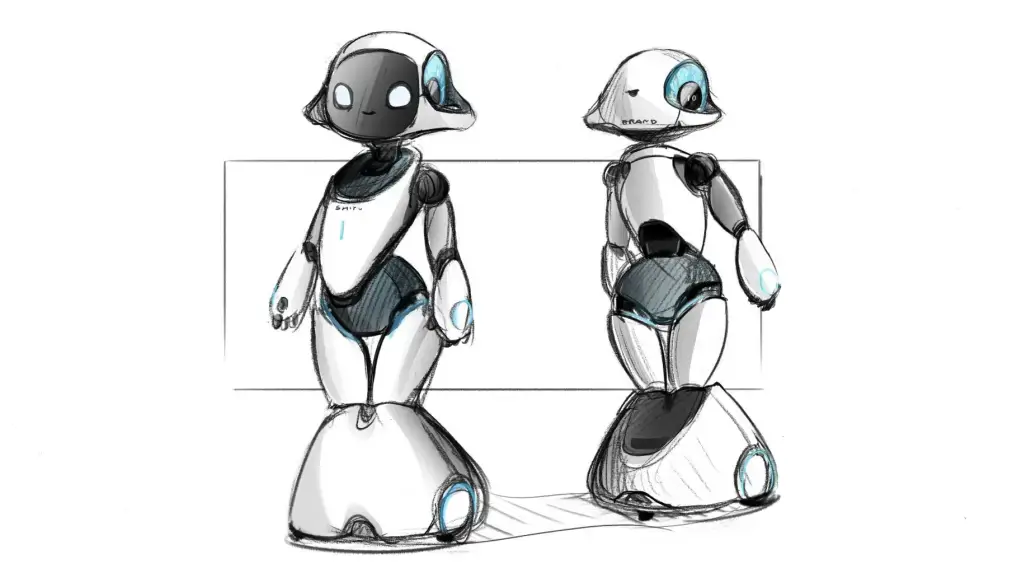
A typical contract manufacturing product prototype design program includes several phases with increasing fidelity:
Concept prototypes
Focus: Form, size, basic user interaction.
Methods: Foam or simple 3D prints combined with early UX mockups.
Engineering prototypes (EVT)
Focus: Core functionality, PCB layout, mechanical structure, thermal behavior.
Methods: 3D‑printed or CNC‑machined parts plus PCBA and basic firmware.
Design verification prototypes (DVT)
Focus: Full functionality in near‑final form factor; verification of user experience, robustness, and environmental performance.
Methods: Higher‑fidelity parts, closer‑to‑final materials, refined PCBA and firmware.
Production verification prototypes (PVT)
Focus: Trial production, line balancing, assembly yields, and quality inspection procedures.
Methods: Early tooling, pilot production runs on near‑final lines.
LKK manages these stages with clear documentation and SOPs so that each prototype generation directly improves the manufacturability of the final product.
One of the most critical aspects of contract manufacturing product prototype design is embedding DFM and manufacturing engineering at the earliest possible stage. LKK’s manufacturing engineering teams work alongside designers and engineers to:
Set realistic tolerances and GD&T for critical parts
Ensure plastic parts have proper draft angles, wall thickness, and ribs
Select processes (injection molding, die‑casting, CNC, sheet metal) based on volumes and cost targets
Design for automated or semi‑automated assembly to improve yield and reduce labor costs
This approach reduces rework between design and factory and shortens the path from prototype to mass production.
Prototypes that are too far from production reality create risk later. LKK’s network of more than 5,000 supply chain partners enables prototype builds that closely mirror the eventual manufacturing environment.
Key advantages include:
Matching prototype processes to likely mass‑production processes (e.g., soft tooling that emulates final injection molds)
Early access to production‑grade components and materials
Feasibility checks by the same types of suppliers who will later handle volume production
This connectivity between prototype and supply chain allows LKK to surface potential risks early, such as component lead times, material availability, or process limitations, and to propose viable alternatives before they threaten launch dates.
LKK’s prototype design work covers a wide variety of products:
Healthcare and medical equipment
Examples include AI‑enabled EEG systems, medical imaging devices, and surgical navigation equipment, where prototypes must meet strict performance and safety criteria to support regulatory submissions.
Smart home and consumer electronics
Printers, smart speakers, projectors, and control panels, where user experience and design language are as crucial as reliability.
Industrial and robotics
Robots, automation systems, and industrial control devices requiring rugged enclosures and dependable performance in demanding environments.
By working across these sectors, LKK transfers lessons from one domain to another, improving prototype quality and manufacturability for new clients.
Quality considerations should not begin at mass production. In LKK’s approach, quality planning starts in the prototype design phase.
Typical practices include:
Defining key product characteristics and critical assemblies early
Designing test points and procedures into PCBA and mechanical parts
Validating assembly sequences during pilot builds using prototype tooling
Building feedback loops from factory tests back into design revisions
LKK’s quality systems, aligned with ISO standards and APQP principles, help ensure that learnings from each prototype round are captured and applied systematically, improving yield and stability in later mass production runs.
For startups:
LKK acts as a full‑service product partner, from concept and prototype design to contract manufacturing.
Its expertise and supply chain reduce the need for an in‑house operations team during early growth stages.
For enterprise innovation teams:
LKK provides flexible, project‑based support that plugs into existing R&D and procurement organizations.
The group’s experience with global brands and complex systems—such as large aircraft components, high‑speed trains, and smart infrastructure—brings additional robustness to new initiatives.
Across both segments, LKK’s role is to transform abstract ideas and sketches into prototype designs that factories can build reliably and repeatedly.


We use cookies to ensure that we give you the best experience on our website. By clicking "Accept All", you consent to our use of cookies. Learn more.
Please fill out the form and we'll get back to you shortly.

Your submission has been received !
Thank you for your submission.
We will get back to you within 24 hours and appreciate your patience.
Enter your details to receive the toolkit for free.