
For a funded startup or an innovation team, building the best product prototype is often the single most critical step between a promising idea and a profitable business. A well-planned prototype does more than just “look real”; it derisks technology, validates user value, and creates a bridge to reliable manufacturing. At LKK Innovation Design Group (LKK), we have helped launch over 10,000 products from early sketches to global mass production, giving us a clear view of what makes a prototype truly effective for the market, not just impressive in a meeting room.
This article will walk you through what “best product prototype” really means today, the stages of a robust prototyping process, and how a full-stack partner like LKK can accelerate your time-to-market while preserving quality and compliance.
Many teams equate “best prototype” with the most polished or technically complex. In reality, the best product prototype is the one that de-risks your next decision with the least time and cost. It evolves across phases: from low-fidelity test rigs to engineering pilots that are ready for design verification and manufacturing scaling.
For hardware, especially in consumer electronics, healthcare, and AI-powered devices, a best-in-class prototype should address four dimensions at the right time:
Desirability: Does the design solve a real user problem and deliver a clear value proposition?
Feasibility: Are the chosen technologies, components, and architecture technically sound?
Viability: Do the cost structure and supply chain assumptions support your business model?
Manufacturability: Can this be produced at scale with consistent quality and compliance?
When these dimensions are aligned, your prototype becomes a powerful asset for investor pitches, regulatory approvals, and supplier negotiations, not just a demonstration unit.
Different phases of development require different kinds of prototypes. Understanding which type you need will save weeks and thousands of dollars.
Concept and Experience Prototypes These early prototypes are designed to test the core idea and user flow. They can be basic 3D prints, foam models, or interactive click-throughs that focus on form factor, ergonomics, and user journeys. The goal is to quickly validate whether your concept resonates with users and stakeholders before investing in engineering-heavy work.
Functional Engineering Prototypes Once the concept is validated, teams move into functional prototypes that integrate preliminary electronics, firmware, and mechanical structures. At this stage, you test key functions such as sensing, connectivity, power management, and safety. LKK’s cross-functional teams can deliver functional prototypes within weeks using integrated industrial, mechanical, and electronics design workflows.
Design-For-Manufacturing (DFM) Prototypes DFM prototypes focus on bridging the gap between engineering feasibility and production reality. Here, the emphasis is on material selection, tolerances, assembly methods, and cost optimization. LKK applies DFM best practices across injection molding, CNC machining, die casting, SMT, and assembly to ensure the prototype can be scaled to mass production without complete redesigns.
EVT/DVT/PVT Prototypes Leading hardware teams often follow staged verification:
EVT (Engineering Verification Test): Validates core engineering performance.
DVT (Design Verification Test): Confirms that the design meets all functional and aesthetic requirements.
PVT (Production Verification Test): Uses near-final tooling and processes to validate that the line can produce at target yield and quality.
LKK’s end-to-end methodology explicitly incorporates EVT–DVT–PVT to reduce risk and compress the timeline from prototype to mass production.
A robust prototype is not a one-off artifact; it is part of a lifecycle that spans from initial strategy to mass production (MP).
Strategy and Product Definition The process begins with clarifying business goals, target users, and competitive landscape. A Product Requirements Document (PRD) defines must-have features, constraints, and success metrics. LKK’s consulting and design teams help translate vision into measurable product goals, using market and user insight to prioritize features and define a realistic roadmap.
Industrial and Interaction Design Industrial design defines the physical form, materials, and visual language of the product, while UX and interaction design define how users discover, use, and trust it. LKK’s industrial designers work across more than 20 verticals and 200 product categories, with award-winning results in smart home, healthcare, and AI interactive devices.
Mechanical and Electronics Engineering The next stage is integrating mechanical structures with electronics and firmware. This includes enclosure design, thermal management, structural analysis, PCB layout, and hardware architecture. LKK’s engineering services cover hardware, firmware, and software development, with compliance-ready systems and support for IoT, AI-enabled devices, and complex medical equipment.
Prototyping and Validation Rapid prototyping leverages 3D printing, CNC, soft tools, and quick-turn PCB fabrication. At LKK, integrated labs and pilot lines allow parallel development and early validation for functionality, usability, and safety. This parallelism helps cut time-to-market by up to around 30%, with functional prototypes often available in approximately six weeks, depending on complexity.
Tooling, Manufacturing Engineering, and MP The final stages involve tooling, process engineering, pilot production, and ramp-up. LKK’s manufacturing engineering teams focus on line design, process optimization, and quality control, leveraging a network of over 5,000 vetted suppliers and plants across China and key global hubs. This helps ensure stable yield, optimized cost, and on-time delivery as products move into mass production.
Although startups and large enterprises aim for high-quality prototypes, their priorities differ.
For early-stage companies, the best product prototype is typically optimized for:
Fundraising: Clear story, compelling demo, and visible differentiation.
Learning speed: Short iteration cycles to arrive at product–market fit.
Cost discipline: Smart trade-offs on features, materials, and technologies.
LKK has worked with fast-growing venture-backed startups, particularly in medical devices and smart hardware, to take them from initial concept to regulatory-ready prototypes and pilot production units that unlock subsequent funding rounds.
Corporate innovation teams usually emphasize:
Compliance and risk management.
Integration with existing product portfolios and platforms.
Global quality and certification standards.
For these teams, the best prototype typically includes early EMC pre-compliance, material and process traceability, and alignment with internal engineering standards. LKK supports global certifications including ISO 9001, ISO 13485, ISO 14000, and TS16949, and can build prototypes that align with CE, FCC, UL, and other certifications.
Many promising products fail not during ideation, but during the transition from prototype to manufacturing. The best product prototypes anticipate this transition from day one.
Key DFM principles include:
Part count reduction to lower assembly time and probability of failure.
Standardizing fasteners and components to simplify supply and maintenance.
Early tolerance analysis to avoid fit and finish issues.
Material and process choices that balance performance, appearance, and cost.
LKK’s DFM approach is embedded in its industrial, mechanical, and electronics design workflows, helping clients avoid expensive redesign cycles when scaling to thousands or millions of units.
For modern products, especially smart home devices, AI interactive companions, and medical equipment, the “best” prototype is a tightly integrated system.
LKK supports:
Hardware architecture and PCB design, including IoT connectivity and sensor fusion.
Firmware development for stability, power efficiency, and security.
Application development for iOS, Android, embedded screens, or desktop environments.
By keeping these disciplines under one roof, communication gaps are reduced, and hardware–software co-design becomes more efficient. This results in prototypes that behave closer to the final product, allowing realistic field trials, user studies, and pre-compliance tests long before full-scale launch.
If you plan to operate in regulated or safety-critical markets, quality and compliance must enter the conversation at the prototype stage. LKK integrates quality systems such as ISO 9001 and advanced product quality planning (APQP), and designs prototypes with certification pathways in mind.
This includes:
Pre-compliance EMC testing to identify potential issues before formal lab testing.
Early risk assessment for safety and reliability.
Traceability of materials and components aligned with global standards such as RoHS.
By weaving quality and compliance into the prototype phase, teams can shorten certification cycles and reduce the risk of late-stage failures.
A prototype that cannot be produced at scale is not truly “best” for business outcomes. Safeguarding your supply chain early can make the difference between a smooth launch and months of delay.
LKK maintains a supply chain network of around 5,000 partners across machining, molding, SMT, assembly, and packaging, with on-the-ground presence in major manufacturing provinces and regions. This allows rapid supplier matching, realistic cost benchmarking, and production planning that takes into account logistics and regional strengths.
When LKK supports both prototyping and subsequent contract manufacturing, clients avoid the typical handover friction between design firms and factories. Knowledge is preserved, and lessons learned in prototyping feed directly into process optimization for mass production.
Across sectors like smart home, medical devices, industrial equipment, and AI interactive products, LKK has repeatedly demonstrated how high-caliber prototypes can catalyze category-leading products.
Examples include:
Smart home printers and all-in-one devices for leaders such as Huawei, where LKK delivered industrial design, mechanical design, rapid prototyping, and mass production support, contributing to fast category growth.
AI-enabled medical devices, where LKK provided mechanical design, electronics engineering, prototyping, certification support, and full-scale manufacturing, helping clients navigate both technical and regulatory hurdles.
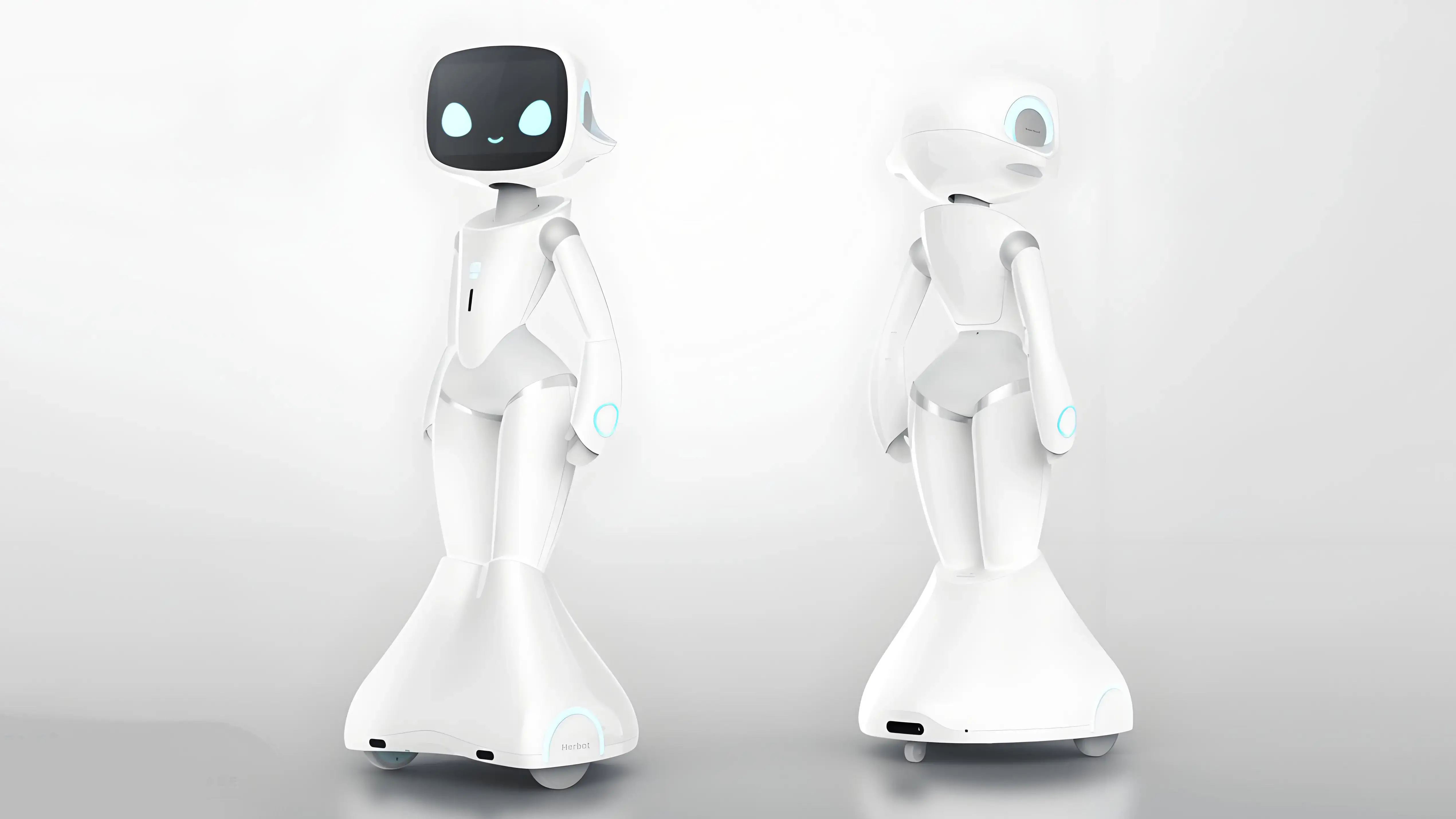
Educational AI robots and security robots in collaboration with major technology companies, combining industrial design, interaction insight, and engineering implementation from prototype to deployment.
These cases illustrate how a prototype, when supported by an integrated ecosystem, becomes a launchpad for entire product families and new categories.
When selecting a partner to build your best product prototype, consider the following criteria:
End-to-end capabilities: Strategy, design, engineering, prototyping, and manufacturing under one coordinated framework.
Cross-industry experience: Proven track record in your sector and adjacent sectors, which often inspire innovation.
Certification and quality: Established quality systems and familiarity with international standards.
Supply chain depth: Access to reliable suppliers, competitive costs, and flexible capacity.
IP protection: Robust processes and experience working with global brands.
LKK Innovation Design Group has more than 20 years of experience, with over 592 international design awards, 1,000+ global clients including Fortune 500 companies, and thousands of products successfully launched across consumer electronics, healthcare, industrial, and smart city domains.
If you are planning your next product—whether it is a smart home device, a medical instrument, or an AI interactive companion—the best product prototype should be more than a showcase. It should be a strategic asset that links your business model, user value, and manufacturing reality.
By working with a partner like LKK that integrates consulting, industrial design, mechanical and electronics engineering, prototyping, and contract manufacturing, you significantly increase your chances of moving from idea to market-ready product on time and on budget.


We use cookies to ensure that we give you the best experience on our website. By clicking "Accept All", you consent to our use of cookies. Learn more.
Please fill out the form and we'll get back to you shortly.
Your submission has been received !
Thank you for your submission.
We will get back to you within 24 hours and appreciate your patience.
Enter your details to receive the toolkit for free.